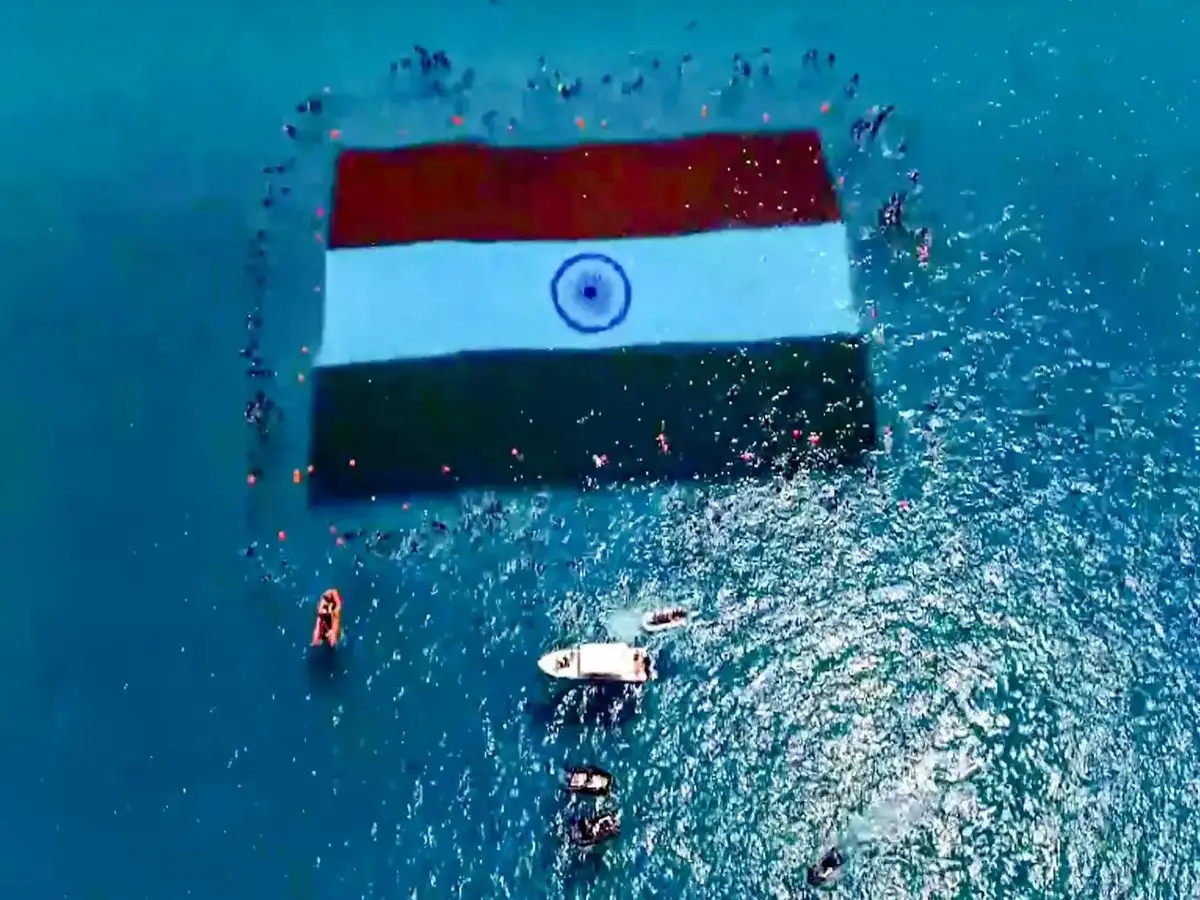
The Andaman and Nicobar Islands Set Guinness World Record by Unfurling Largest Underwater National Flag
The Andaman and Nicobar Islands have made history by achieving a unique Guinness World Record for unfurling the world's largest Indian Tricolour underwater. This remarkable feat not only showcases the islands' patriotism but also highlights the region's pristine marine beauty and potential for adventure tourism.
Background and Context
The Andaman and Nicobar Islands are a union territory of India located in the Bay of Bengal. The archipelago, comprising 572 islands, is known for its rich biodiversity, coral reefs, and unique ecosystems. The islands have a rich cultural heritage and are home to several indigenous communities, including the Great Andamanese and the Jarawa.
With the Indian government's efforts to promote tourism and conservation in the region, the Andaman and Nicobar Islands have become a popular destination for scuba divers, snorkelers, and nature lovers. The islands' unique marine ecosystems and coral reefs make them an ideal location for underwater exploration and research.
The Record-Breaking Event
The record-breaking event was organized by a team of professional scuba divers, experts, and officials from the Andaman and Nicobar Islands Administration. The team carefully coordinated the effort to ensure the massive flag was displayed at a significant depth while managing ocean currents.
The underwater flag, measuring 225 square meters, was made of a durable and water-resistant material. The flag was attached to a specialized underwater structure designed to withstand the ocean's currents and pressure. A team of divers carefully lowered the flag into the water, where it was displayed at a depth of about 10 meters.
National Pride and Environmental Celebration
The achievement marks a unique fusion of national pride and environmental celebration, drawing global attention to the islands' unique underwater ecosystems. The event was not only a tribute to India's rich cultural heritage but also highlighted the importance of marine conservation and responsible tourism.
The Andaman and Nicobar Islands' administration has been actively promoting tourism and conservation efforts in the region. The islands' pristine marine beauty and unique ecosystems make them an ideal location for eco-tourism and research. The record-breaking event has put the islands on the global map, attracting attention from tourists, researchers, and conservationists.
Conclusion
The Andaman and Nicobar Islands' achievement is a testament to the region's natural beauty, cultural heritage, and the dedication of its people. The record-breaking event has highlighted the importance of marine conservation, responsible tourism, and the need to protect the region's unique ecosystems. As the world continues to explore and discover the wonders of the ocean, the Andaman and Nicobar Islands remain a shining example of India's commitment to marine conservation and environmental stewardship.