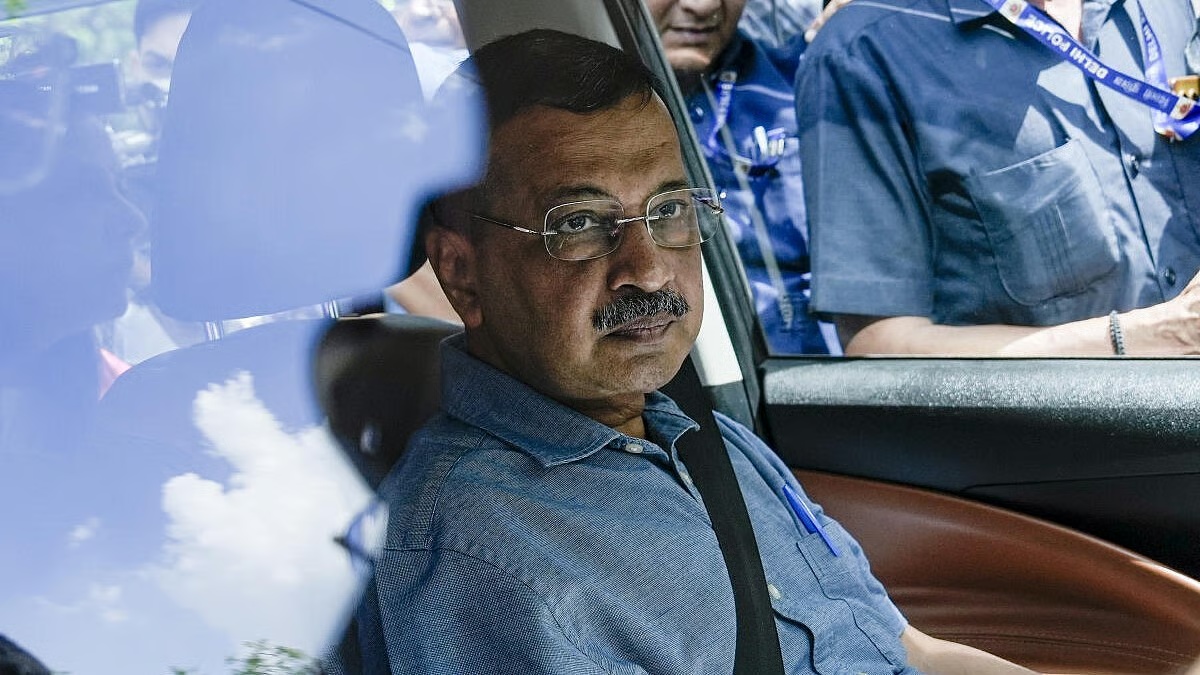
Delhi CM Arvind Kejriwal Requests Recusal of Justice Swarana Kanta Sharma in Excise Policy Case
Delhi Chief Minister Arvind Kejriwal has filed a petition with the Delhi High Court, requesting Justice Swarana Kanta Sharma to recuse herself from hearing his plea in the contentious excise policy case. The move is a significant development in the ongoing litigation, which has garnered widespread attention and sparked intense debate in legal circles.
The request for recusal is premised on the defense's argument that Justice Sharma's earlier rulings in related matters may create a perception of pre-determined bias. This perception is based on the fact that the same bench has previously delivered judgments in cases related to the excise policy, potentially influencing their impartiality in the present case. The defense argues that this may undermine the integrity of the judicial process and compromise the principle of fairness.
Background and Context
The excise policy case has been a contentious issue in Delhi, with the AAP government facing allegations of irregularities and favoritism in the policy's implementation. The case has sparked a high-stakes battle between the Delhi government and the Opposition, with both sides accusing each other of wrongdoing.
Against this backdrop, the request for Justice Sharma's recusal is seen as a strategic move by the AAP government to mitigate potential biases and ensure a fair hearing. The petition is a procedural twist that requires the court to first decide on the validity of the recusal plea before addressing the main excise policy case. This could potentially delay the proceedings and create further uncertainty.
Implications and Analysis
The implications of the recusal request are far-reaching and have significant implications for the judicial process. If the court grants the recusal, it would essentially be admitting to a potential bias and would need to appoint a new judge to hear the case. This could set a precedent for similar requests in future cases and create uncertainty around the impartiality of judges.
On the other hand, if the court rejects the recusal request, it would demonstrate its commitment to upholding the principle of impartiality and ensure that the case is heard by a judge who is not influenced by previous rulings. This would maintain the integrity of the judicial process and uphold the trust of the public in the courts.
The Delhi High Court's decision on the recusal request will have significant implications for the excise policy case and set a precedent for future cases. The court's decision will be closely watched by legal circles and the public, and will have a significant impact on the perception of the judicial process in India.