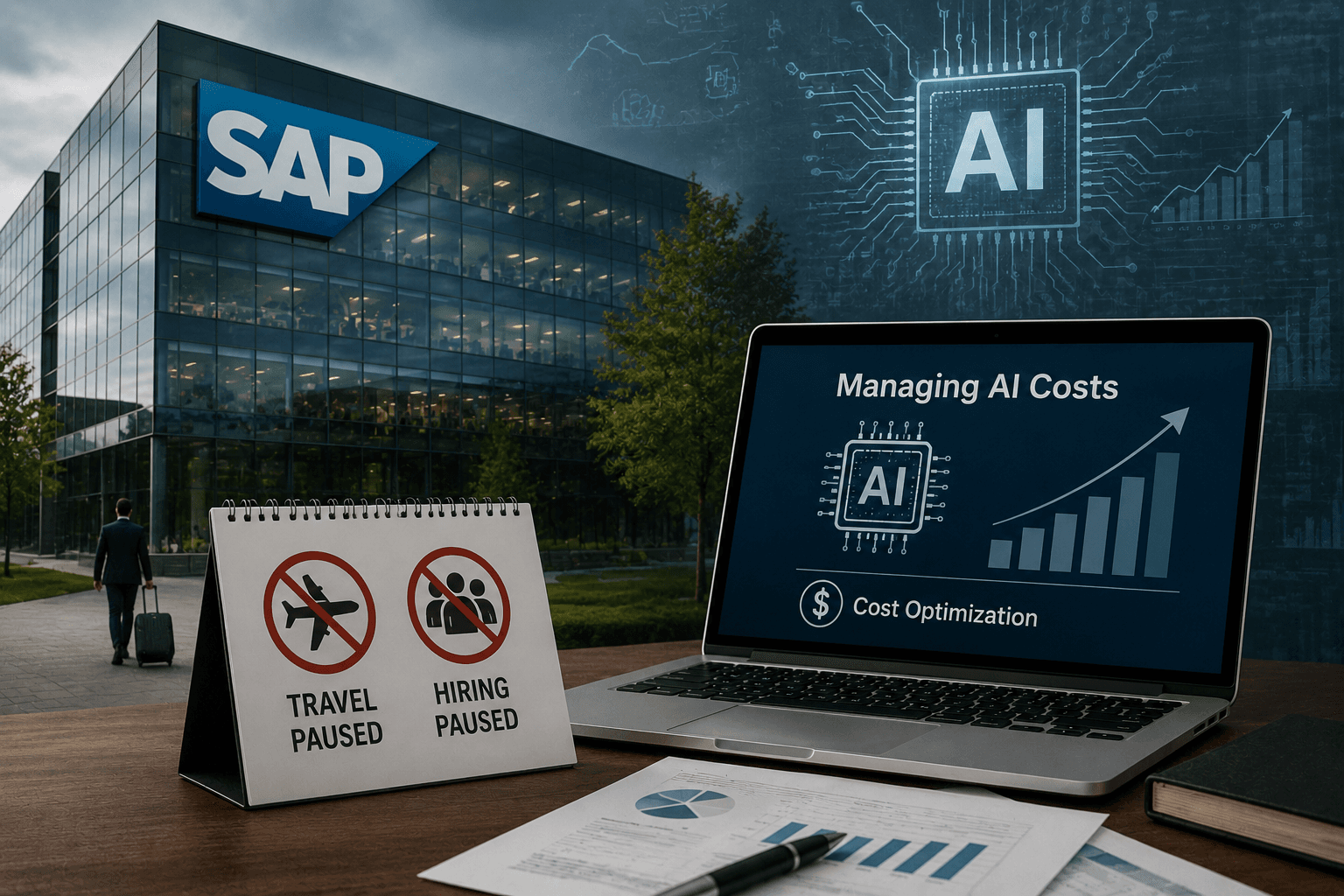
In a significant move, SAP, Europe's largest software company, has announced a halt on most travel and hiring activities, citing the need to prioritize investments in artificial intelligence products and adoption. This strategic decision underscores the company's commitment to future-proofing its enterprise software offerings, as the tech industry continues to grapple with rising costs and intense competition. By exempting only AI-related hiring and essential customer-facing travel from these new controls, SAP is sending a clear signal about its priorities in the rapidly evolving tech landscape. As the company navigates this critical juncture, its actions are being closely watched by industry peers and analysts, who are eager to understand the implications of this move on the broader tech ecosystem.
Key Context & Background
The decision by SAP to pause travel and hiring is not an isolated incident, but rather a symptom of a larger trend sweeping the tech industry. As companies increasingly recognize the strategic importance of artificial intelligence in driving business growth and competitiveness, they are being forced to reassess their spending priorities and allocate resources accordingly. The rising costs of AI development and adoption have become a major concern for many companies, including SAP, which is seeking to balance its investments in AI with the need to maintain profitability and fiscal discipline. Furthermore, the current economic uncertainty and market volatility have added to the pressure on tech companies to optimize their cost structures and prioritize spending on initiatives that drive long-term value creation. Against this backdrop, SAP's move to halt non-essential travel and hiring can be seen as a prudent and forward-thinking decision, designed to ensure the company's continued leadership in the enterprise software market.
Broader Implications & Future Impact
The implications of SAP's decision to prioritize AI investments over other areas of the business are far-reaching and multifaceted. In the short term, the move is likely to have a significant impact on the company's employees, partners, and customers, who may need to adapt to new ways of working and collaborating. However, in the medium to long term, the decision is likely to position SAP for sustained growth and success in a rapidly changing tech landscape. As AI continues to transform the enterprise software market, companies that invest heavily in AI research and development are likely to emerge as leaders, while those that fail to do so may risk being left behind. Moreover, SAP's decision may also have a ripple effect on the broader tech industry, as other companies take note of the strategic importance of AI and begin to reassess their own spending priorities. Ultimately, the move by SAP to prioritize AI investments over other areas of the business may mark a significant turning point in the evolution of the tech industry, as companies increasingly recognize the need to harness the power of AI to drive innovation, growth, and competitiveness.
Industry-wide Ramifications
As the tech industry continues to grapple with the challenges and opportunities presented by AI, SAP's decision to prioritize AI investments is likely to have significant ramifications for the sector as a whole. Other companies may follow suit, leading to a surge in AI-related hiring and investment, as well as a corresponding decline in non-essential travel and other areas of spending. Furthermore, the move by SAP may also accelerate the development of new AI-powered products and services, as companies seek to leverage the technology to drive innovation and growth. Ultimately, the decision by SAP to prioritize AI investments may mark the beginning of a new era in the tech industry, one in which AI is no longer seen as a niche or emerging technology, but rather as a core component of business strategy and competitiveness. As the industry continues to evolve and mature, it will be important to monitor the impact of SAP's decision and assess the broader implications for the tech sector and the economy as a whole.