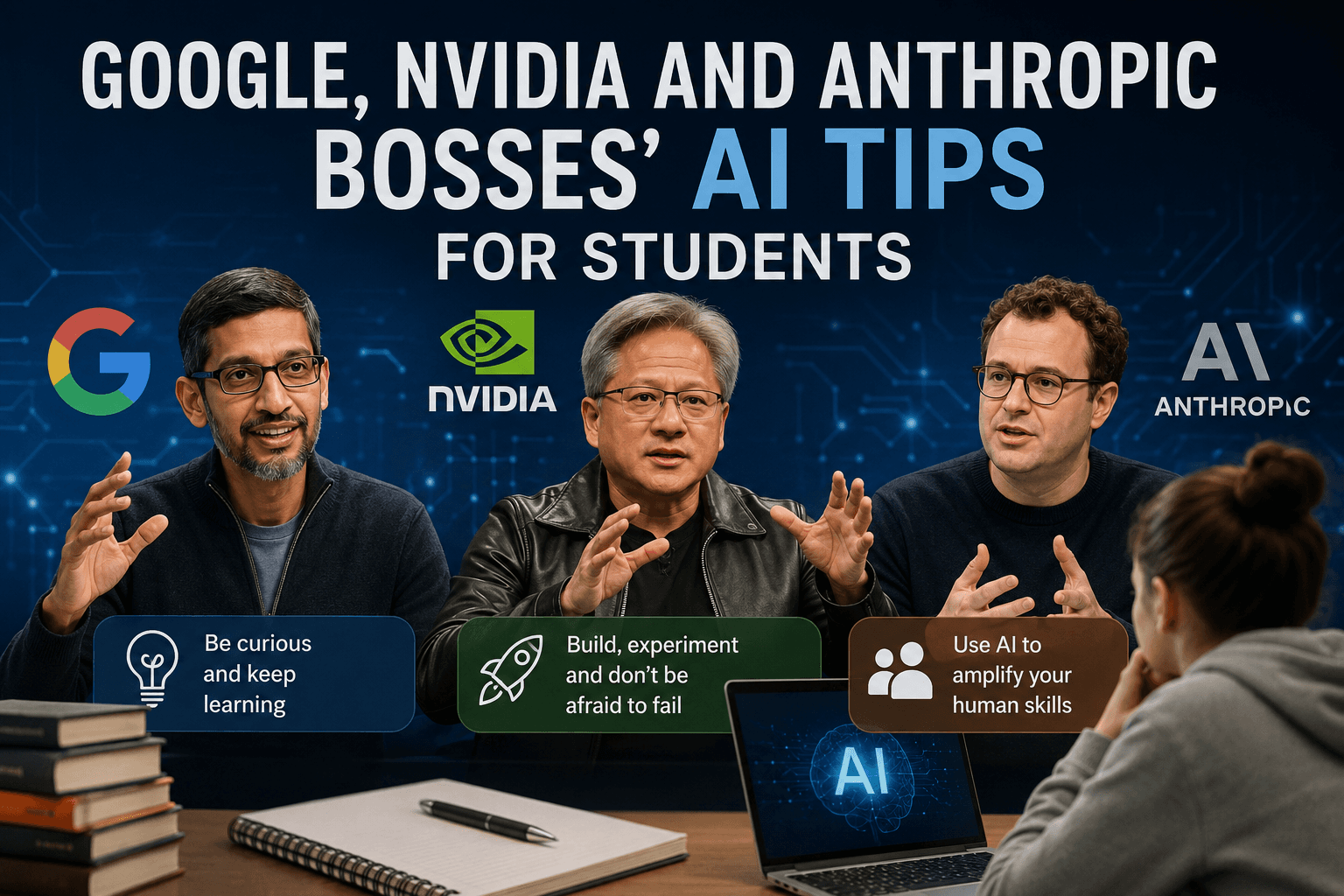
The tech world was abuzz with excitement as Sundar Pichai, Jensen Huang, and Jack Clark, the bosses of Google, Nvidia, and Anthropic respectively, shared their advice with students on the rapidly evolving field of Artificial Intelligence (AI). In a recent interview with the BBC, these industry leaders offered their insights and tips to the next generation of innovators, highlighting the immense potential and opportunities that AI presents. This development is significant, not only because of the stature of the individuals involved, but also due to the timing, as the world grapples with the challenges and benefits of AI integration in various sectors.
Key Context & BackgroundThe advice from these tech moguls comes at a time when AI is increasingly becoming a crucial part of our daily lives, from virtual assistants to complex healthcare diagnostics. The reason behind this convergence of industry leaders to guide students is rooted in the recognition of AI's transformative power and the need for skilled professionals who can harness its potential. Historically, the development of AI has been marked by periods of rapid advancement followed by plateau phases, but the current era is distinct due to the confluence of big data, computational power, and algorithmic sophistication. This perfect storm has propelled AI to the forefront of technological innovation, making it an attractive and challenging field for young minds. The involvement of Pichai, Huang, and Clark signifies the industry's acknowledgment of the need for a well-prepared workforce that can navigate the complexities and opportunities of AI.
The backgrounds of these leaders also provide insight into the diversity of paths that can lead to innovation in AI. Sundar Pichai's journey from being a product manager to leading Google underscores the importance of understanding the intersection of technology and user needs. Jensen Huang's pioneering work in graphics processing units (GPUs) and their application in AI computing highlights the role of hardware in enabling AI advancements. Jack Clark's experience in AI research and his role in Anthropic, a company focused on making AI more beneficial and less dangerous, points to the growing concern and effort to ensure AI's safe and beneficial development.
Broader Implications & Future ImpactThe advice from these industry leaders to students has broader implications that extend beyond the immediate context of career guidance. It reflects a shift in how technology is being perceived and developed, with a greater emphasis on responsibility, safety, and societal benefit. The future of AI, as envisioned by Pichai, Huang, and Clark, is not just about technological advancement but also about ensuring that these advancements serve humanity. This perspective is crucial as AI begins to play a more significant role in critical sectors such as healthcare, finance, and education, where its impact on society will be profound.
In the medium to long term, the industry can expect a surge in AI-related research and development, driven in part by the inspiration and guidance provided by leaders like Pichai, Huang, and Clark. This could lead to breakthroughs in areas such as natural language processing, computer vision, and predictive analytics, further integrating AI into daily life and transforming industries. Furthermore, the emphasis on safe and beneficial AI development is likely to foster a new wave of innovations focused on AI ethics, transparency, and accountability, addressing some of the current concerns around AI's potential misuse and societal impact.