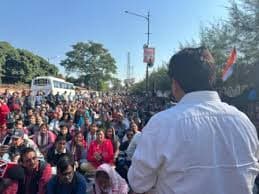
Uttarakhand Government Imposes ESMA on UPNL Workers, Sparks Criticism
The Uttarakhand government's decision to impose the Essential Services Maintenance Act (ESMA) on Uttarakhand Power News Limited (UPNL) workers has drawn sharp criticism from the state's Congress leadership. Congress state president Ganesh Godiyal has condemned the move, arguing that it reflects the government's preference for repression over dialogue. The imposition of ESMA and the enforcement of a "no-work, no-pay" policy on UPNL employees have significant implications for the state's workforce and its overall governance.
The UPNL workers have been seeking permanent status, protection, and fair wages for years, highlighting the precarious nature of their employment. Despite their crucial role in supporting the state's health, security, administrative, and technical systems, these workers have been denied basic rights and benefits. The government's decision to impose ESMA on these workers, rather than engaging in constructive dialogue, has been perceived as an attempt to silence their demands and maintain the status quo. Godiyal's criticism suggests that the government is trying to hide its policy failures, inability to manage human resources, and insensitivity towards its workforce.
Context and Background
The imposition of ESMA on UPNL workers is not an isolated incident. It reflects a broader trend of labor unrest and governance challenges in Uttarakhand. The state has witnessed several instances of worker protests and strikes in recent years, often sparked by demands for better working conditions, fair wages, and job security. The government's response to these protests has been criticized for being heavy-handed, with a focus on maintaining order rather than addressing the underlying grievances.
The Dhami government's decision to impose ESMA on UPNL workers has significant implications for the state's labor relations and governance. It may exacerbate existing tensions between the government and the workforce, potentially leading to further protests and strikes. Moreover, the imposition of ESMA may undermine the morale and motivation of UPNL workers, compromising the quality of essential services provided to the public. As the state grapples with these challenges, it is essential for the government to engage in constructive dialogue with workers and address their legitimate demands, rather than resorting to repression and coercion.