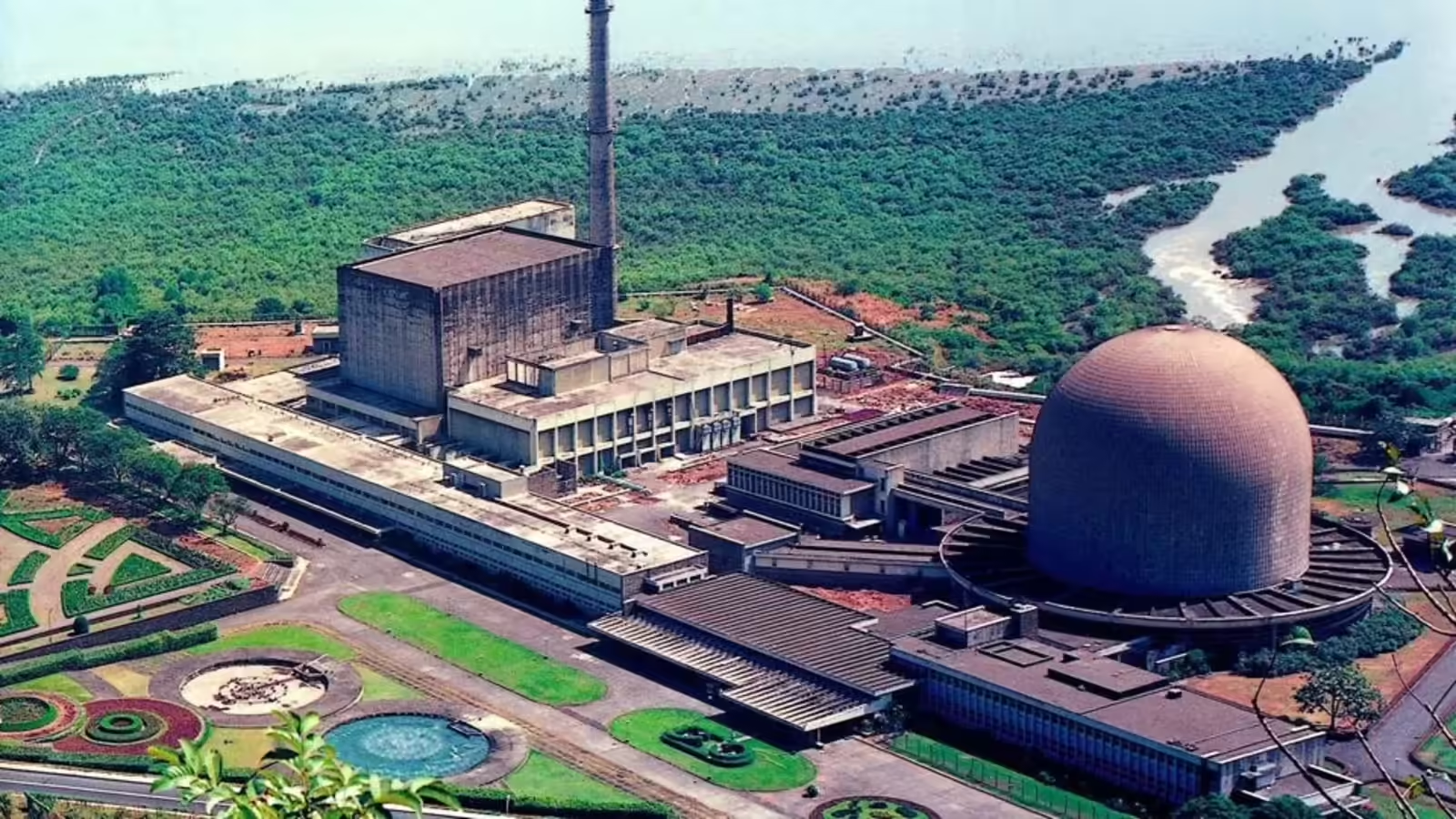
India's Fast Breeder Reactor Hits Criticality, Boosting Nuclear Ambitions
The recent achievement of India's Prototype Fast Breeder Reactor (PFBR) at Kalpakkam, Tamil Nadu, has marked a significant milestone in the country's nuclear power program. With the PFBR reaching criticality, India has formally entered the second stage of its three-stage nuclear power program, solidifying its position as a global leader in advanced nuclear technology.
Background and Significance
The PFBR is a culmination of India's decades-long effort to develop indigenous nuclear technology. Designed and built by the Bharatiya Nabhikiya Vidyut Nigam Limited (BHAVINI), a subsidiary of the Nuclear Power Corporation of India Limited (NPCIL), the reactor uses a "fast" neutron spectrum and liquid sodium coolant to produce more fuel than it consumes. This unique design allows the PFBR to operate on a Plutonium-Uranium Mixed Oxide (MOX) fuel, paving the way for the third stage of India's nuclear power program, which will utilize the country's vast Thorium reserves for centuries of clean energy.
Implications of PFBR's Criticality
The PFBR's criticality is a significant achievement for India, as it marks the country's formal entry into the second stage of its nuclear power program. This stage is crucial in developing the necessary infrastructure and expertise for the next stage, which will focus on harnessing India's Thorium reserves. By achieving this milestone, India becomes only the second country after Russia to have a commercially operating Fast Breeder Reactor, solidifying its position as a global leader in advanced nuclear technology.
Fuel Security and Energy Independence
The PFBR's ability to produce more fuel than it consumes is a significant step towards fuel security and energy independence for India. By utilizing its Thorium reserves, India can reduce its dependence on imported Uranium and achieve a significant reduction in greenhouse gas emissions. This achievement is particularly relevant in today's energy landscape, where countries are increasingly looking for sustainable and reliable sources of energy.
Conclusion
The PFBR's criticality marks a significant milestone in India's nuclear power program and solidifies its position as a global leader in advanced nuclear technology. With its unique design and ability to produce more fuel than it consumes, the PFBR has paved the way for India's next stage of nuclear power development, which will focus on harnessing its Thorium reserves. As the world continues to grapple with the challenges of climate change and energy security, India's achievement is a significant step towards a more sustainable and reliable energy future.