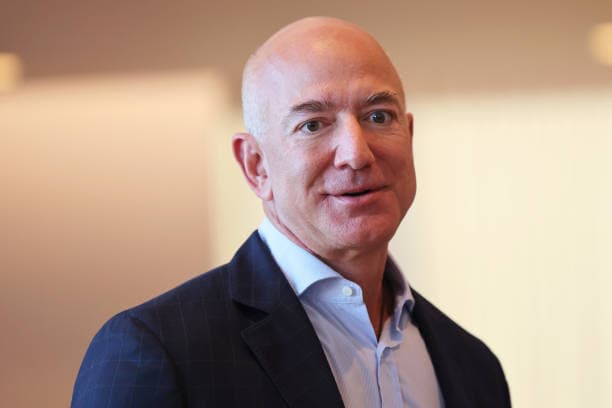
Amazon founder Jeff Bezos used a recent interview to argue that fear of artificial intelligence is misplaced, insisting that the technology could soon make a three‑day work week a realistic option for many American families. He linked the prospect to the growing productivity gains from AI‑driven automation, while also distancing Amazon’s latest round of layoffs from any “AI‑induced” panic. The remarks have ignited debate across business circles, labor groups, and policy forums about whether AI can truly reshape work‑life balance or merely accelerate existing trends.
Key Context & Background
Bezos’ comments arrive at a moment when the United States is grappling with a post‑pandemic labor market that has been reshaped by both remote‑work norms and an unprecedented wave of corporate hiring followed by rapid downsizing. During the COVID‑19 surge, Amazon added more than 400,000 workers to meet soaring e‑commerce demand, only to trim its workforce in 2023 as demand normalized and cost‑control became a priority. Simultaneously, the AI sector has experienced a classic “hype cycle,” with venture capital flooding startups that promise generative‑AI capabilities, prompting analysts to warn of a speculative bubble. Yet, the underlying technology—large language models, computer vision, and robotic process automation—has already begun delivering measurable efficiency gains in logistics, customer service, and data analytics, setting the stage for the optimism Bezos expresses.
Bezos’ Vision of a 3‑Day Work Week
The former CEO painted a scenario in which AI‑enhanced productivity could free one partner in a dual‑income household from the necessity of full‑time employment. By automating routine tasks—from inventory management to basic legal drafting—AI could theoretically compress the amount of human labor needed to sustain household income. Bezos suggested that, if families can afford to “stop working” for part of the week, society would see a shift toward more leisure, creativity, and caregiving. He framed the idea not as a utopian fantasy but as a logical extension of historical productivity gains, likening it to the reduction of work hours that followed the mechanization of manufacturing in the early 20th century.
Broader Implications & Future Impact
If AI can indeed sustain income with fewer human hours, the ripple effects could be profound. Labor economists warn that a sudden contraction in demand for routine work could exacerbate wage polarization, pushing low‑skill workers into precarious gig arrangements unless policy interventions—such as universal basic income or expanded retraining programs—keep pace. On the other hand, a shorter workweek could alleviate chronic burnout, improve mental health outcomes, and stimulate sectors like hospitality and the arts that thrive on discretionary time. Companies that successfully integrate AI while preserving employee welfare may gain a competitive edge, attracting talent that values flexibility over sheer compensation.
AI Bubble Narrative vs. Technological Reality
Bezos acknowledged the existence of an “AI bubble,” noting that inflated valuations have led some investors to overestimate short‑term returns. Yet he insisted that the core technology remains “incredibly valuable” and that the market will eventually separate hype from sustainable innovation. This dual stance mirrors a broader industry consensus: while some AI startups may falter, the underlying models are becoming integral to enterprise operations, from supply‑chain optimization to personalized marketing. The challenge, analysts argue, will be ensuring that the benefits of AI are broadly distributed rather than confined to a handful of tech giants.