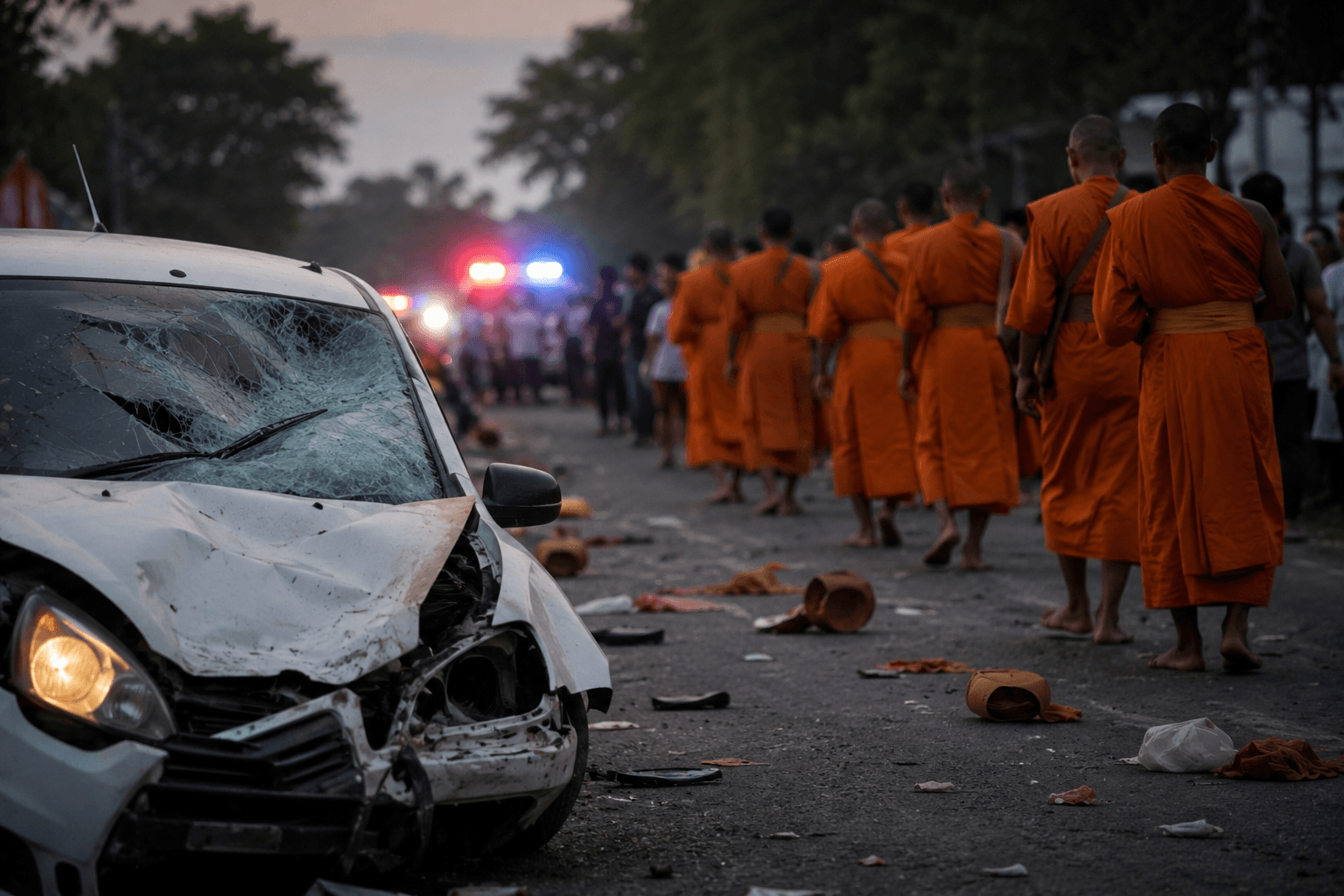
A tragic incident in Thailand has left nine monks dead and several others injured after an 11-year-old driver lost control of a truck and collided with a procession of Buddhist monks. The group, consisting of 35 monks and five lay followers, was walking by the roadside when the vehicle ploughed into them, resulting in one of the most devastating accidents involving monks in recent Thai history. The incident has sent shockwaves across the country, prompting an outpouring of grief and raising important questions about road safety and the role of children in operating vehicles.
Key Context & BackgroundThe accident highlights a disturbing trend of reckless driving and lax enforcement of traffic laws in Thailand. According to official statistics, Thailand has one of the highest road fatality rates in the world, with over 20,000 deaths reported annually. The country's roads are often congested, and drivers frequently disregard traffic rules, leading to a culture of impunity and negligence. In this particular incident, the fact that an 11-year-old was behind the wheel of a truck is a stark reminder of the lack of effective age restrictions and vehicle safety regulations in Thailand. The ease with which minors can access and operate vehicles is a consequence of inadequate law enforcement and a lack of awareness about road safety among the general public.
Thailand's Buddhist monks are highly revered and play a significant role in the country's social and cultural fabric. They often participate in processions and ceremonies, which can involve walking along roads and highways. The fact that this group of monks was struck by a vehicle while engaged in a peaceful procession has sparked widespread outrage and calls for greater measures to protect vulnerable road users. The incident also underscores the need for a more comprehensive approach to road safety, one that includes education, enforcement, and infrastructure development.
Broader Implications & Future ImpactThe tragic accident has significant implications for Thailand's transport sector and society as a whole. It highlights the need for a fundamental overhaul of the country's road safety policies and practices. The government will likely face increased pressure to implement stricter age restrictions, improve vehicle safety standards, and enhance law enforcement on the roads. Moreover, the incident may lead to a renewed focus on education and awareness campaigns aimed at promoting road safety and responsible driving practices. The Thai authorities may also need to consider investing in dedicated pedestrian and cyclist infrastructure, such as footpaths and bike lanes, to reduce the risk of accidents involving vulnerable road users.
In the medium to long term, the accident may have a profound impact on Thailand's social and cultural landscape. The country's Buddhist community is likely to demand greater protection and respect for monks and other vulnerable groups. The incident may also lead to a re-evaluation of the role of children in Thai society, with a greater emphasis on education, safety, and protection. Furthermore, the accident may prompt a national conversation about the need for a more sustainable and equitable transport system, one that prioritizes the safety and well-being of all road users, regardless of their age, occupation, or social status. As Thailand continues to grapple with the aftermath of this tragedy, it is clear that a fundamental transformation of the country's transport sector is necessary to prevent such accidents from occurring in the future.