Pakistan's Indus Waters Push: Inside Islamabad's Diplomatic Campaign Amid Its Own Water Crisis
A
By Admin📖5 min read
Article Content
Pakistan has launched a renewed diplomatic push to internationalize the dispute over the Indus Waters Treaty (IWT), more than a year after India placed the 65-year-old water-sharing agreement "in abeyance" following the April 2025 Pahalgam terror attack and the military exchange that followed under Operation Sindoor.
How we got here
On April 22, 2025, militants killed 26 civilians in Pahalgam, Jammu and Kashmir. India blamed Pakistan-based groups, and the next day suspended the Indus Waters Treaty "with immediate effect," alongside other measures such as closing the Attari-Wagah border and cancelling Pakistani visas. Pakistan denied involvement, called the treaty suspension "an act of war," and closed its airspace to Indian carriers.
The crisis escalated into a brief military conflict in early May 2025: India struck what it described as terrorist infrastructure in Pakistan and Pakistan-administered Kashmir under Operation Sindoor, Pakistan responded with its own operation, and the two sides fought a short but intense exchange — including one of the largest beyond-visual-range air engagements in recent history — before a ceasefire took hold on May 10, 2025.
More than a year on, India's position has not softened. Marking the first anniversary of Operation Sindoor in May 2026, the Ministry of External Affairs reiterated that the treaty "stands in abeyance in response to Pakistan's sponsorship of cross-border terrorism," and that it will remain suspended until Pakistan "credibly and irrevocably" ends support for cross-border terrorism. India has since accelerated hydropower projects on the western rivers and stopped sharing routine flow and flood data with Islamabad, though experts note a full blockade of the Indus system isn't currently feasible given India's limited storage infrastructure on those rivers.
The Islamabad conference
This week, Pakistan hosted an international seminar in Islamabad titled "The Indus Waters Treaty: A Key Instrument for Peace and Regional Stability," at the Jinnah Convention Centre. Deputy Prime Minister and Foreign Minister Ishaq Dar told the gathering that India's suspension was "illegal" since the treaty contains no unilateral exit clause, and warned that any interruption to Pakistan's water share would have "profound consequences" for regional peace — while insisting Islamabad was pursuing only legal and diplomatic channels, not war.
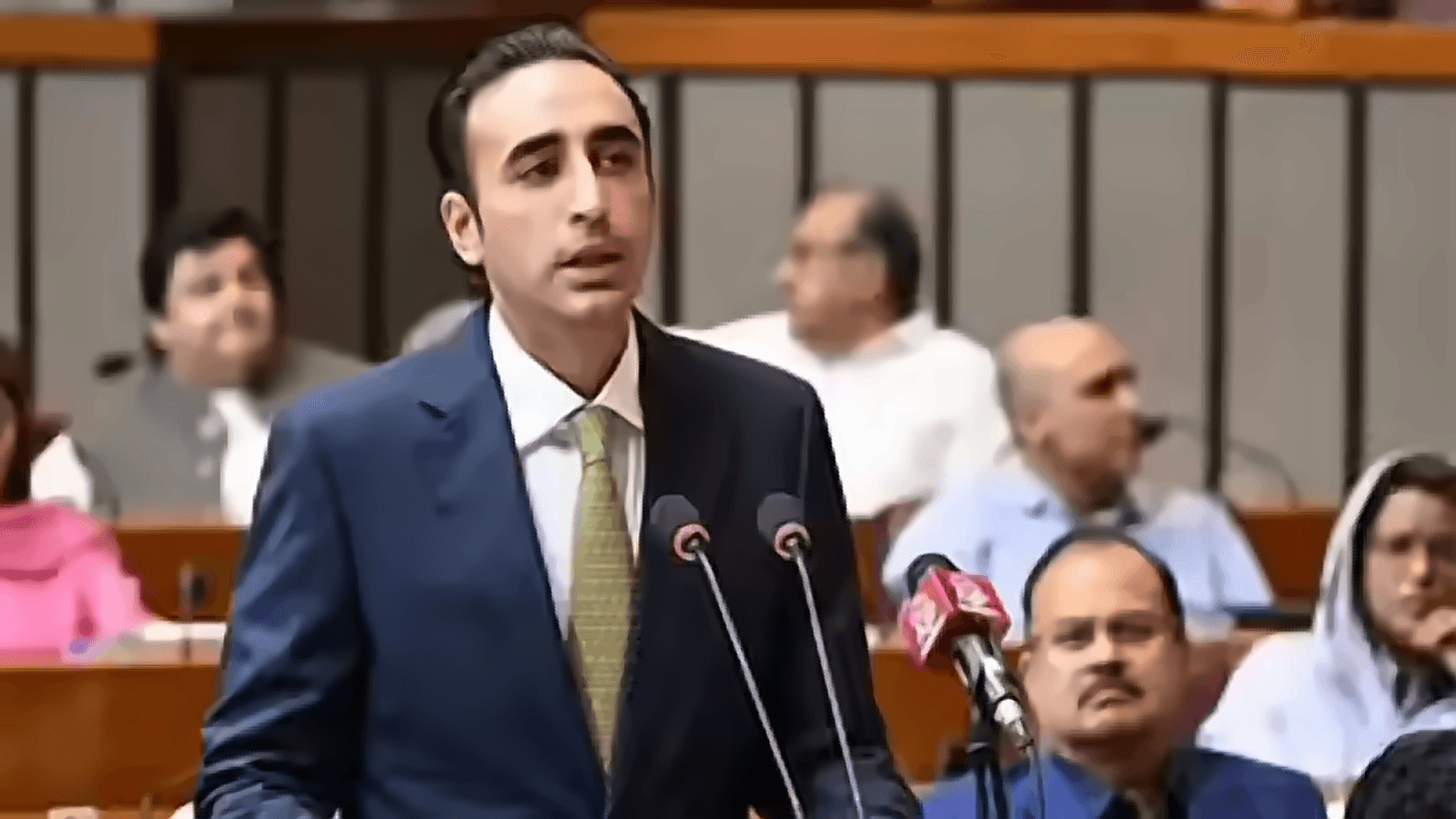
PPP chairman Bilawal Bhutto Zardari struck a more combative note, calling for a new international convention against the "weaponisation of waterways" and describing the Indus as "not a bargaining chip" but the "bloodstream of Pakistan itself." He argued that India's move set a precedent that threatens the broader postwar framework of treaty law, not just South Asia.
Indian commentary on the conference has been sharply critical, with some describing it as a stage-managed attempt to internationalize a bilateral dispute and to deflect from the underlying issue — India's insistence that the treaty stays suspended absent verifiable action against terror groups operating from Pakistani soil.
Pakistan's domestic backdrop
The diplomatic offensive comes as Pakistan grapples with serious troubles at home. Independent reporting this year has documented:
A worsening internal water crisis — per-capita water availability has fallen from roughly 5,260 cubic metres in 1951 to about 899 today, well below the 1,000 cubic metre threshold that defines "water scarcity." Sindh's irrigation department has reported canal shortfalls as steep as 82% on some waterways, and Quetta's groundwater levels are dropping several metres a year.
Economic strain, including heavy external debt and continued reliance on international financial support.
Persistent unrest in Balochistan and reports of separatist sentiment in Sindh and Pakistan-administered Kashmir (PoK), compounding governance and security challenges.
Warnings from Pakistani officials, including Defence Minister Khawaja Asif, that water disputes could trigger military escalation with India — rhetoric that has drawn accusations, particularly from Indian outlets, that Islamabad is using the treaty standoff to divert attention from domestic failures.
#induswaterstreaty#pakistan#india#operationsindoor#pahalgamattack#ishaqdar#bilawalbhutto#balochistan#sindh#southasiawatercrisis
← Previous ArticleIndia-US Trade Deal Nears Completion: Ambassador Sergio Gor Signals a "New Era" of Strategic PartnershipNext Article →Why Indian IT's Grip on the Nifty 50 Just Hit a 20-Year Low