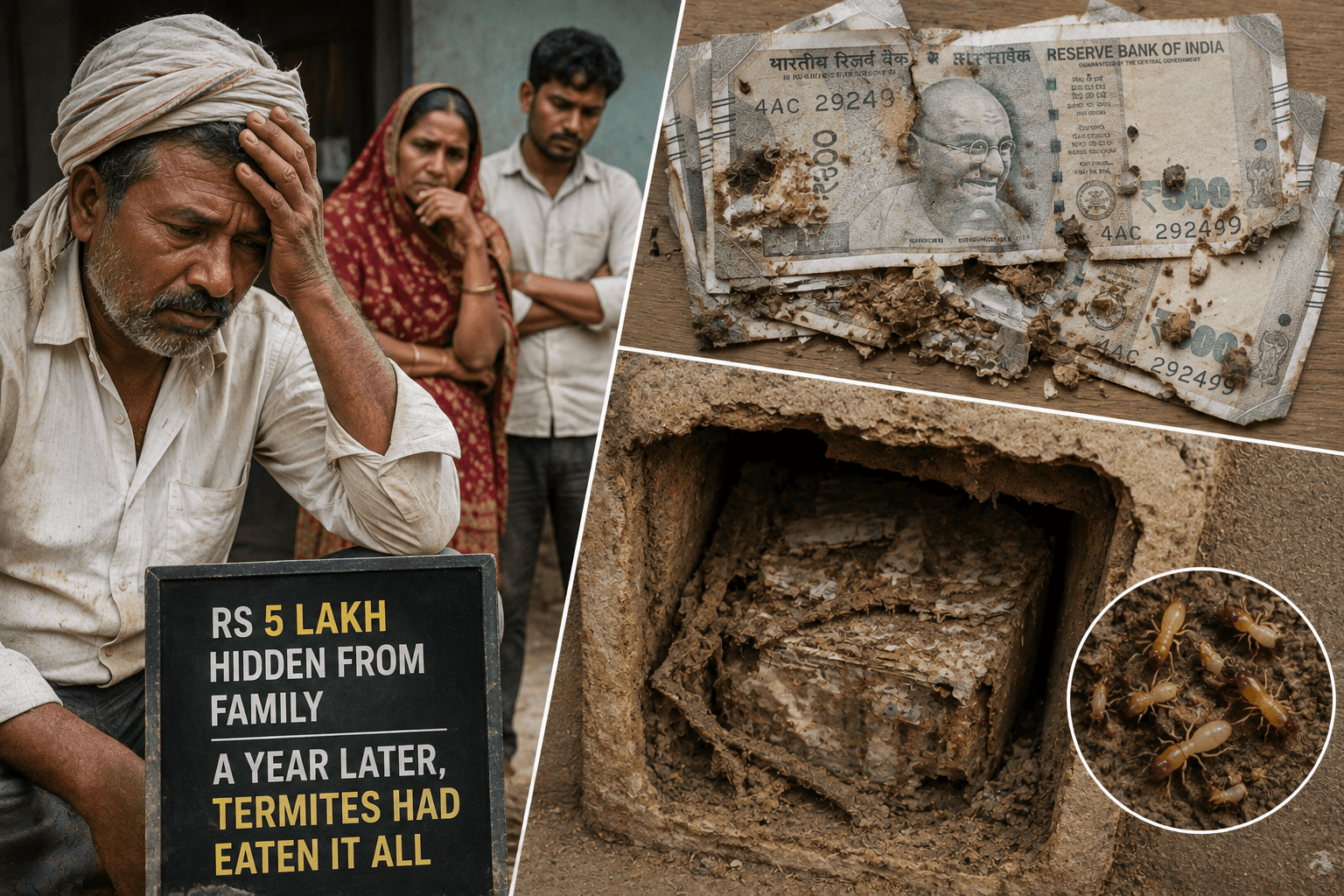
In a bizarre incident, a farmer from Rajasthan's Balotra district recently discovered that termites had devoured nearly his entire stash of Rs 5 lakh, which he had buried in his field for safekeeping. The farmer, in an attempt to keep the money hidden from his family, had opted for this unconventional method, only to forget the location of the buried treasure. It was not until almost a year later, when the cash was finally unearthed, that the farmer realized the extent of the damage caused by the termites. This incident highlights the risks associated with unconventional methods of storing cash and raises questions about the broader financial habits of rural communities. The fact that the farmer felt the need to hide the money from his family also underscores the complexities of financial decision-making in these households.
Key Context & Background
This incident can be seen as a symptom of a larger issue - the lack of access to formal banking services in rural areas. Many farmers and rural households still rely on informal methods of saving and storing cash, often due to limited access to banks and other financial institutions. This is particularly true in regions like Rajasthan, where the penetration of banking services is relatively low compared to urban areas. The habit of storing cash at home or in hidden locations is also influenced by a deep-seated distrust of formal banking systems, which can be attributed to a combination of factors, including limited financial literacy and historical experiences of exploitation by moneylenders. As a result, incidents like the one in Balotra district are not isolated and reflect a broader pattern of financial behavior in rural India.
Broader Implications & Future Impact
The incident has significant implications for the financial inclusion agenda in India. It highlights the need for increased efforts to expand the reach of formal banking services, particularly in rural areas. The government's push for digital payments and financial inclusion initiatives, such as the Pradhan Mantri Jan-Dhan Yojana, has shown promise, but more needs to be done to address the trust deficit and limited access to banking services in rural areas. Furthermore, the incident also underscores the importance of financial literacy and education, particularly in rural households. By promoting a better understanding of formal banking systems and the risks associated with informal methods of saving, policymakers can work towards reducing the reliance on cash-based transactions and promoting a more stable and secure financial environment. In the long term, this can have a positive impact on the overall economic development of rural areas, by facilitating access to credit, reducing poverty, and promoting economic growth.
Regional Significance and Future Directions
The incident also has regional significance, particularly in the context of Rajasthan, where the state government has been working to promote financial inclusion and digital payments. The state's efforts to expand the reach of banking services, particularly in rural areas, will be critical in addressing the issues highlighted by this incident. Moreover, the incident also presents an opportunity for policymakers to re-examine the existing financial infrastructure in rural areas and identify areas for improvement. By leveraging technology and innovative financial products, policymakers can work towards creating a more inclusive and secure financial environment, which can help to reduce the risks associated with informal methods of saving and promote economic development in rural areas. Ultimately, addressing the root causes of this incident will require a sustained effort to promote financial inclusion, literacy, and education, as well as a commitment to expanding access to formal banking services in rural India.