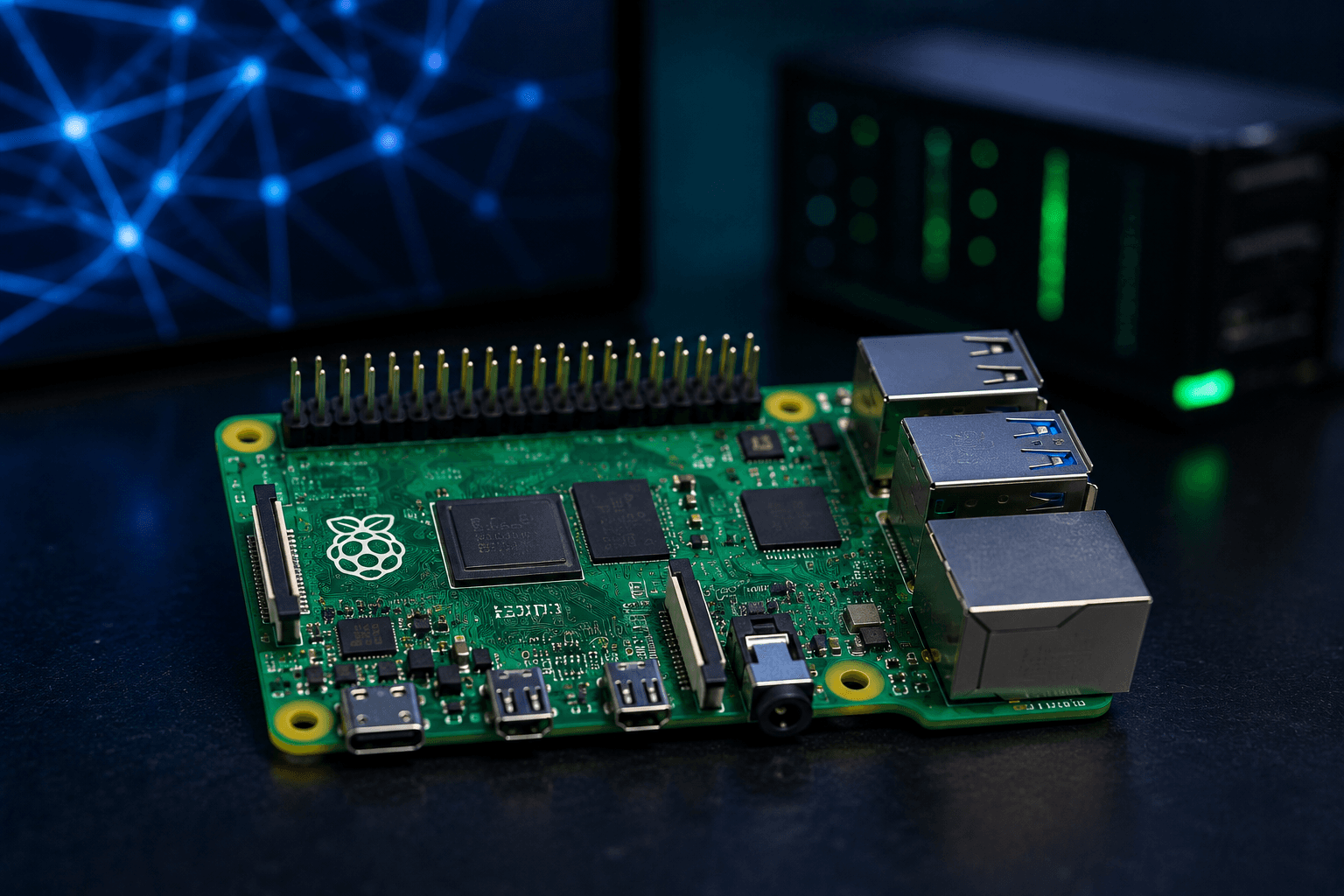
Raspberry Pi, the British computer hardware company, has announced a significant increase in its profit forecast, driven by growing demand for artificial intelligence (AI) in various sectors. The firm expects to deliver adjusted earnings of at least $38m (£28.2m) for the first half of 2026, a notable increase from its initial projections. This development highlights the accelerating pace of technological advancements and their impact on various industries.
Key Context & BackgroundRaspberry Pi's profit forecast is closely tied to the rapid growth of the AI market. The global AI market size is projected to reach $190 billion by 2025, driven by increasing adoption in sectors such as healthcare, finance, and manufacturing. The demand for specialized computer hardware, including single-board computers like Raspberry Pi, is expected to fuel this growth. Raspberry Pi, which was founded in 2006 as a non-profit organization, has become a leading player in the single-board computer market, with over 30 million units sold worldwide.
The company's success can be attributed to its ability to adapt to changing market trends and technological developments. Raspberry Pi's initial focus on providing affordable, accessible computing solutions for hobbyists and educators has evolved to cater to the growing demand for AI-enabled hardware. The company's decision to invest in AI-specific products, such as the Raspberry Pi high-performance computing (HPC) cluster, has paid off, as it has enabled the company to tap into the lucrative AI market.
Broader Implications & Future ImpactThe growing demand for AI-enabled hardware, driven by Raspberry Pi's success, has significant implications for various industries and sectors. As AI adoption increases, the need for specialized computer hardware will become more pronounced, driving innovation and investment in this area. This, in turn, will lead to the development of more advanced AI applications, further fueling growth in the industry.
Moreover, the increased adoption of AI will also have significant societal implications. As AI becomes more ubiquitous, it is expected to create new job opportunities in fields such as AI development, deployment, and maintenance. However, it also raises concerns about job displacement, particularly in sectors where AI is likely to automate tasks. Governments and policymakers will need to address these concerns and develop strategies to mitigate the negative impacts of AI adoption.
The growth of the AI market also highlights the importance of investing in education and skills development. As AI becomes more prevalent, there will be a growing need for professionals with expertise in AI-related fields, such as machine learning, deep learning, and data science. Governments, educational institutions, and industry leaders must work together to develop programs that equip students with the necessary skills to thrive in an AI-driven economy.
Industry Response & Future OutlookThe industry response to Raspberry Pi's profit forecast highlights the growing excitement and optimism surrounding the AI market. Other companies, such as NVIDIA and Intel, have also reported significant growth in their AI-related businesses. This trend is expected to continue, driven by the increasing demand for AI-enabled hardware and software solutions.
As the AI market continues to grow, it will be interesting to see how companies like Raspberry Pi adapt to changing market trends and technological developments. The company's ability to innovate and expand its product line will be crucial in maintaining its market lead and driving growth in the industry. With its track record of success and commitment to innovation, Raspberry Pi is well-positioned to capitalize on the growing demand for AI-enabled hardware and software solutions.