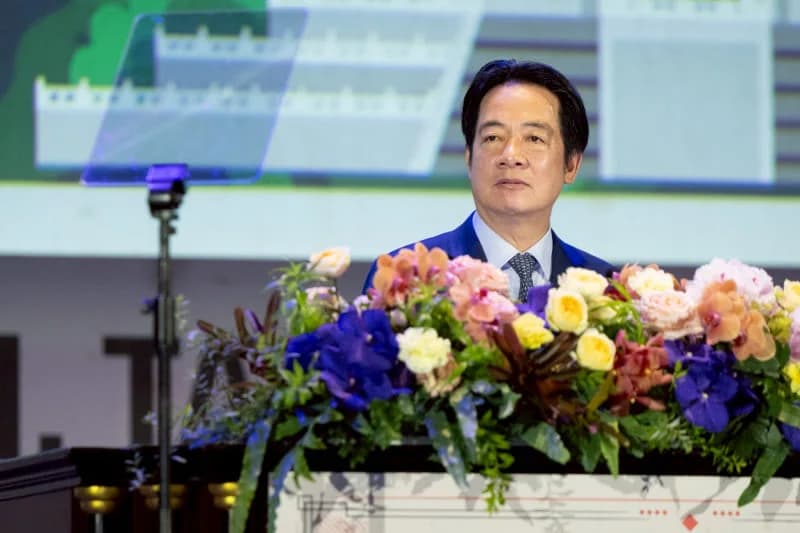
In a statement of resolve, Taiwan's President Lai Ching-te has reaffirmed his nation's commitment to maintaining sovereignty, while also emphasizing a desire to avoid provoking conflict. This declaration comes in response to a recent meeting between US President Trump and Chinese President Xi, where the topic of Taiwan's independence was reportedly discussed.
President Lai's remarks serve as a clear indication that Taiwan will not compromise on its sovereignty, even in the face of international pressure. At the same time, he has signaled a willingness to engage in diplomatic efforts to reduce tensions and promote peaceful coexistence with neighboring nations. This nuanced approach reflects the delicate balance Taiwan must maintain in its relationships with major world powers, particularly China and the United States.
The meeting between Trump and Xi has been closely watched, as it has significant implications for Taiwan's future. China has long considered Taiwan a renegade province and has threatened to use force to bring it back under its control. The US, on the other hand, has historically maintained a policy of strategic ambiguity towards Taiwan, providing it with military support while avoiding explicit recognition as a sovereign state.
By reiterating Taiwan's commitment to sovereignty, President Lai is sending a strong message to both China and the US. He is emphasizing that Taiwan will not be swayed by external pressures and will continue to chart its own course, even as it seeks to navigate the complex web of international relations. As the situation continues to unfold, the international community will be watching closely to see how China and the US respond to President Lai's statement, and whether it will have a lasting impact on the region's delicate balance of power. Ultimately, Taiwan's future remains uncertain, but one thing is clear: President Lai's administration is determined to protect its nation's sovereignty and interests.