Trump Warns of Massive Missile Response as US Pushes Iran on Hormuz Guarantees
t
By thecommonsvoice📖3 min read
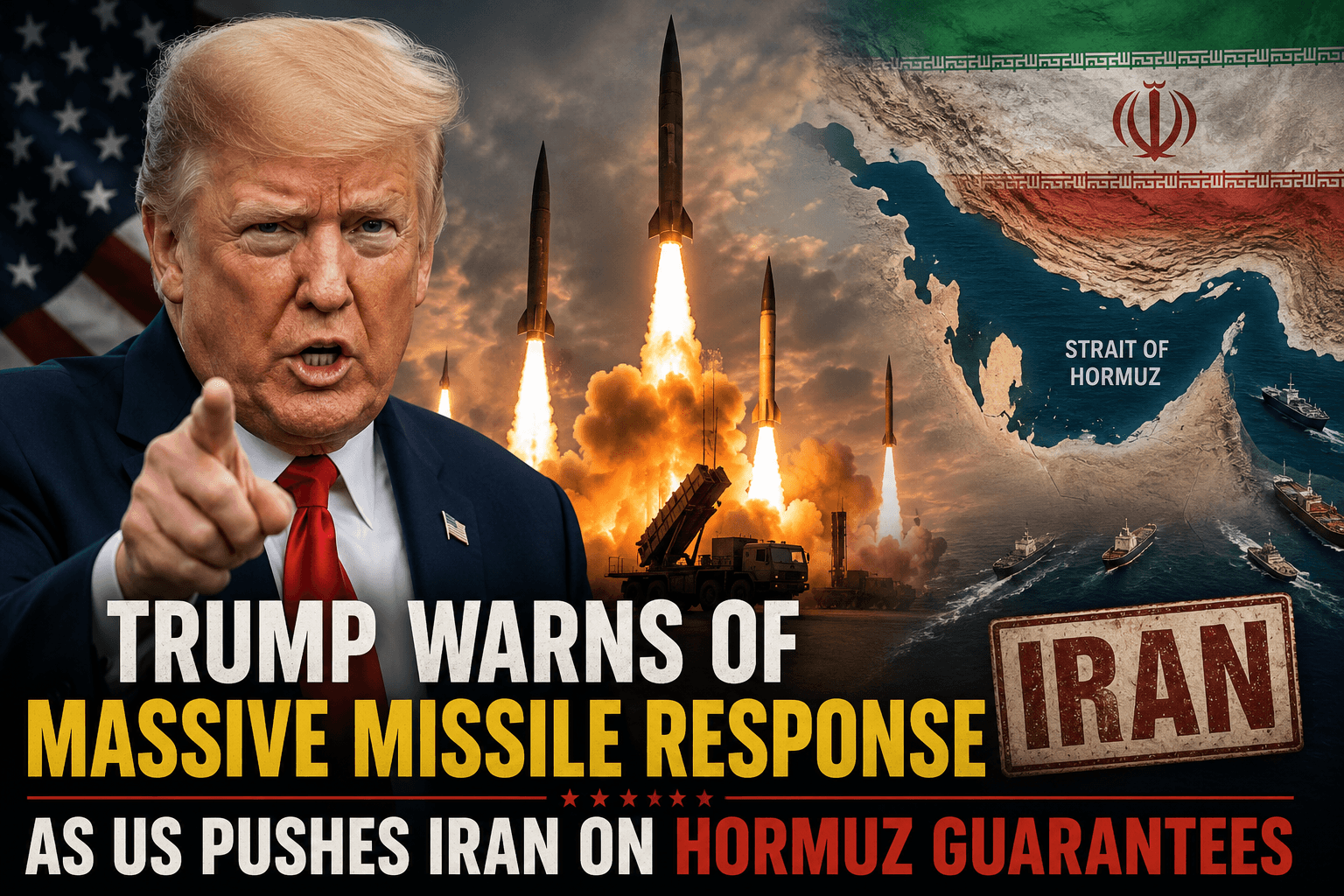
Tensions in the Middle East remain elevated this week as U.S. President Donald Trump issued a stark warning to Iran, stating that thousands of American missiles stand ready to strike if Tehran attempts to have him assassinated. The remarks come amid a fragile ceasefire between Washington and Iran that has repeatedly come under strain since fighting broke out earlier this summer.
Washington Pressures Iran Over Shipping Lane
Alongside the missile warning, U.S. officials are reportedly pressing Iran to publicly commit to keeping the Strait of Hormuz open to commercial traffic. The narrow waterway, one of the world's most critical routes for oil and gas shipments, has been a flashpoint throughout the recent standoff, with international shippers and energy markets watching closely for any signs that transit could be disrupted.
The push for a public guarantee reflects broader concerns that even a temporary closure or attack near the strait could send shockwaves through global energy prices, given the volume of crude oil that passes through the passage daily.
Ceasefire Under Strain
The current truce between the U.S. and Iran has been tested repeatedly in recent days, with exchanges of strikes threatening to unravel the agreement entirely. Regional observers note that the situation escalated further following the death of Iran's Supreme Leader, whose funeral drew large crowds of mourners in Mashhad earlier this month. His succession has added another layer of uncertainty to Tehran's posture in the standoff.
Wider Diplomatic Backdrop
The latest developments follow a NATO summit held in Turkey, where Trump met separately with Ukrainian President Volodymyr Zelenskyy. During that meeting, Trump indicated the United States would grant Ukraine a license to manufacture Patriot air defense systems domestically, a move aimed at bolstering Kyiv's ability to defend against ongoing Russian strikes without relying solely on U.S.-made supplies.
Taken together, the flurry of statements underscores how intertwined the Iran standoff has become with other major U.S. foreign policy priorities, from European security to global energy stability. Analysts caution that any further escalation in the Gulf could complicate Washington's ability to manage multiple crises simultaneously.
What Comes Next
For now, officials on both sides appear to be holding to the ceasefire, even as rhetoric sharpens. Whether Iran issues the public assurance Washington is seeking regarding the Strait of Hormuz may prove to be the next major signal of whether the truce can hold in the weeks ahead.
← Previous ArticleIndia-Indonesia Ink BrahMos, Astra Missile Deals; Agree to Jointly Develop Sabang Port Near Malacca StraitNext Article →US-Iran Ceasefire Collapses: Gulf States Under Fire as Both Sides Trade Strikes