Why Indian IT's Grip on the Nifty 50 Just Hit a 20-Year Low
A
By Admin📖4 min read
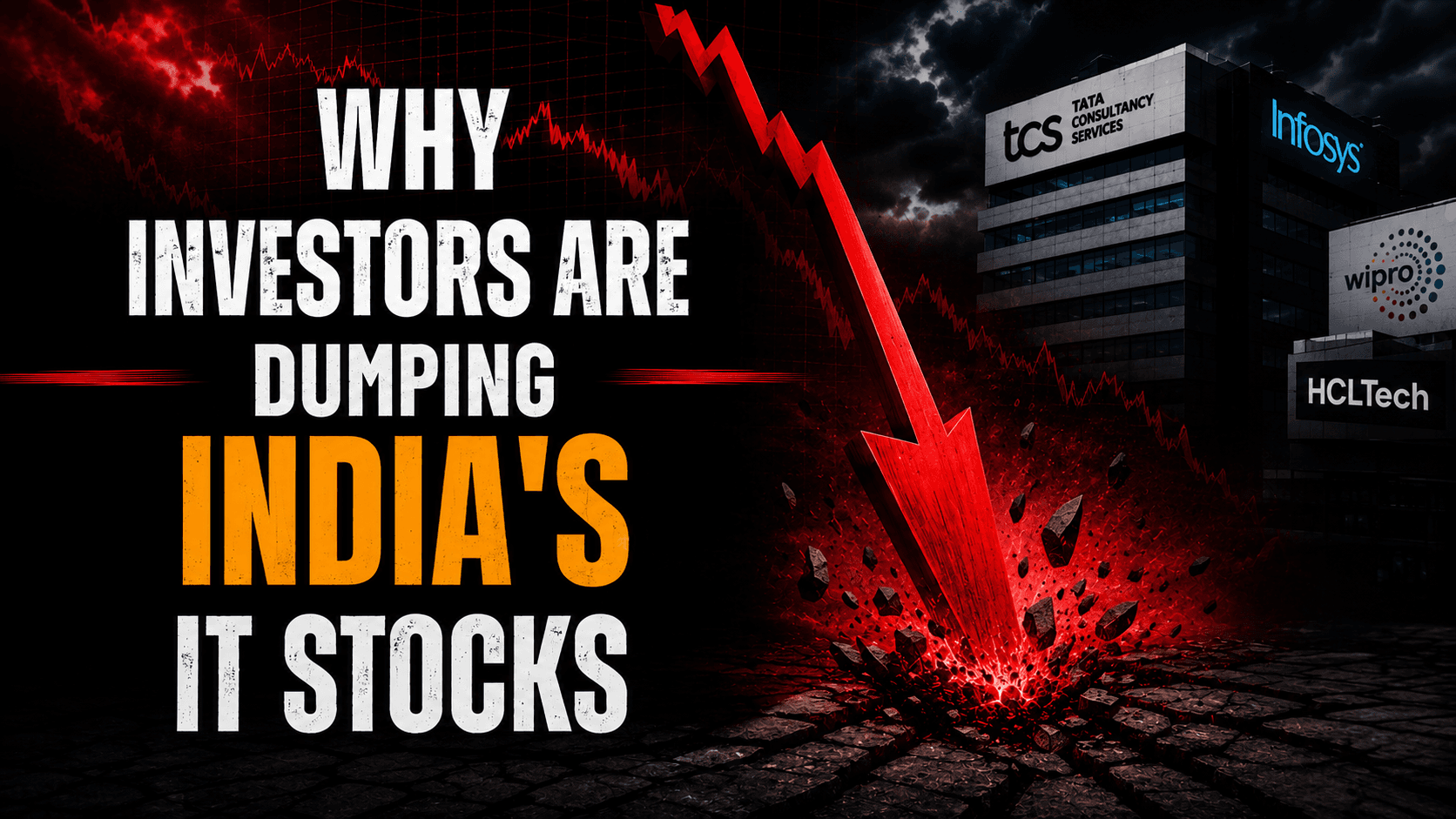
ndia's IT giants, once the undisputed heavyweights of the Nifty 50, have slipped to their lowest index influence in more than two decades — and the sell-off shows little sign of easing.
The numbers behind the fall
The combined weight of India's five largest IT companies in the Nifty 50 has fallen below 7.6%, the lowest level since at least 2002, according to Bloomberg data. At the sector's peak in the early 2000s, these companies accounted for more than a fifth of the benchmark index. The shift has been dramatic in ranking terms too: Infosys, once a top-three constituent, has slipped to 8th place by weight, while TCS — India's largest IT company by market cap — now sits at 13th. IT has fallen behind financials, consumer discretionary, energy, and industrials to become only the fifth-largest sector in the index.
The pain is starkest in the sector's own benchmark: the Nifty IT Index is down around 29% year-to-date, versus a much smaller decline in the broader Nifty 50, and has corrected roughly 42% from its all-time high hit in December 2024.
Why it's happening
AI disruption fears. The central worry gripping investors is that generative AI is starting to erode the traditional outsourcing model that powered Indian IT's rise — automating coding, testing, and support work that once required large offshore engineering teams. Analysts say the market isn't necessarily pricing in a collapse in earnings, but rather slower revenue growth, weaker pricing power, and compressed margins over the next 12–24 months as clients consolidate tech spending and push for AI-driven cost cuts.
A self-reinforcing passive-selling cycle. As IT stock prices fall, their weight in the Nifty 50 shrinks — and because a large and growing pool of money now tracks the index passively (Nifty 50-linked funds manage roughly ₹5 trillion), that shrinking weight means less automatic buying from index funds and ETFs. Less passive demand adds further downward pressure on prices, which shrinks index weight even more, extending the cycle.
A broader re-rating of the business model. Beyond AI, investors are simply demanding lower valuation multiples for an industry facing structurally slower growth, rather than the premium multiples IT stocks have historically commanded.
Where the stocks stand now
Infosys shares have been trading close to six-year lows, changing hands near the ₹1,000 mark (52-week range: roughly ₹996–₹1,728), with a price-to-earnings ratio around 14 — among its lowest in two decades and a steep discount to peer valuations.
TCS has fared similarly, trading near its 52-week low around ₹1,990–2,050 — a more than 40% decline from its 52-week high — and, on monthly charts, has broken below its 200-month moving average for the first time since the 2020 pandemic crash, a level technical analysts consider a major long-term trend signal.
The weakness hasn't been confined to the top two: mid-cap IT names have also been swept into the downturn, in what market commentators have described as a punishing stretch for sector investors dating back to August 2024.
What would change the narrative
Brokerages remain cautious in the near term, with several flagging that a meaningful recovery could take 18 months to two years. The consensus view is that sentiment won't turn until Indian IT majors can show, in hard numbers, that their heavy investments in AI, cloud, and digital transformation are offsetting disruption to the legacy outsourcing business — converting deal wins into actual revenue and margin improvement rather than just deal-pipeline headlines. Q1 FY27 earnings season, with TCS reporting July 9, will be an early test of whether that turnaround story is starting to show up in the numbers.
#nifty 50#indian it sector#infosys#tcs#niftyitindex#generativeai#stockmarket#itstocks#indianeconomy#passiveinvesting
← Previous ArticlePakistan's Indus Waters Push: Inside Islamabad's Diplomatic Campaign Amid Its Own Water CrisisNext Article →Inside the Doha Talks: Where the Fragile US-Iran Ceasefire Stands After Khamenei's Killing