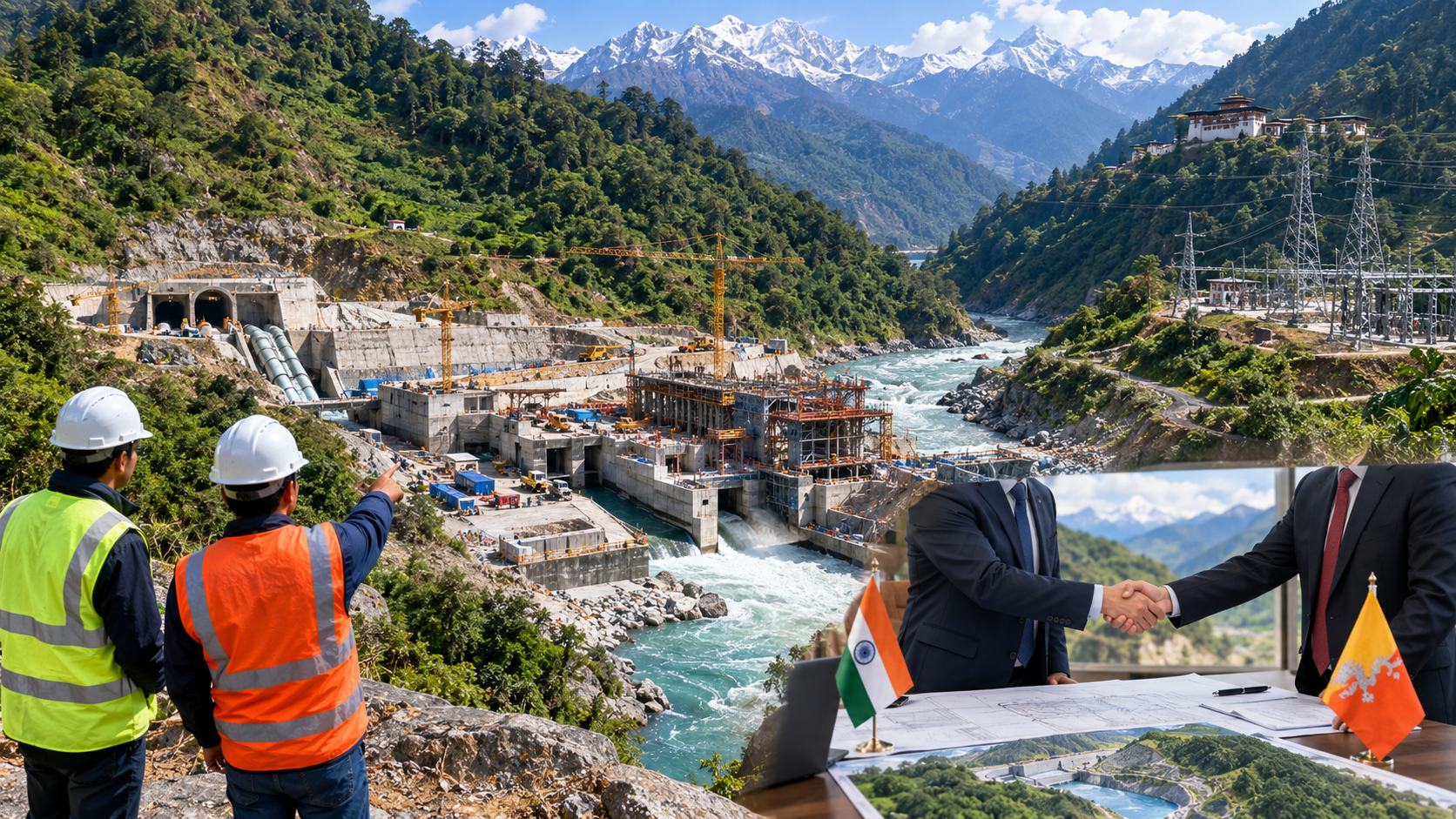
Adani Power and Druk Green Power have signed a memorandum of understanding to develop a 770‑megawatt run‑of‑river hydropower plant in the western region of Bhutan. The venture, announced in early October 2026, marks the second large‑scale collaboration between the Indian conglomerate and Bhutan’s state‑backed renewable‑energy arm after the 570 MW Wangchhu project sealed in September 2025. Both parties portray the deal as a catalyst for deepening cross‑border energy ties and diversifying Bhutan’s export‑oriented power portfolio, while simultaneously feeding India’s ambition to secure low‑carbon electricity for its fast‑growing grid.
Key Context & Background
Bhutan’s hydropower sector has long been a cornerstone of its development strategy, accounting for over 30 % of national GDP and the majority of its export earnings to India. The country’s steep topography and abundant river systems enable high‑head, low‑impact run‑of‑river schemes that can be built with relatively modest environmental footprints. However, a combination of aging infrastructure, limited domestic demand, and a need for foreign capital has prompted the monarchy to seek strategic partnerships with experienced investors. The 2025 Wangchhu agreement, which brought together Adani Power and Druk Green Power for a 570 MW project, demonstrated the viability of the model: private‑sector financing, technology transfer, and long‑term power purchase agreements (PPAs) with India’s state utilities. The new 770 MW venture builds on that template, reflecting a broader regional shift toward securing renewable baseload capacity amid tightening emissions targets and volatile fossil‑fuel markets.
Project Blueprint & Financing
The proposed plant will harness the flow of the Mo Chhu river, employing a series of concrete‑filled diversion tunnels and underground penstocks to generate electricity without the need for large reservoirs. Preliminary designs estimate an annual generation of roughly 4,200 GWh, sufficient to meet a substantial portion of India’s northeastern states’ demand. Financing is expected to be a blend of senior debt from international lenders—such as the Asian Development Bank and the Export‑Import Bank of India—and equity contributions from Adani Power, which will hold a 60 % stake, while Druk Green Power retains 40 %. The PPA, slated for a 25‑year term, will lock in a tariff that is competitive with other regional renewables yet reflects Bhutan’s higher construction costs. Environmental clearances have been fast‑tracked under Bhutan’s “gross‑national‑happiness” framework, which mandates rigorous impact assessments and community benefit schemes, including guaranteed electricity access for nearby villages.
Broader Implications & Future Impact
The partnership signals a deepening of India‑Bhutan energy interdependence, a trend that could reshape the South Asian power market. For India, the additional 770 MW of clean capacity helps offset the nation’s reliance on coal and gas, supporting its commitment to achieve 500 GW of renewable generation by 2030. For Bhutan, the project diversifies revenue streams, reduces the country’s fiscal exposure to seasonal fluctuations in water flow, and provides a platform for technology upgrades that could be replicated in smaller, community‑scale schemes. Moreover, the deal underscores the growing appetite of Indian conglomerates to invest in frontier renewable markets, a pattern mirrored by recent agreements in Nepal and Myanmar. If the project proceeds on schedule, it may also catalyze ancillary infrastructure—new transmission lines, road upgrades, and skilled‑labor training programs—thereby generating multiplier effects beyond the electricity sector. Critics, however, caution that large‑scale hydropower can still pose ecological risks, particularly to downstream ecosystems and indigenous livelihoods, urging that the promised community benefit mechanisms be rigorously monitored.