At least 14 confirmed dead
A powerful earthquake struck Japan's Kumamoto Prefecture, on the southwestern island of Kyushu, at 4:27 pm local time on Tuesday, July 28. Prime Minister Sanae Takaichi confirmed Wednesday morning that at least 14 people have died, with that toll including some deaths still being investigated for their direct connection to the quake and its aftershocks. The full number of missing and injured had not been finalised as of Wednesday, and is likely to change as search and rescue operations continue.
A magnitude that depends on who's measuring
Different agencies have reported different magnitudes for the quake, which is normal in the hours after a major seismic event as estimates are refined: the US Geological Survey measured it at Mw 6.8, while Japan's own Meteorological Agency (JMA) put it at Mj 7.1, registering a maximum intensity of shindo 7 — the highest level on Japan's seismic intensity scale, comparable to "violent" shaking capable of collapsing vulnerable structures outright. The quake was shallow, at a depth of around 10 kilometres, and was followed by at least six aftershocks recorded by the USGS. No tsunami warning or threat was issued.
The mall collapse
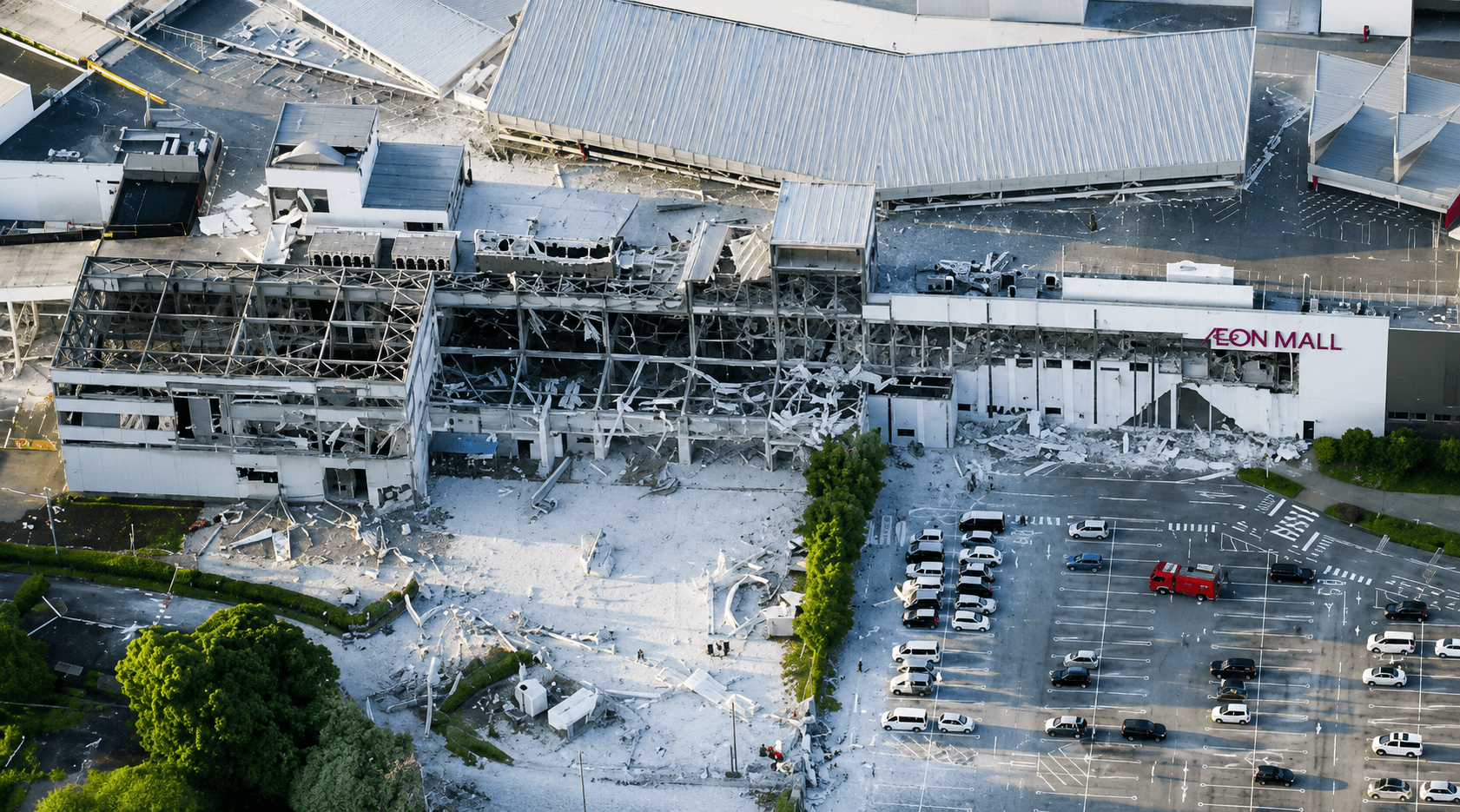
The most serious single incident was the collapse of the second floor of the Aeon Mall shopping centre in Kashima Town, apparently triggered by an explosion — widely reported as likely gas-related — that sent white smoke rising from the building. Kyodo News initially reported that 20 to 30 employees were unaccounted for, with several people rescued and taken to hospital; by Wednesday morning, CNN reported the number still missing at the site had narrowed to three, reflecting rescue progress overnight, while several people had died there. Given how quickly this figure has moved — from dozens missing to a handful within roughly a day — any specific missing-person count should be sourced to a same-day report rather than cited as a fixed number.
Widespread infrastructure disruption
The entire Kyushu Shinkansen bullet train line was suspended following the quake, with the West Kyushu Shinkansen line running with delays and numerous local train lines halted; specific reports of a train derailment could not be independently confirmed and should be verified before publishing. Expressways in Kumamoto Prefecture closed, and bridges in the region buckled. Kumamoto Castle — a historic landmark already damaged in the major 2016 Kumamoto earthquakes — sustained fresh damage, a particularly resonant detail for a region still recovering from that earlier disaster. Widespread power outages were reported across the affected area, though a specific confirmed figure of 50,000 affected homes could not be verified in the sources reviewed for this article. Similarly, a report of a damaged paper factory as a distinct rescue site could not be independently confirmed and should be checked against local Kumamoto or NHK reporting before publishing.
The government's response
Prime Minister Takaichi has mobilised thousands of military personnel for search and rescue operations, saying "every second counts" for those still trapped. She had earlier urged residents in quake-hit areas to "remain vigilant for the possibility of another earthquake of similar magnitude," warning that the full extent of injuries was still being confirmed. A claim of evacuation orders covering 300,000 residents could not be independently verified in the reporting reviewed for this article — if citing that figure, confirm it against an official Kumamoto Prefecture or Japanese government source, since evacuation advisory figures during active disaster response tend to be revised frequently and vary significantly by report.
What to watch next
With rescue operations continuing, aftershocks ongoing, and officials warning residents to stay alert for further strong tremors, the coming days are likely to bring updates to nearly every figure in this story — the death toll, the number still missing at the Aeon Mall site, and the scale of infrastructure damage. Given the region's history with the devastating 2016 Kumamoto earthquakes, officials are treating aftershock risk and secondary building collapses as a serious ongoing concern rather than a diminishing one.