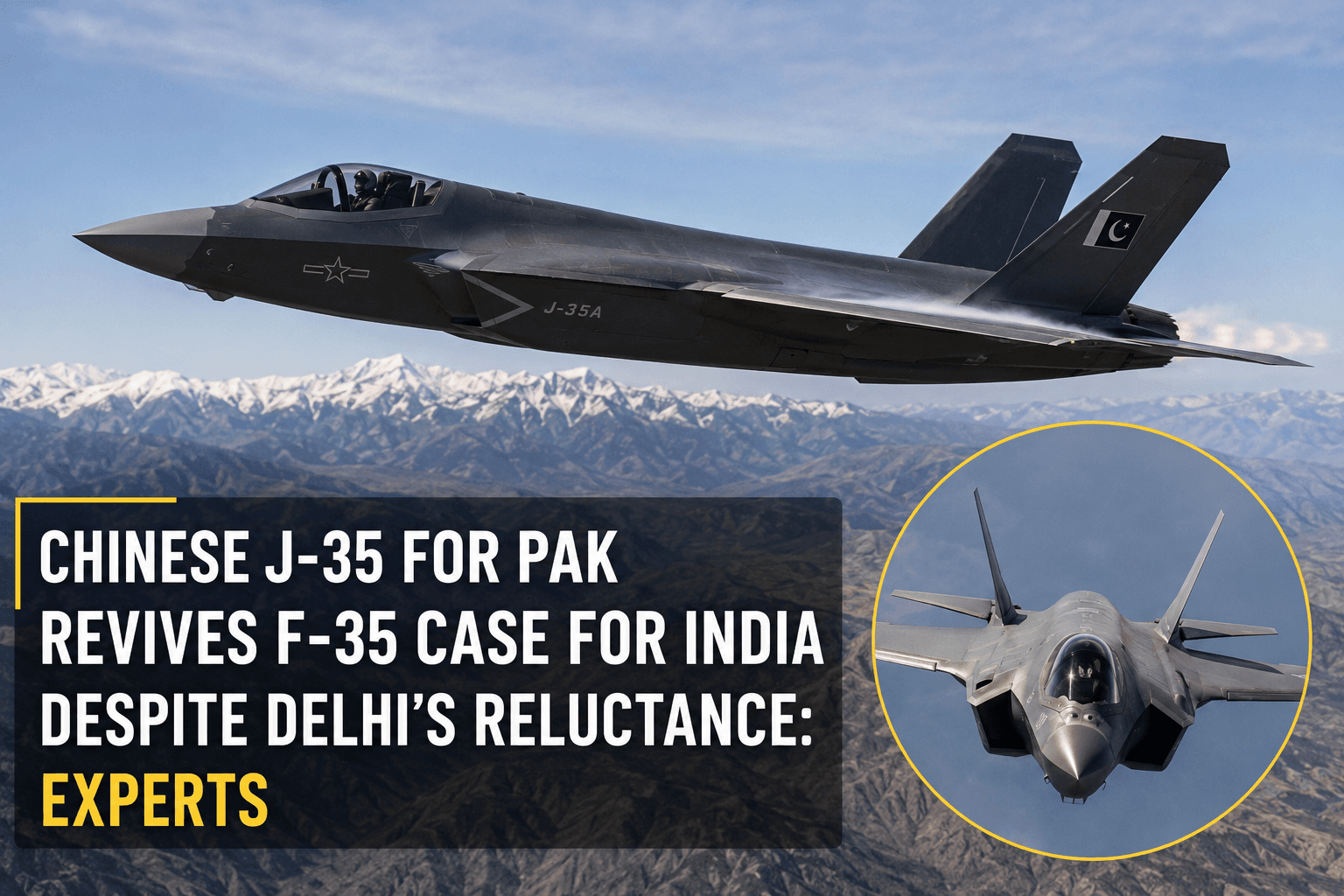
The potential acquisition of Chinese J-35 fighters by Pakistan has rekindled discussions about the possibility of the United States offering F-35 jets to India, despite India's initial reluctance towards directly acquiring the aircraft. According to US experts, the introduction of J-35 fighters in the region could significantly alter the balance of power, making it imperative for India to reassess its defense strategy. India has traditionally preferred technology transfer and domestic manufacturing over direct acquisition of foreign-made jets, but the evolving security dynamics in South Asia may force a reevaluation of this stance. The development also underscores the expanding military reach of China in the region, with Pakistan serving as a key partner in its strategic ambitions.
Key Context & Background
The backdrop to this development is the complex web of geopolitical and military alliances in South Asia, where China, the United States, India, and Pakistan are key players. Historically, India has been cautious about directly acquiring US-made military equipment, opting instead for partnerships that allow for technology transfer and domestic production. This approach is reflected in India's efforts to develop its indigenous Advanced Medium Combat Aircraft (AMCA) program, which, however, is still in its development phase and years away from entering service. Meanwhile, Pakistan's potential induction of the J-35, a fifth-generation fighter jet developed by China, would not only enhance its airpower capabilities but also mark a significant milestone in China's efforts to export its military technology and hardware. The J-35, with its advanced stealth capabilities, could potentially challenge the air superiority currently enjoyed by the Indian Air Force in the region.
Broader Implications & Future Impact
The broader implications of Pakistan acquiring the J-35 and the subsequent possibility of India receiving the F-35 are far-reaching, with significant consequences for regional security and the global arms trade. For India, integrating the F-35 into its military arsenal would pose considerable challenges, particularly given its existing inventory of Russian-made equipment. The F-35's advanced systems and the need for secure communication networks would require substantial modifications to ensure compatibility and mitigate potential security risks. Furthermore, the introduction of these advanced fighter jets in the region could spark an arms race, with both India and Pakistan seeking to outdo each other in terms of military capabilities. This scenario would not only destabilize the delicate balance of power in South Asia but also have profound implications for the global non-proliferation regime and the future of defense partnerships between major powers and regional actors.
Regional Security Dynamics
The evolving security dynamics in South Asia, driven in part by China's expanding military presence and influence, are likely to play a crucial role in shaping the future of regional defense strategies. For India, the challenge will be to navigate its relationships with both the United States and Russia, balancing its desire for advanced military technology with the need to maintain strategic autonomy. The potential offer of the F-35 to India must be seen in this context, as part of a broader effort by the United States to strengthen its partnership with India and counterbalance China's growing influence in the region. As these dynamics continue to unfold, the region is likely to witness significant shifts in military alliances and defense postures, with profound implications for regional and global security.