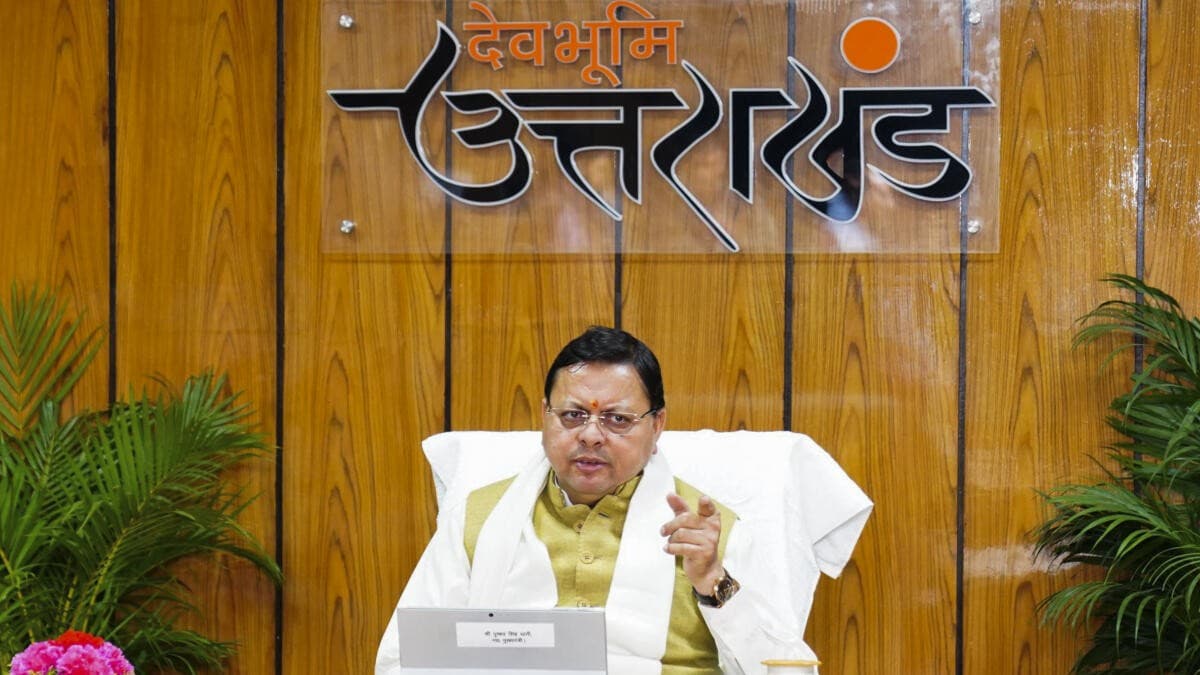
Dhami's defense: strict law, tens of thousands of jobs delivered
Chief Minister Pushkar Singh Dhami has pushed back on Congress leader Rahul Gandhi's allegations that Uttarakhand has become an "epicentre" of examination paper leaks, pointing to the state's anti-cheating law and its record of transparent recruitment as evidence the government has taken the issue seriously. Dhami's response leans on a case he has made consistently over the past two years: that his government's anti-cheating law, in force since 2022, has enabled far more government jobs to be filled through clean, verified processes than in previous decades combined.
What triggered the exchange
The rebuttal follows a pointed attack from Rahul Gandhi, the Leader of the Opposition in the Lok Sabha, who visited Dehradun on July 17 as part of his nationwide "Chhatron Ki Goonj" (Students' Echo) campaign. In posts on X ahead of the visit, Gandhi said he was coming to Uttarakhand specifically "because 'Devbhoomi' has been turned into the epicentre of paper leaks," alleging that a "system" had taken root around Uttarakhand Subordinate Services Selection Commission (UKSSSC) exams in which "positions like Patwari or Lekhpal are secured not through merit, but at rates fixed by criminals." Gandhi argued that despite the anti-cheating law, "the law remained merely on paper, while exam papers continued to be sold in the market," and described the practice as "theft" of young people's "rights, livelihood and future."
Gandhi's comments referenced the cancellation of the UKSSSC's Graduate-Level Recruitment Examination — held on September 21, 2025 across all districts and covering 416 vacancies for posts including Patwari and Lekhpal — which was declared void in October 2025 following a paper leak controversy. A single-member inquiry commission led by retired Justice UC Dhyani, set up by the state government to investigate the irregularities, has since submitted an interim report to Dhami.
The numbers Dhami points to
Dhami's government has repeatedly cited a rising count of jobs filled since the anti-cheating law took effect as its central evidence of reform: 16,000 in mid-2024, more than 25,000 by September 2025, over 26,000 shortly after, and more than 30,000 by March 2026 — a trajectory consistent with a further increase to the roughly 34,000 figure cited in recent remarks. Dhami has contrasted this with what he describes as only about 16,000 jobs filled across the state's first 21 years of existence prior to the law. He has also pointed to more than 100 arrests of individuals linked to "cheating mafias" under the law, and the introduction of a published recruitment examination calendar, as evidence of a more transparent system than existed previously.
A recurring political flashpoint
This is not the first time Dhami and Gandhi have clashed over recruitment integrity in the state. When the September 2025 UKSSSC leak first surfaced, Dhami accused a "coaching mafia" and "cheating mafia" of waging what he called a "cheating jihad" against the state's youth, while noting that of nearly 80,000 candidates who sat that exam, only one leak incident had been reported. BJP state president Mahendra Bhatt has separately sought to redirect criticism toward the Congress's own record, alleging that recruitment scandals in departments including Sub-Inspector, Patwari, BDO, and technical university hiring originated during earlier Congress-led state governments.
Where this leaves the debate
The dispute reflects two competing framings of the same underlying facts: Congress points to the persistence of leak incidents — most recently the cancelled September 2025 exam — as proof the anti-cheating law hasn't solved the problem it was designed to fix, while the state government points to the volume of clean recruitment achieved and the number of offenders jailed as evidence the law is working as intended, even if it hasn't eliminated the problem entirely. With the Dhyani commission's findings on the 2025 exam still pending full public release, that specific episode is likely to remain a point of contention regardless of how the broader jobs-filled figures are framed by either side.