A standoff over where to talk
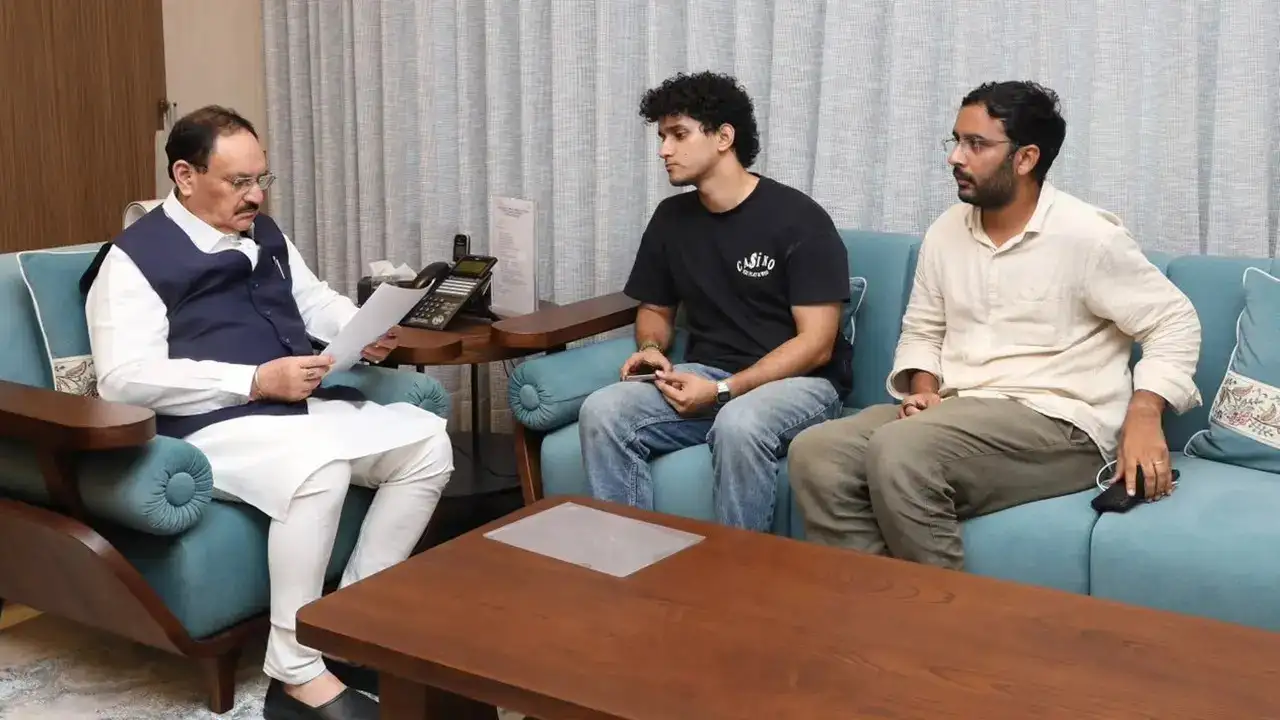
As the Cockroach Janta Party's (CJP) sit-in at Jantar Mantar stretches well past a month, the movement has rejected a government proposal to hold talks at Union Health Minister JP Nadda's residence. In a post on X, CJP spokesperson Saurav Das said, "The talks will happen at Jantar Mantar or can also be held at some neutral place nearby" — declining to name a specific alternate venue in the statement itself. This isn't the group's first friction over how talks have gone: an earlier meeting between two CJP representatives, Saurav Das and Ashutosh Ranka, and Nadda at his residence — which reportedly ran about 10 minutes after protesters waited roughly four hours — was later dismissed by CJP as "useless," with the group saying the time had been "wasted."
Wangchuk softens his terms — but not on the point that matters most to him
Sonam Wangchuk, whose hunger strike has now run for more than three weeks, addressed a formal letter to Nadda and Minister of State Dr Jitendra Singh laying out the conditions under which he would end his fast. The single condition he described as unequivocal: a clear government assurance that no protesting students from the July 20 "Chalo Sansad" march would face retaliatory legal action. Wangchuk wrote that despite what he described as disproportionate force used by Delhi Police that day, the protest itself had remained peaceful throughout. Beyond that central demand, his letter also asked the Centre to provide adequate compensation for the families of NEET aspirants who died by suicide following the paper leak controversy, to formally accept responsibility for the episode, to hold a discussion on the issue in Parliament, and — notably softened from his earlier position — to merely "consider" Union Education Minister Dharmendra Pradhan's resignation rather than demanding it outright.
Wangchuk thanked Nadda and Singh for visiting him in hospital and said he wanted to return to "my students and my work," but added he could not do so "at the expense of the young people who began" the movement. He noted that following the ministers' visit, around 65 members of Parliament from various political parties had written to him, with some visiting him directly.
CJP's demands, expanding rather than narrowing
Even as Wangchuk's personal conditions have softened in tone, the CJP's collective demands to the government have grown rather than shrunk. The movement's original three asks — the release of Wangchuk, Dharmendra Pradhan's resignation, and ₹1 crore compensation for the families of deceased NEET aspirants — have now been joined by a fourth: action against police officials involved in what protesters describe as atrocities against demonstrators during the July 20 march. The CJP has framed the fight for accountability as continuing regardless of whether Wangchuk's individual hunger strike ends.
A note on the timeline
Exact day-counts for both the broader Jantar Mantar sit-in (which began June 6) and Wangchuk's personal hunger strike have varied slightly across reports as the story has developed in real time, with different outlets citing his fast at 24 or 25 days as of the most recent statements reviewed. If citing a specific day-count publicly, it's worth double-checking against the CJP's own same-day statements, since minor discrepancies of a day or two are common in fast-moving, multi-source coverage of an ongoing protest.
What happens next
With the venue for further talks still unresolved and Wangchuk's core demand — protection from legal consequences for fellow protesters — still unanswered by the government as of this writing, the movement remains in a holding pattern: neither fully at an impasse nor close to resolution. Whether the government agrees to meet on the CJP's terms, and whether it offers the specific legal assurance Wangchuk has asked for, will likely determine whether his hunger strike ends in the coming days or continues alongside an agitation that shows no sign of narrowing its demands.