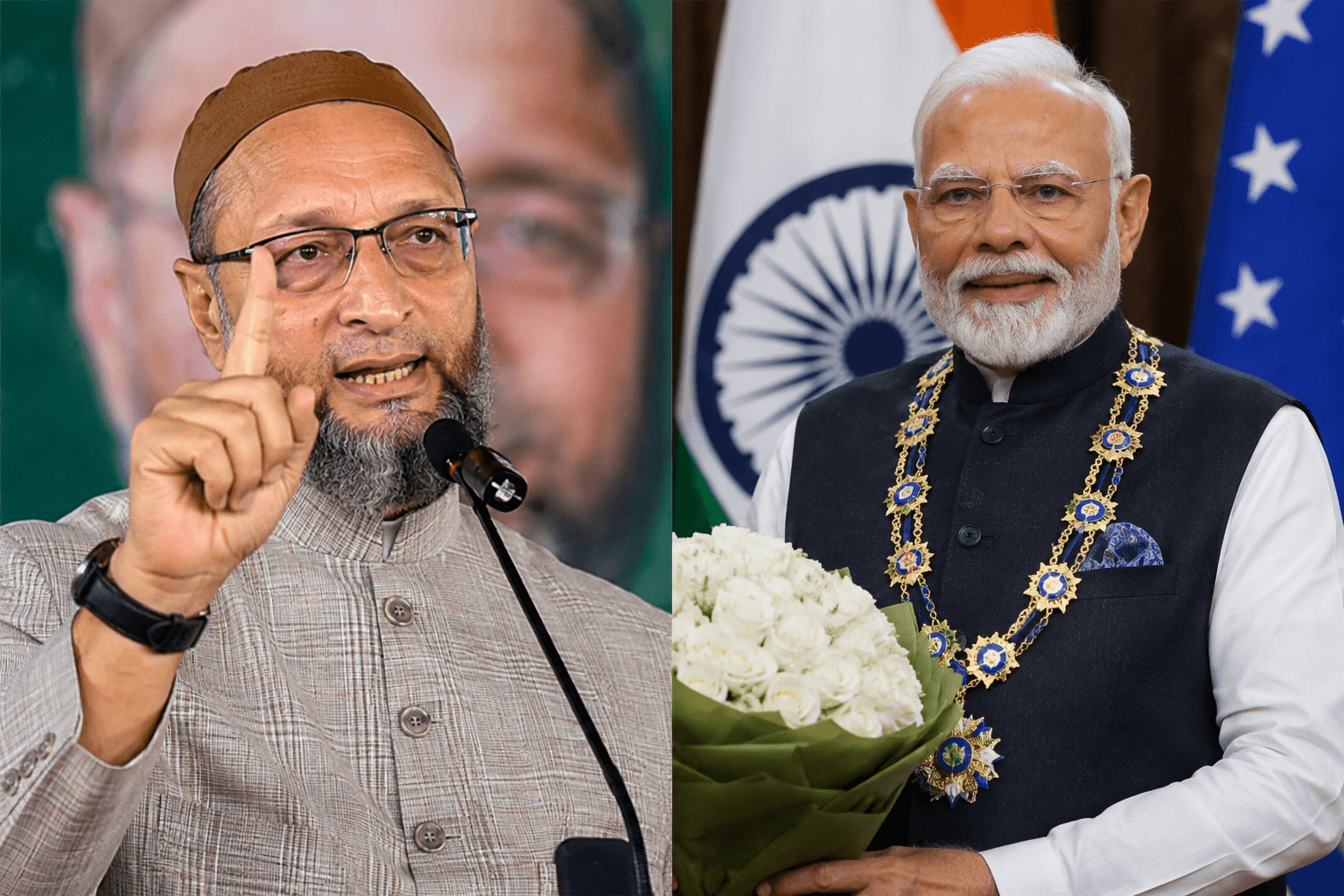
Senior Congress leader Asaduddin Owaisi sparked a fresh political flashpoint on Tuesday by mocking Prime Minister Narendra Modi’s receipt of Uzbekistan’s highest civilian award. In a televised interview Owaisi quipped that “the country Babur came from” was now being honoured by a government that, according to him, “praises a conqueror who invaded our sub‑continent.” The remark, aimed at the Order of Friendship presented to Modi during his Central Asian tour, quickly turned into a talking point on both sides of the Indo‑Pak border, raising questions about the domestic resonance of India’s growing outreach to its historic neighbours.
Key Context & Background
Modi’s visit to Tashkent in late May marked the first high‑profile Indian delegation to Uzbekistan since the two countries signed a comprehensive strategic partnership in 2022. The award, conferred by President Shavkat Mirziyoyev, was framed as recognition of “India’s support for regional stability and cultural ties.” The gesture fits into New Delhi’s broader “Act‑East‑Plus” policy, which seeks to deepen economic, security, and people‑to‑people links across Central Asia, a region traditionally within Russia’s sphere of influence. At the same time, the Indian government has been keen to showcase its “civilisational diplomacy,” invoking shared heritage—such as the Persian‑language literary legacy of the Mughal era—to foster goodwill. Owaisi’s barb, therefore, lands at the intersection of historical memory and contemporary geopolitics.
Political Repercussions in India
Owaisi’s criticism reverberated through the corridors of power, prompting a swift rebuttal from the BJP’s national spokesperson, who dismissed the comment as “political theatrics aimed at communal polarization.” The episode underscores the delicate balancing act the ruling party faces: while it seeks to project India as a responsible global actor, it must also navigate a domestic electorate that remains sensitive to symbols of historical conquest. For Owaisi, whose All India Majlis‑e‑Ittehadul Muslimeen (AIMIM) base is concentrated in Hyderabad and other Muslim‑majority pockets, the jab serves a dual purpose—reinforcing his image as a vocal defender of Muslim historiography and challenging the BJP’s narrative of a monolithic civilizational continuity.
Regional Diplomacy and the Central Asian Pivot
Beyond domestic theatrics, the incident highlights the strategic calculus behind India’s Central Asian outreach. Uzbekistan, rich in hydrocarbon resources and a key node on the Belt and Road Initiative, offers New Delhi a counterweight to China’s growing footprint in the region. By accepting the Order of Friendship, Modi signalled a willingness to deepen defence cooperation, including joint exercises and intelligence sharing on terrorism—a concern both nations share given the proximity of Afghanistan. However, the historical undertones of Owaisi’s remark risk complicating a relationship that relies heavily on soft‑power gestures, such as cultural festivals and academic exchanges, which could be vulnerable to nationalist backlash if perceived as glossing over a painful past.
Broader Implications & Future Impact
The episode may set a precedent for how India’s foreign honors are politicised domestically. If opposition figures continue to weaponise historical narratives, New Delhi could find its diplomatic overtures constrained by internal debates over cultural symbolism. Moreover, the incident could embolden other Central Asian states to leverage historical linkages—positive or negative—to extract political concessions, a tactic Moscow has employed for decades. For India, the challenge will be to sustain its strategic momentum in Central Asia while managing the domestic sensitivities that Owaisi’s comment has amplified. In the medium term, the episode is likely to spur a more nuanced public discourse on how historical memory shapes contemporary foreign policy, forcing policymakers to weigh the diplomatic dividends of awards against the potential for internal dissent.