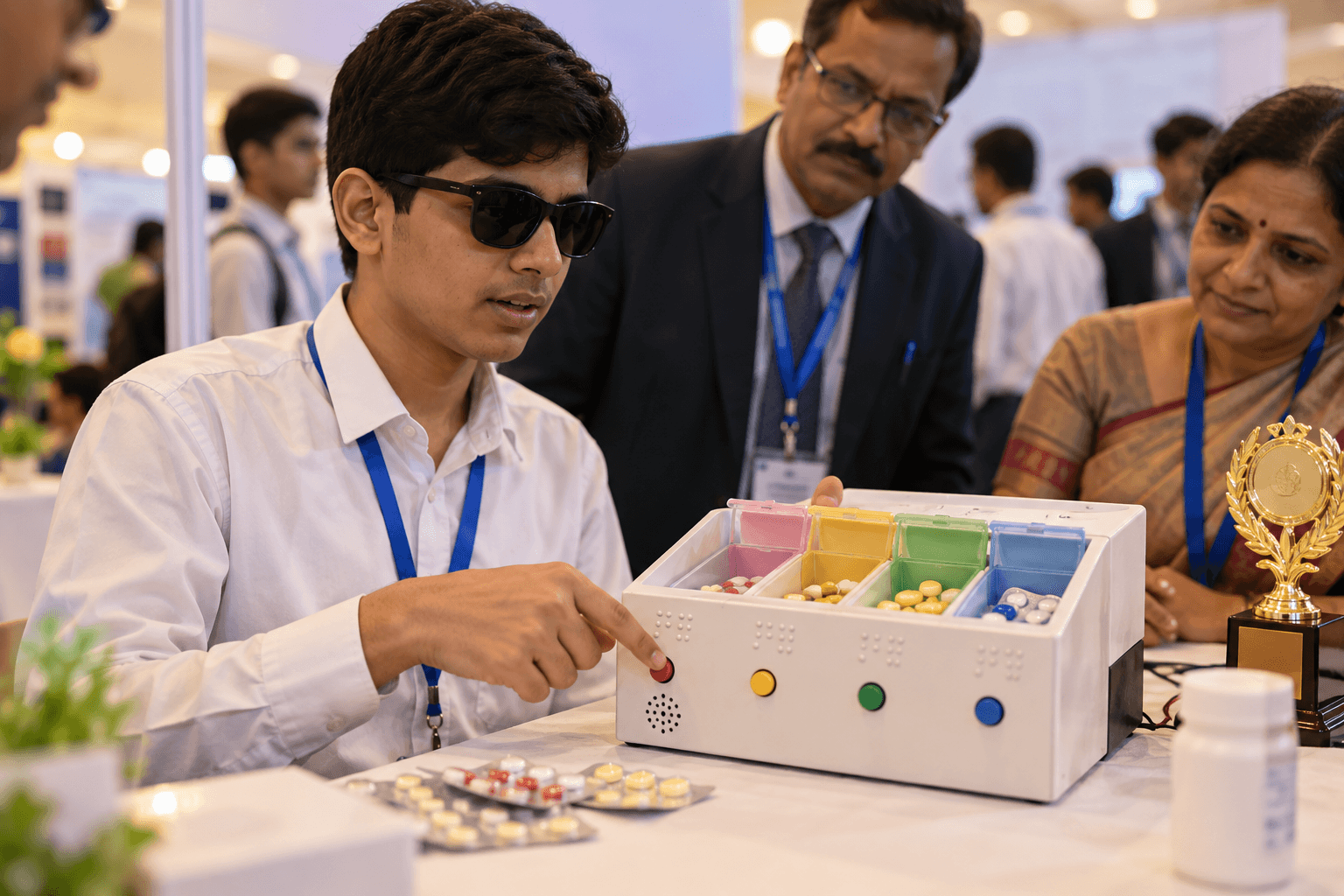
A 17‑year‑old student from Hyderabad, Rehan Raza, turned a simple, everyday problem into a nationally recognised invention: a talking medicine box that announces a drug’s name, dosage and schedule in clear, audible cues. The prototype, born out of a personal struggle to manage multiple prescriptions without visual assistance, clinched first place at the National Innovation Competition for the Differently‑Abled, drawing attention from health‑tech entrepreneurs and policymakers alike. Raza’s achievement not only showcases youthful ingenuity but also spotlights a glaring gap in India’s assistive‑technology ecosystem, where millions of visually impaired citizens still rely on rudimentary, error‑prone methods to handle medication.
Key Context & Background
India is home to an estimated 13 million people with visual impairment, a figure that has risen steadily due to aging demographics, rising chronic disease prevalence, and limited access to preventive eye care. Yet the assistive‑technology market remains fragmented, with most solutions imported at high cost or confined to niche NGOs. The National Programme for Control of Blindness has prioritized awareness and cataract surgery, but medication management has lingered on the periphery of policy agendas. Simultaneously, the country’s pharmaceutical sector has exploded, with over 20 000 generic manufacturers supplying a bewildering array of tablets, often indistinguishable by shape or color. This confluence of a large, underserved user base and a complex drug landscape created a fertile ground for grassroots innovation, prompting students like Raza to confront the problem head‑on.
Innovation Journey
Raza’s device integrates a low‑cost microcontroller, a Bluetooth‑enabled QR code scanner, and a text‑to‑speech engine housed within a compact, resealable container. Users affix a QR label to each medication blister pack; when the box is opened, the scanner reads the code, triggers the speech module, and announces the drug’s identity, prescribed dose and timing. The solution leverages open‑source software and locally sourced components, keeping the bill of materials under ₹1 500 (≈ $20). Throughout development, Raza consulted with ophthalmologists, pharmacists and visually impaired volunteers to refine the user interface, ensuring that audio prompts are concise and that the device’s tactile cues align with established accessibility standards. The project’s success at the national competition was amplified by a mentorship program that paired him with a startup incubator, opening pathways for pilot testing in two Hyderabad hospitals.
Broader Implications & Future Impact
Raza’s talking medicine box underscores a shift toward user‑centred design in Indian health‑tech, where solutions are emerging from the very communities they serve rather than being imposed from abroad. If scaled, the technology could reduce medication errors—a leading cause of hospitalization among the visually impaired—and lower the burden on caregivers, freeing up resources in an already overstretched public health system. Moreover, the device’s modular architecture invites integration with emerging digital health platforms, such as electronic prescription services and tele‑medicine apps, paving the way for a seamless, voice‑driven medication ecosystem. On a policy level, the invention may catalyse greater governmental support for low‑cost assistive devices, prompting revisions to the Assistive Devices Grant Scheme and encouraging public‑private partnerships that prioritize affordability and local manufacturing. As India’s demographic dividend wanes and the elderly population swells, innovations like Raza’s could become cornerstones of a more inclusive, technology‑enabled care model, redefining how accessibility is embedded into everyday health practices.