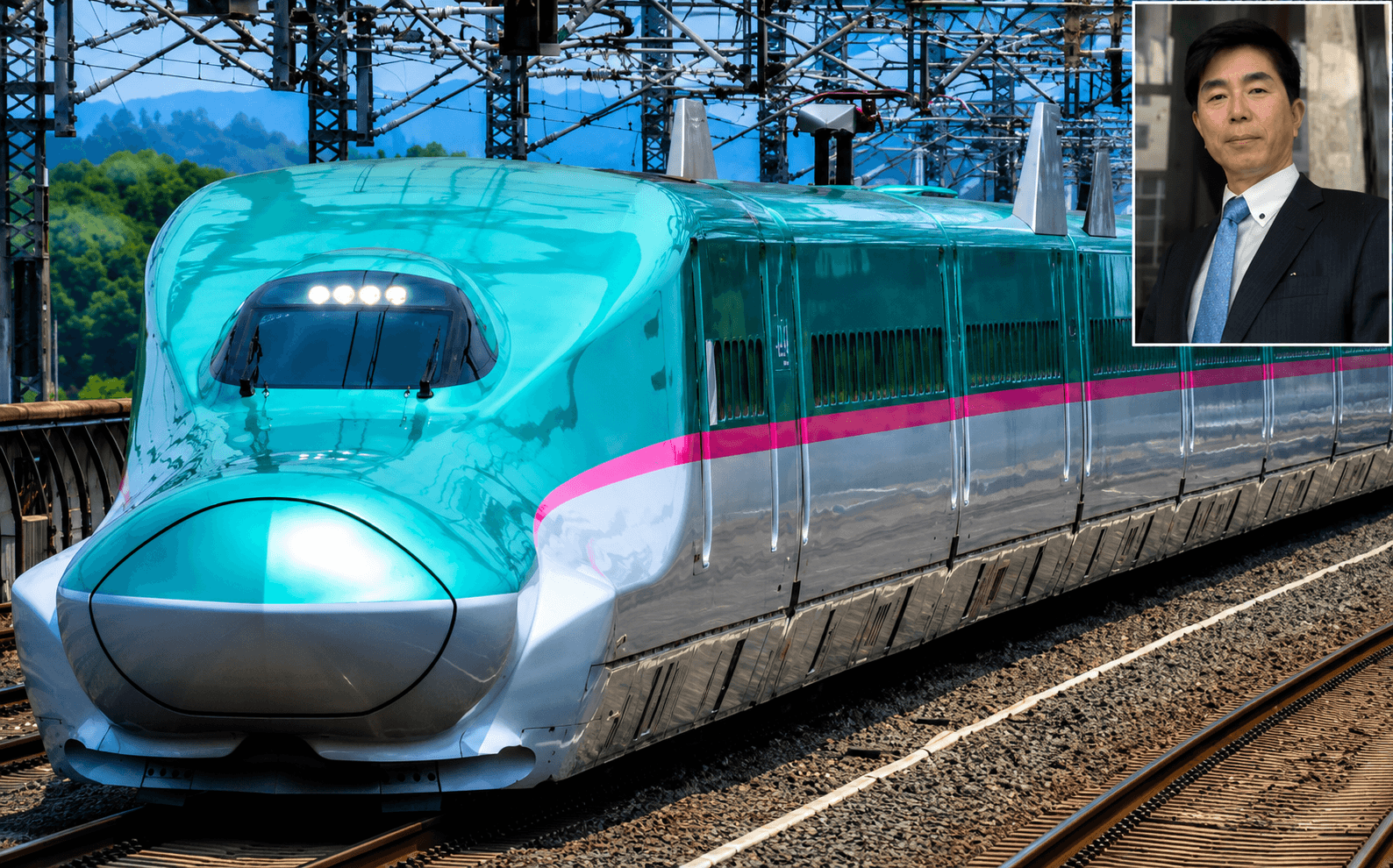
A viral tweet, and who's actually behind it
A pointed social media post blaming India for delays in the Mumbai-Ahmedabad bullet train project has gone viral — but it's worth being precise about who made it. The claim comes from Hideki Makihara, a Japanese politician from the ruling Liberal Democratic Party who has served as both Justice Minister and State Minister for Economy, Trade and Industry. He is not currently a sitting lawmaker, having lost his Diet seat in 2024. Makihara's post, shared on X on July 14, was written in response to an opinion article in Toyo Keizai Online by Isao Tsujimura, a Japanese railway engineer and Delhi-based metro vehicle consultant — meaning the technical, on-the-ground perspective in this story originates with Tsujimura, while Makihara's contribution is a former minister's political commentary on negotiations he was involved with at a governmental level, not hands-on project engineering.
What Makihara actually said
In his post, Makihara wrote: "The Shinkansen project in India is something I was involved with myself, but what stood out in international meetings and negotiations was the sheer recklessness of the Indian side, repeated over and over. They just don't keep promises, no matter what. Even if they make a promise, they flip it right away. They keep pushing their own self-interest right up to the very end." He went on to single out India's minister in charge as "especially awful," adding, "if the top guy's like that, there's no way to have any decent dealings," and said he felt "100%" that responsibility for the project's lack of progress lay entirely with the Indian side.
India's response: 'at considerable variance with facts'
India's Ministry of External Affairs pushed back directly. Spokesperson Randhir Jaiswal, addressing the matter at a media briefing on July 17, said: "We have seen the post. It is an individual opinion and is at considerable variance with facts. India-Japan discussion on Ahmedabad-Mumbai high-speed rail is in fact progressing well." Jaiswal also addressed one specific technical point raised in the underlying dispute — the delay in supplying Japan's next-generation E10 Shinkansen trainset — clarifying that Japan would only be able to supply the E10 series in the early 2030s "as the train is still under development," implying that at least part of the timeline in question reflects Japan's own manufacturing schedule rather than an Indian failure to act.
The underlying technical dispute
The Toyo Keizai article that prompted Makihara's post reportedly focused on India's decision to exclude Japanese suppliers from the project's signalling system — described in the piece as "the key to safety" — a technical and commercial decision rather than a matter of broken promises in the sense Makihara's post implies. Commentary responding to the controversy in Indian media has noted that sourcing a safety-critical system like train signalling from a different supplier than the one providing the rolling stock is a common practice in large infrastructure projects worldwide, and doesn't, on its own, indicate negligence or bad faith — a framing at odds with how the dispute has been characterised in some of the social media coverage built around Makihara's remarks.
Why this matters
The Mumbai-Ahmedabad High-Speed Rail Corridor, India's first bullet train project, is being built with significant Japanese financing and technology transfer under a long-standing bilateral partnership, making any public friction between the two sides notable regardless of its source. But it's worth distinguishing between three different things that have been blurred together in how this story has spread: a former minister's personal, political characterisation of past negotiations; a working railway engineer's technical critique of a specific procurement decision; and India's official government position, which flatly disputes the "entirely India's fault" framing. Treating Makihara's post as neutral expert testimony — as some viral social media graphics have done — skips over both his role as a politician rather than a project engineer, and India's direct, on-the-record rebuttal.