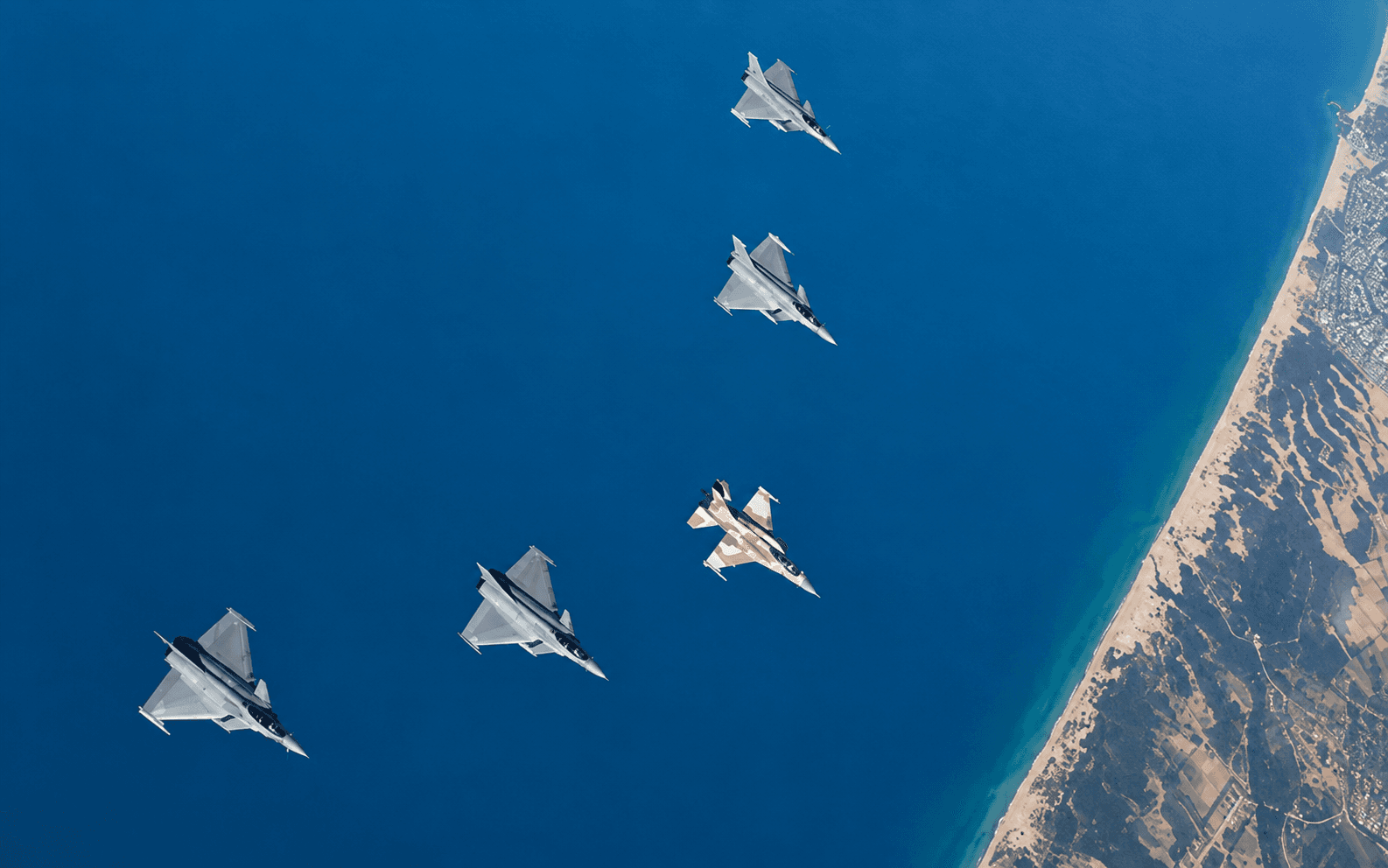
The US Air Force is now flying an AI-controlled F-16
DARPA and the US Air Force have moved their VENOM program — the Viper Experimentation and Next-generation Operations Model — into genuine in-air autonomy testing at Eglin Air Force Base, Florida. Modified F-16s fitted with dedicated computing hardware, additional sensors, and specialised software allow an AI agent to control the aircraft while a human safety pilot remains in the cockpit, able to take back control instantly through a dedicated switch. Piloted verification flights began in June 2026 to confirm the modified jets flew safely, with autonomous-agent flight tests following in July. The program builds on DARPA's earlier X-62A VISTA aircraft, which previously proved an AI agent could pilot a fighter jet through dogfighting manoeuvres; VENOM extends that work to a small fleet of operationally representative aircraft rather than a single specialised research jet, and feeds directly into the Pentagon's Collaborative Combat Aircraft effort to develop uncrewed wingman drones. "These groundbreaking flight tests of VENOM-modified F-16s advance the infrastructure needed to develop trusted, autonomous air combat capabilities," said DARPA program manager Brig. Gen. James Valpiani.
India's 114-jet Rafale deal remains gridlocked over radar software
India's long-pursued acquisition of up to 114 additional Dassault Rafale fighters — part of the Multi-Role Fighter Aircraft (MRFA) programme and valued at estimates ranging from roughly $22 billion to $43 billion depending on configuration and reporting — remains stalled despite momentum expected around French President Emmanuel Macron's February 2026 visit to India. The core dispute centres on France's refusal to hand over source code and Interface Control Documents (ICDs) for three of the Rafale's most sensitive systems: the Thales RBE2 active electronically scanned array radar, the SPECTRA electronic warfare and defensive aids suite, and the Modular Data Processing Unit that serves as the aircraft's central mission computer. Without access to these systems, Indian engineers cannot independently integrate indigenous weapons — including the Astra beyond-visual-range missile and the Rudram anti-radiation missile — or modify radar algorithms and threat libraries without recurring approval from Dassault Aviation. French officials have cited both intellectual property protection and proliferation concerns, reportedly including specific worry that integrating India's BrahMos-NG cruise missile, developed jointly with Russia, could expose sensitive French avionics data to Russian entities. Indian officials have signalled they consider ICD access non-negotiable for a deal of this scale, framing it as a matter of long-term operational sovereignty rather than a minor technical request.
Other developments from this roundup
Several additional items covered in this defence update reflect real, ongoing programmes and areas of Indian and global defence activity, though the specific details below should be treated as reported claims to verify against a primary source (such as a PIB release, DRDO statement, or company announcement) before publishing with full confidence:
- Bhargavastra counter-drone system: Solar Defence and Aerospace Limited's Bhargavastra is a real, publicly known low-cost counter-swarm drone system already tested by the Indian Army; an evolution toward a layered, multi-tier shield configuration is consistent with the system's known development trajectory, though the specific "three-tier" framing should be confirmed against a recent company statement.
- Radar exports to Ukraine, Egypt, and Armenia: India has confirmed defence exports, including radar and related systems, to a growing list of countries in recent years as part of its push to expand defence exports; the specific claim naming Ukraine, Egypt, and Armenia together, attributed to former DRDO leadership, should be verified against the original interview or statement.
- IAF Chief's MiG-29K flight from INS Vikramaditya: Indian service chiefs periodically fly frontline aircraft to demonstrate operational confidence and inter-service coordination; this would be consistent with that pattern, though the specific date and details should be confirmed against an official Indian Air Force or Navy release.
- DRDO-SAIL steel technology transfer: DRDO has a track record of transferring specialised metallurgy, including warship-grade steel technologies, to the Steel Authority of India Limited (SAIL) for domestic production; this fits that established pattern.
- 8x8 Prahaar launcher upgrade for Pralay: The Pralay short-range ballistic missile and Prahaar guided missile programmes are both real, DRDO-developed systems; integration or upgrade work linking launcher platforms and communication links across missile programmes is plausible but should be confirmed against a specific DRDO announcement.
- TEDBF wind tunnel testing: India's Twin Engine Deck Based Fighter programme, intended for the Navy, is a real and publicly discussed project; wind tunnel testing and a multi-year timeline to first flight are consistent with the programme's known development stage, though the specific "within five years" and "120+ units" figures should be checked against the latest Aeronautical Development Agency statements.
- Germany/Airbus exploring a 6th-generation fighter with Saab: Discussions around European sixth-generation fighter cooperation, including potential Airbus-Saab collaboration as an alternative or complement to the Franco-German-Spanish FCAS programme, have been reported in defence trade press; potential future Indian participation would be a notable extension of that story and should be verified against a direct Airbus or Saab statement before being presented as confirmed.