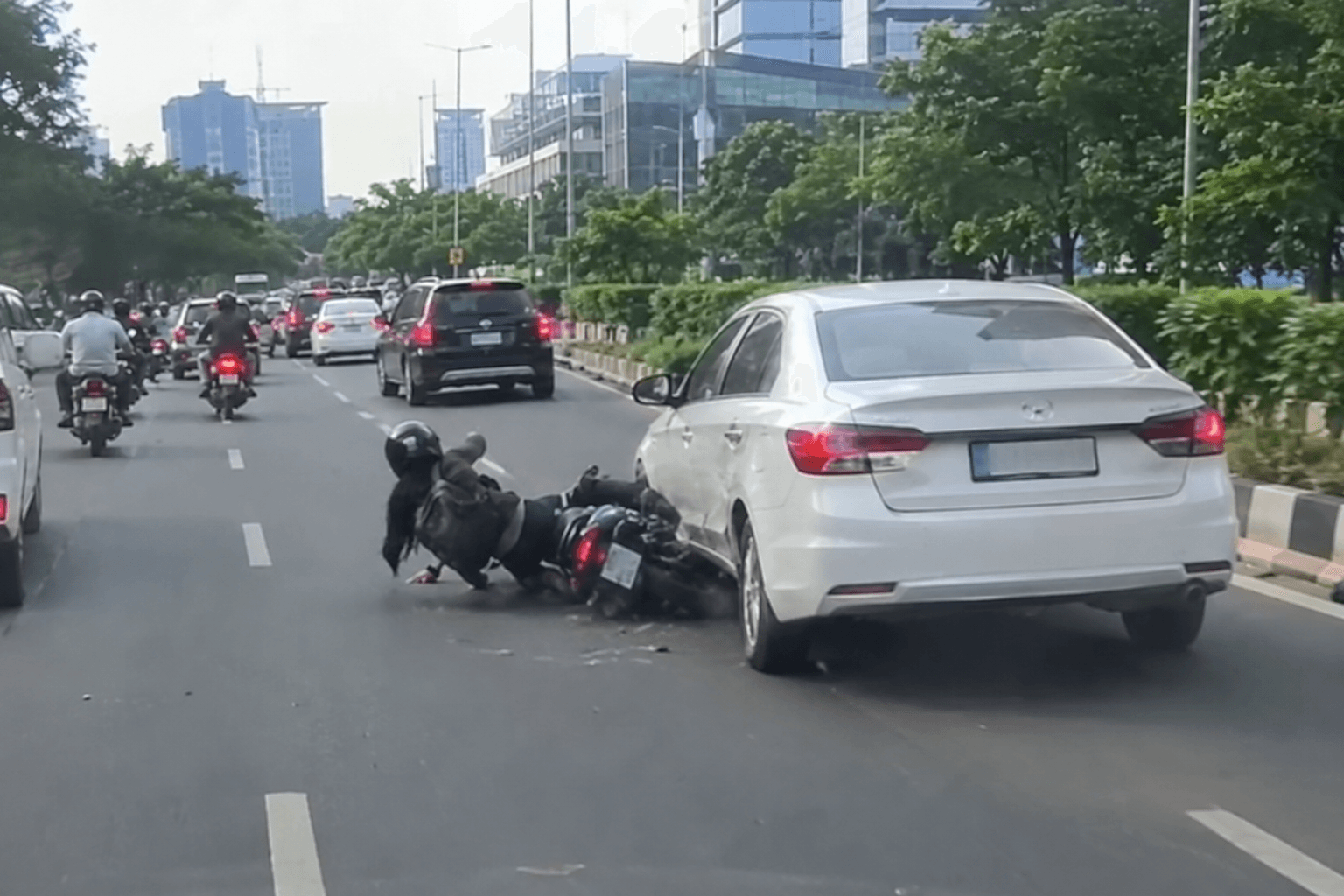
A viral video of a car striking a motorcyclist in Gurgaon’s busy sector 57 has ignited a fresh wave of public outcry over road safety. The footage, posted by a woman biker on social media, shows a dark sedan ploughing into her bike before speeding away, leaving the rider visibly shaken. The car’s owner, a self‑identified army employee, claims the vehicle was lent to a friend two days earlier and that he learned of the incident only on Monday morning. Gurgaon police have taken suo motu cognisance of the clip, promising swift identification and arrest of the driver.
Key Context & Background
Gurgaon, part of the National Capital Region, has long wrestled with a mismatch between rapid urban expansion and the capacity of its traffic‑management infrastructure. The city’s vehicle density rose by more than 30 % between 2018 and 2023, outpacing the addition of new lanes or signalised intersections. Simultaneously, a culture of “vehicle borrowing” among middle‑class professionals—often justified as a convenience for occasional trips—has created a gray area of accountability, especially when the borrower is not formally documented. The army‑affiliated owner’s defense hinges on this informal practice, echoing similar defenses in past hit‑and‑run cases across Delhi‑NCR, where the legal burden of proof frequently slides onto the victim.
Legal & Procedural Response
Under the Motor Vehicles Act, 2019, hit‑and‑run offenses attract a minimum three‑year imprisonment and a hefty fine, but enforcement has been uneven. Gurgaon Police’s suo motu action—initiating an investigation without a formal complaint—signals a shift toward proactive policing, spurred by recent judicial admonitions that law‑enforcement agencies must act on viral evidence. The department has already issued a notice to the vehicle’s registered owner, demanding a detailed log of all drivers who used the car in the past week. If the friend’s identity is established, both parties could face joint liability, a legal nuance introduced in the 2022 amendment that holds vehicle owners responsible for the actions of authorized users.
Broader Implications & Future Impact
The incident arrives at a moment when India’s road‑safety agenda is under intense scrutiny. The Ministry of Road Transport and Highways has pledged a 50 % reduction in traffic fatalities by 2030, yet hit‑and‑run cases remain stubbornly high, accounting for roughly 12 % of all road deaths nationwide. A high‑profile case involving an army officer could catalyse stricter enforcement of vehicle‑sharing protocols, prompting insurers to demand written authorisation for any secondary driver. Moreover, the viral nature of the video underscores the growing power of citizen journalism to compel official action, a trend that may reshape investigative priorities across Indian police forces.
Public Reaction & Road‑Safety Culture
Social media users have rallied around the biker, using hashtags such as #JusticeForBiker and #RoadSafetyNow to demand accountability not only for this driver but for the systemic laxity that enables such incidents. Advocacy groups argue that the case highlights a deeper cultural malaise: a perception that motorcyclists are “lesser road users,” often sidelined in traffic‑law discourse. If the investigation culminates in a conviction, it could set a precedent that deters future impunity, encouraging both vehicle owners and borrowers to adopt stricter safety practices, such as installing dash‑cameras and maintaining real‑time GPS logs. The outcome may therefore serve as a litmus test for how effectively Gurgaon—and by extension, the wider NCR—can translate policy intent into tangible road‑safety improvements.