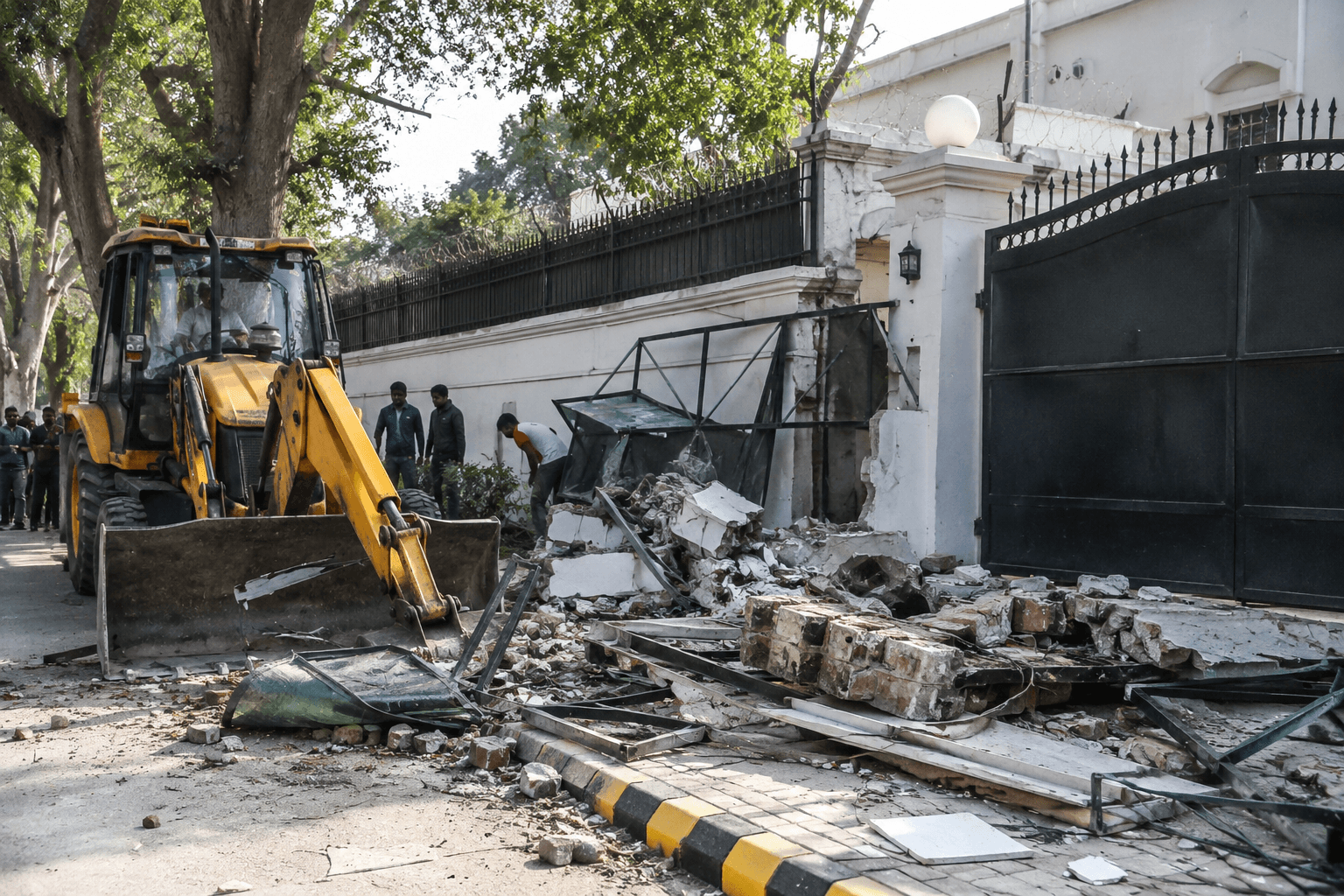
New Delhi ordered the removal of makeshift structures that had sprouted around the Pakistani High Commission in New Delhi on Tuesday, a move that mirrors Islamabad’s decision three days earlier to pull down temporary security barricades outside India’s diplomatic mission in Islamabad. The reciprocal action, framed by both capitals as a “tit‑for‑tat” response, underscores the fragile equilibrium of security‑driven diplomacy that has defined Indo‑Pak ties since the early 2000s. While the physical changes are modest, the episode reverberates through the broader narrative of mutual suspicion, domestic politics, and the ever‑shifting calculus of regional stability.
Key Context & Background
The immediate trigger for the New Delhi clearance was Pakistan’s removal of concrete barriers that had been installed around the Indian High Commission in Islamabad following a spate of cross‑border provocations in early 2024. Those barriers, erected under the pretext of safeguarding diplomatic staff, were widely interpreted in New Delhi as an attempt to signal a hardening stance after India’s alleged support for Kashmiri separatists. Historically, such physical gestures have been a barometer of bilateral tension: from the 2001 standoff that saw both sides reinforce embassy perimeters, to the 2016 “surgical strikes” that prompted a rapid build‑up of security infrastructure on both sides of the border.
Tit‑for‑Tat Diplomacy in Practice
The decision to dismantle the encroachments—mostly informal stalls and vendor kiosks that had occupied the fringe of the Pakistani mission—was announced by the Ministry of External Affairs as a “reciprocal measure” aimed at restoring “normal diplomatic ambience.” Analysts note that the term “encroachment” is deliberately vague, allowing the Indian government to frame the removal as a corrective act rather than a concession. The move also serves a domestic narrative: the ruling party can portray itself as defending Indian sovereignty against perceived Pakistani provocations, a theme that resonates strongly in the run‑up to the upcoming state elections in several northern provinces.
Broader Implications & Future Impact
Beyond the immediate diplomatic choreography, the episode highlights a broader shift in how South Asian powers manage security friction. The reliance on low‑visibility, “soft” measures—such as temporary barricades or the regulation of street vendors—suggests an avoidance of overt military posturing that could trigger escalation. However, the reciprocal nature of these actions also risks institutionalising a tit‑for‑tat playbook, where each side feels compelled to match the other’s gestures, potentially limiting diplomatic flexibility. For regional actors like China and the United States, the pattern offers a cautionary signal: any attempt to mediate or propose confidence‑building measures must account for the symbolic weight of such on‑the‑ground adjustments.
What Lies Ahead for Indo‑Pak Engagement
If the current trajectory holds, both capitals are likely to continue employing incremental, reversible actions as a means of testing each other’s resolve without crossing the threshold into open confrontation. The removal of encroachments may pave the way for a limited “reset” of diplomatic protocols, but it will not erase the underlying strategic mistrust that fuels periodic flare‑ups. Observers warn that unless both governments can translate these symbolic gestures into substantive dialogue—particularly on trade, water sharing, and counter‑terrorism—their diplomatic dance will remain a series of choreographed steps that mask a deeper, unresolved rivalry.