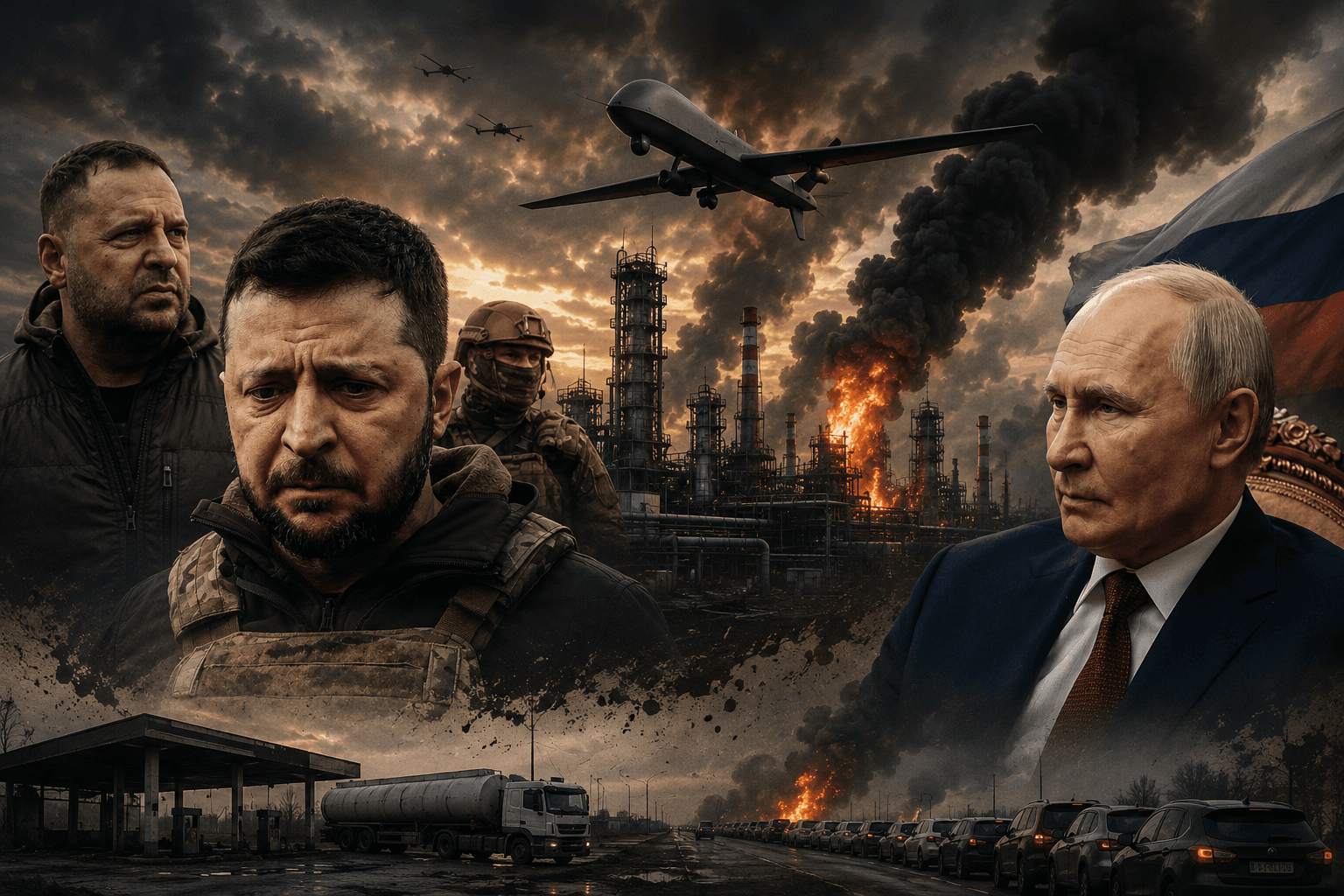
A deep-strike Ukrainian drone attack on Russia's Gazpromneft-ONPZ refinery in Omsk has intensified an already worsening nationwide fuel shortage, placing additional pressure on Russia's refining network. The facility, one of the country's largest oil refineries, was among the few major plants that had remained untouched since the start of the war until the July 6 attack.
The strike comes as fuel shortages, rationing measures and supply disruptions continue spreading across Russia, affecting millions of people and forcing authorities to introduce emergency conservation measures in several regions.
The Strike on Omsk Refinery
According to Ukrainian officials and open-source satellite analysis, long-range FP-1 drones travelled nearly 2,700–3,000 kilometres before striking the Gazpromneft-ONPZ refinery in Omsk. The refinery processes more than 22 million tonnes of crude oil annually and contributes roughly 10–12% of Russia's refining capacity.
Satellite imagery indicated multiple impacts on the refinery's primary processing unit, which is responsible for a significant portion of its production. Russian authorities acknowledged the attack, stating that air defence systems intercepted many of the incoming drones while confirming that the refinery suffered damage and temporarily halted operations.
A Growing Nationwide Fuel Crisis
The Omsk strike has added further strain to an already fragile fuel supply system. Reports indicate that fuel shortages or supply disruptions have been recorded across the vast majority of Russia's regions, with millions of residents experiencing rationing, purchase limits or periodic shortages.
Several of Russia's largest refineries have been damaged during the conflict, reducing domestic gasoline production at a time when seasonal demand remains high. Analysts estimate that current production is significantly below daily consumption requirements, creating an ongoing supply gap.
Fuel Rationing Across Russia
Authorities in many regions have introduced restrictions on fuel purchases, including limits of around 20–30 litres per vehicle, bans on filling portable fuel containers and, in some locations, odd-even purchase systems based on vehicle registration numbers.
Some regions have reported lengthy queues at filling stations, while officials have taken action against black-market fuel sales. Russia has also suspended gasoline exports, expanded fuel imports from neighbouring countries and temporarily relaxed certain fuel-quality standards to ease domestic shortages.
Remote Work Measures in Siberia
The impact of the refinery strike quickly spread beyond Omsk. Authorities in the neighbouring Novosibirsk region issued recommendations encouraging employers outside essential services to adopt remote working arrangements and reduce fuel consumption wherever possible.
Officials also advised residents to minimise private vehicle use, while neighbouring regions introduced similar guidance encouraging online meetings and reduced business travel in an effort to conserve fuel supplies.
Ukraine's Strategic Objective
Ukraine has described its refinery campaign as part of a broader strategy aimed at weakening Russia's ability to finance and sustain military operations. By targeting oil processing infrastructure rather than crude production itself, Kyiv hopes to disrupt fuel supplies supporting both the civilian economy and military logistics.
The repeated strikes have contributed to lower gasoline production, rising inflationary pressure and slower economic growth forecasts, increasing the financial burden on Moscow as the conflict continues.
Russia's Response
President Vladimir Putin has acknowledged that fuel shortages and long queues remain a concern for motorists and businesses but has maintained that the situation remains manageable. Russian authorities continue repairing damaged refineries while relying on fuel imports and rationing measures to stabilise domestic supplies.
Some analysts believe the current shortages remain less severe than previous fuel disruptions, while others argue the outcome will largely depend on whether Ukraine can continue sustaining long-range strikes against critical energy infrastructure.
What Comes Next
With Ukrainian attacks continuing against refineries, fuel depots and logistics infrastructure across Russia, the coming weeks are expected to determine whether the shortages deepen further or whether Moscow succeeds in stabilising supplies through repairs, imports and continued rationing.
As of July 13, 2026, the situation remains highly dynamic. Damage assessments, regional fuel availability and operational status of affected refineries continue to change, making ongoing verification essential as new information emerges.