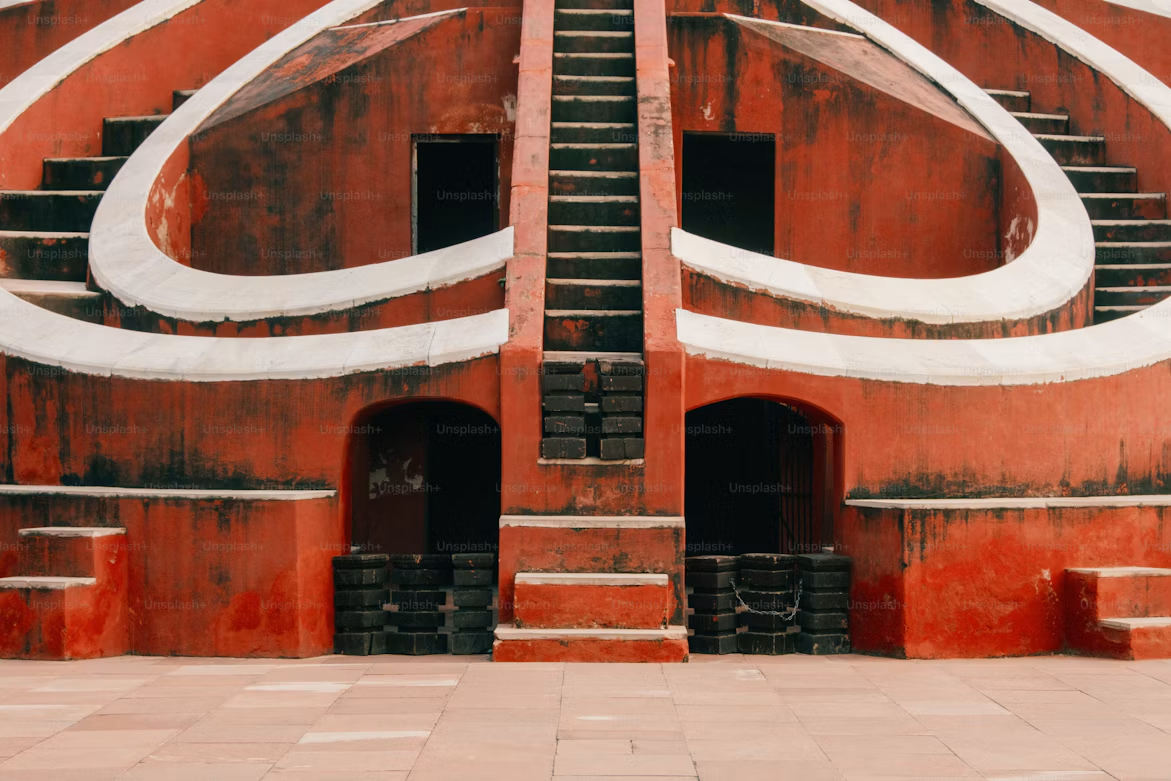
Delhi’s iconic Jantar Mantar, long‑standing as a symbolic arena for public dissent, will cease to function as a protest venue following a government order that designates three alternative sites in the capital. The shift, announced by the Ministry of Home Affairs, reflects mounting pressure to manage demonstrations in a city already grappling with security constraints, traffic snarls and frequent clashes between police and demonstrators. Activists, legal experts and urban planners are now scrambling to interpret the practical ramifications of moving the city’s “default” protest ground to new, less familiar locations.
Key Context & Background
Jantar Mantar earned its status as a protest hotspot in the early 1990s, when the Supreme Court’s 1992 judgment granted it the same legal standing as the historic Parliament Street venue. Over the past three decades, it hosted everything from farmer agitations to anti‑government rallies, becoming a de‑facto “first‑come, first‑served” site that required no prior permission. However, the location’s proximity to the Parliament, Rashtrapati Bhavan and several high‑security installations has increasingly clashed with the government’s emphasis on “law‑and‑order” in a post‑pandemic, post‑COVID‑19 environment. Recent incidents—most notably the 2022 “Farmers’ Republic Day” march that turned violent and the 2024 anti‑price‑rise protest that caused a temporary shutdown of nearby arterial roads—have amplified calls from security agencies to curtail unregulated gatherings in the heart of the capital.
The New Designated Sites
The government’s order identifies the Delhi Police Headquarters grounds, the Nehru Park in Chanakyapuri, and the open expanse near the Delhi Secretariat as the three approved alternatives. All three lie within the “high‑security” belt, but each presents distinct logistical challenges. The Police Headquarters grounds, while offering immediate law‑enforcement oversight, lack the public transport connectivity that Jantar Mantar enjoyed via the nearby metro stations. Nehru Park, a diplomatic enclave, may deter participation from groups wary of foreign diplomatic sensitivities. The Secretariat’s peripheral field, though spacious, is prone to flooding during monsoon months, raising concerns about accessibility and safety. Moreover, each site will now require a formal application process, with permits granted on a case‑by‑case basis—a departure from the spontaneous assembly model that defined Delhi’s protest culture.
Broader Implications & Future Impact
The reallocation signals a broader recalibration of civic space in India’s megacities, where rapid urbanisation and heightened security concerns are prompting authorities to re‑examine the balance between democratic expression and public order. Legal scholars warn that the new permit regime could be weaponised to filter out dissent, especially if criteria remain opaque. Conversely, city planners argue that dispersing protests across multiple venues may reduce traffic congestion and allow for better crowd‑control infrastructure, potentially lowering the incidence of violent clashes.
For civil‑society groups, the shift demands a strategic overhaul: mobilisers must now factor in permit timelines, transport logistics and the symbolic weight of the venue itself. The loss of Jantar Mantar—a site whose very architecture evokes resistance—may dilute the visual impact of future demonstrations, affecting media coverage and public perception. On the other hand, the government’s move could set a precedent for other states to formalise protest zones, prompting a nationwide dialogue on the codification of the right to peaceful assembly.
In the medium term, the effectiveness of the three new sites will likely be judged by their capacity to accommodate large‑scale mobilisations without triggering the same security headaches that plagued Jantar Mantar. If the permit system proves efficient and the locations remain accessible, Delhi may emerge as a model for regulated civic engagement in high‑density urban centers. If, however, bureaucratic bottlenecks curtail spontaneous protest, the decision could fuel further legal challenges and deepen mistrust between activist networks and the state, reshaping the contours of dissent in India’s capital for years to come.