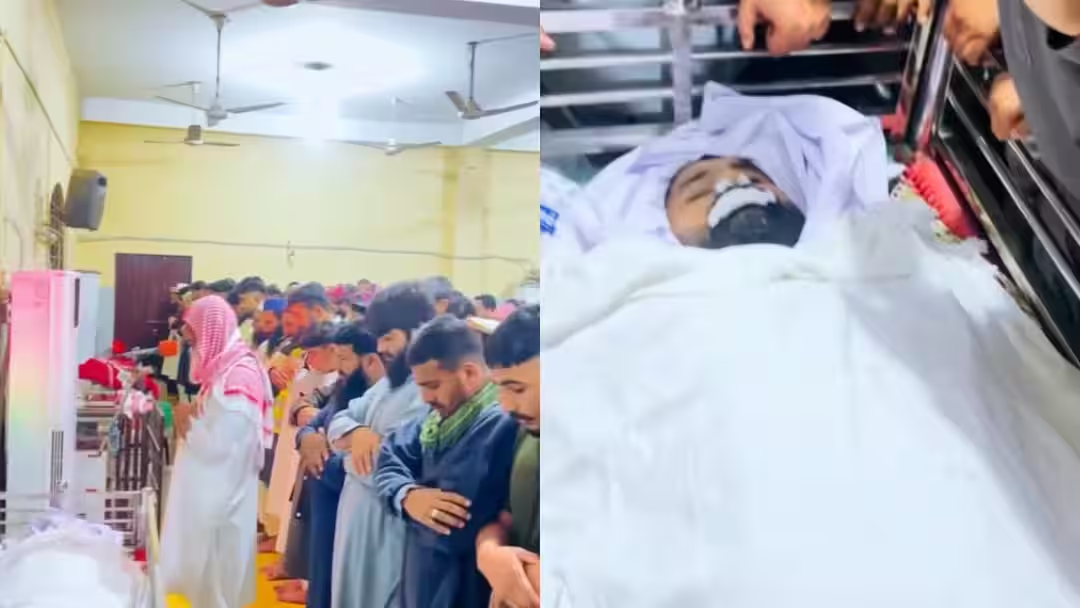
LeT Commander's Family Ties Exposed in Brutal Killing
Bilal Arif Salafi, a high-ranking commander of the banned terror outfit Lashkar-e-Taiba (LeT), was killed in Muridke, Pakistan, shortly after attending Eid-ul-Fitr prayers. The incident has shed light on the internal dynamics of the organization and the role of family ties in its operational decisions.
A Brutal Attack with Family Roots
Reports indicate that Salafi was shot and stabbed multiple times by a fellow operative and relative, identified as Khalid. The killing is believed to be driven by a long-standing family vendetta, with the attacker seeking revenge for the alleged murder of his son-in-law, reportedly orchestrated by Salafi. This incident is a grim reminder of the deep-seated personal and family conflicts that can exist within terrorist organizations.
LeT's Headquarters: A Hub for Terror
The incident took place in Muridke, a known stronghold and headquarters of LeT and its front organization, Jamaat-ud-Dawa (JuD). Muridke has long been a hub for terrorist activities, with LeT and JuD operating openly in the area. The presence of these organizations has made Muridke a sensitive location for law enforcement agencies in Pakistan.
Rising Trend of Targeted Killings
This marks another high-profile death within LeT, amid a rising trend of targeted killings of wanted terrorists in Pakistan over the past year. The Pakistani government has been actively pursuing a policy of targeted killings, using intelligence agencies and special forces to eliminate high-value targets. While this approach has led to the elimination of several key terrorists, it also raises concerns about the potential for internal power struggles and violence within these organizations.
Implications and Future Directions
The killing of Bilal Salafi raises important questions about the role of family ties in terrorist organizations. It highlights the need for a more nuanced understanding of the internal dynamics of these groups and the ways in which personal and family conflicts can drive operational decisions. As the Pakistani government continues to pursue its policy of targeted killings, it will be essential to consider the potential consequences of this approach for the stability and security of the country.