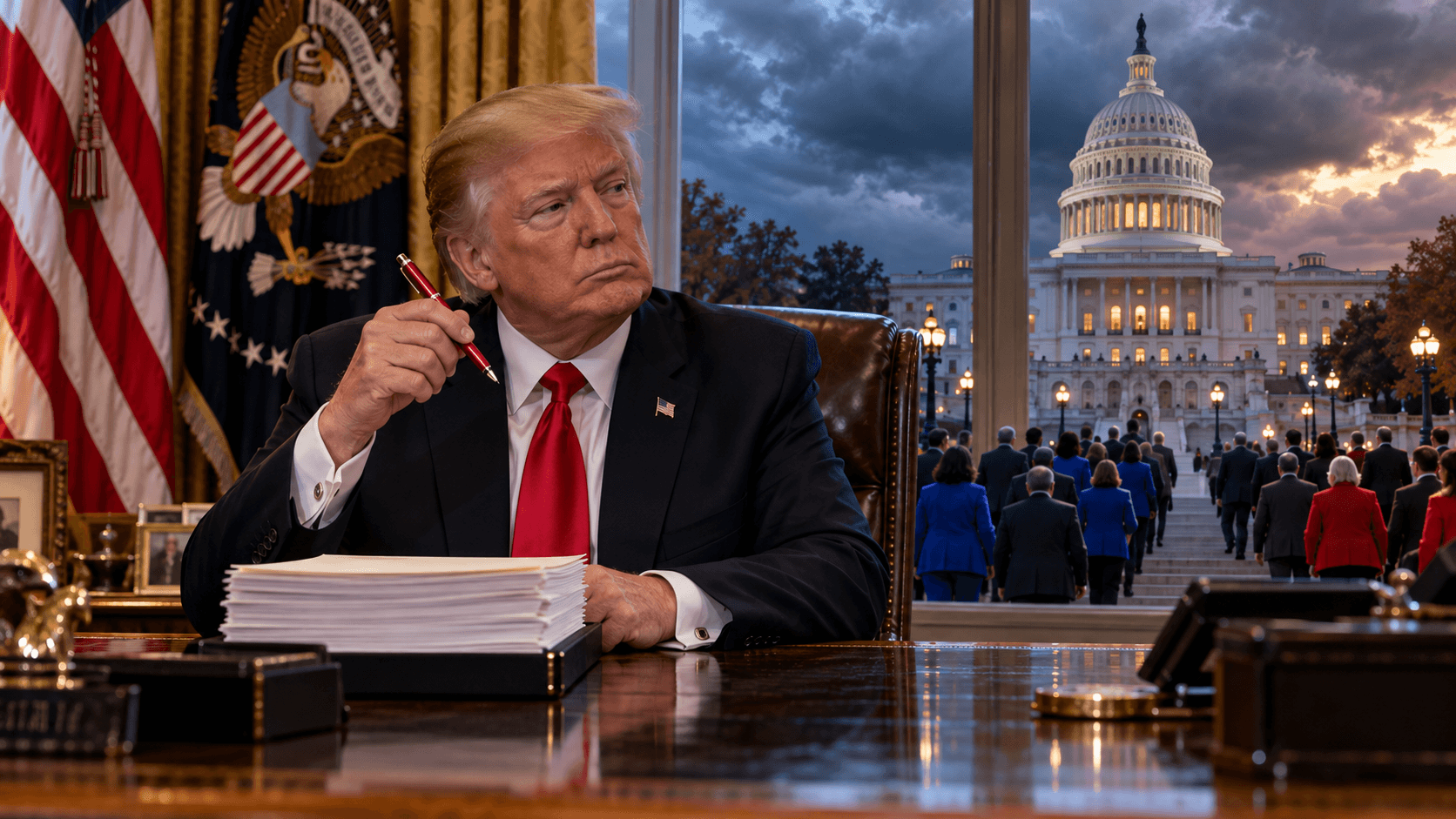
The 2024 midterm elections delivered a mixed verdict for former President Donald J. Trump. While Republican candidates reclaimed the Senate, the party fell short of retaking the House of Representatives, leaving the GOP without a unified congressional agenda. Yet, political analysts argue that Trump’s defeat in the legislative arena does not diminish his strategic advantage – a potent blend of fundraising prowess, a loyal voter base, and an emerging media empire that could reshape the next presidential cycle.
Key Context & Background
Midterm outcomes have traditionally served as a referendum on the sitting president’s agenda, but Trump’s position as a former commander‑in‑chief complicates that formula. The 2022 midterms, held under his incumbency, saw Republicans lose both chambers despite a vigorous campaign, a pattern echoed in 2024 where the party’s congressional hopes hinged on a fragmented electorate and a series of high‑profile scandals. The loss of the House is also rooted in demographic shifts: suburban districts that once leaned Republican have trended Democratic, while the GOP’s appeal remains strongest in rural and ex‑urban areas that are less decisive in determining control of the lower chamber.
Beyond demographics, the political economy of the Trump brand has evolved. Since leaving office, Trump has cultivated a parallel fundraising infrastructure that operates largely outside the Federal Election Commission’s traditional reporting mechanisms. His political action committees (PACs) and “Save America” super‑PAC have collectively amassed over $1 billion, outpacing the combined war chests of many state parties. This financial muscle, coupled with a network of loyal media outlets and a dedicated social media presence, gives Trump a lever that transcends the immediate results of any single election.
Trump’s Remaining Leverage
The “ace” in Trump’s hand is his unrivaled grip on the Republican primary electorate. Recent internal polling shows that a majority of GOP voters still view Trump as the party’s de‑facto leader, a sentiment that forces congressional hopefuls to align with his policy positions or risk primary defeat. This dynamic enables Trump to shape the legislative agenda indirectly, pushing candidates to adopt his stances on immigration, election integrity, and foreign policy, even without formal control of the House.
Moreover, Trump’s legal battles – ranging from the classified‑documents indictment to the New York business fraud case – have paradoxically amplified his media coverage, turning courtroom drama into a rallying point for his supporters. The narrative of a “politically persecuted” leader resonates with a base that perceives institutional opposition as proof of his effectiveness. This feedback loop sustains his relevance and provides a platform to mobilize voters for future contests, particularly the 2028 presidential race.
Broader Implications & Future Impact
The midterm outcome signals a potential realignment within the Republican Party. While the Senate victory restores a degree of legislative influence, the loss of the House underscores the limits of a Trump‑centric strategy in districts that demand broader coalition building. Party leaders now face a strategic crossroads: either double down on Trump’s populist playbook or attempt a moderate recalibration to win back suburban voters.
If Trump continues to wield his fundraising and media apparatus, the GOP could see an influx of candidates who prioritize loyalty over policy expertise, reshaping congressional dynamics and possibly accelerating partisan gridlock. Conversely, a concerted effort by establishment Republicans to distance themselves from Trump may fragment the base, opening space for third‑party or independent challengers in traditionally safe districts.
The long‑term impact extends beyond Washington. Trump's ability to command a national narrative influences voter turnout, campaign financing regulations, and the strategic calculations of state legislatures that control redistricting. As the 2028 election horizon approaches, the interplay between Trump’s personal brand and the institutional Republican apparatus will determine whether the party can translate its Senate foothold into a durable governing majority or remain a fragmented coalition anchored to a single, polarizing figure.