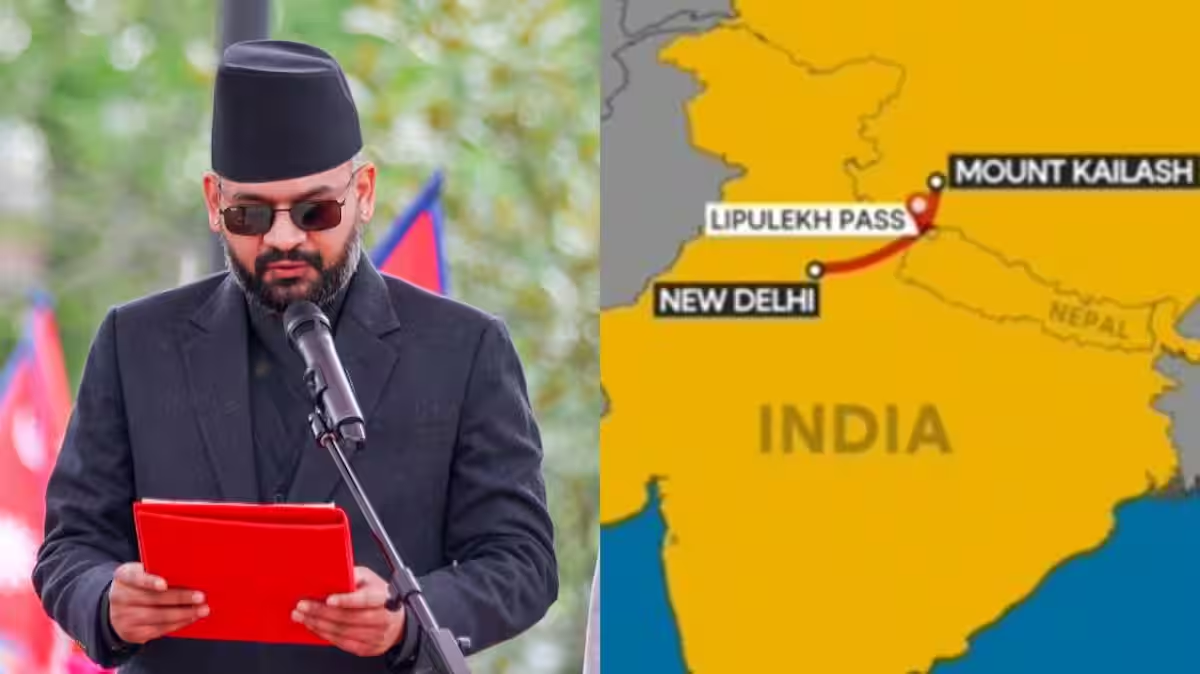
Nepal Reasserts Claim Over Lipulekh Ahead of Mansarovar Yatra
The recent diplomatic dispute between Nepal, India, and China over the Lipulekh Pass has reignited tensions in the region. The Nepal government, led by Prime Minister Balen Shah, issued a formal objection to both India and China regarding the use of the Lipulekh Pass for the 2026 Kailash Mansarovar Yatra. This move has sparked a heated debate, with India dismissing Nepal's territorial assertions as "unilateral artificial enlargement" that is neither justified nor based on historical facts.
Historical Context: A Long-Standing Dispute
The dispute over Lipulekh dates back to 1954, when India and Nepal signed the Trade and Transit Treaty, which allowed for the use of the Lipulekh Pass as a pilgrimage route. Since then, India has maintained that the pass remains an integral part of Uttarakhand, specifically within the Pithoragarh district. Nepal, however, has consistently claimed the region as part of its territory, a claim that has been supported by Nepal's 2020 constitutional amendment, which included Lipulekh, Kalapani, and Limpiyadhura in its official map.
Regional Dynamics: A Complex Web of Interests
The recent tensions over Lipulekh are not an isolated incident, but rather part of a larger complex of regional dynamics. The India-Nepal-China triangle is characterized by competing interests, historical rivalries, and territorial disputes. Nepal's move to assert its claim over Lipulekh can be seen as a bid to strengthen its position in the region and assert its sovereignty. India, on the other hand, is keen to maintain its influence in the region and protect its strategic interests.
Diplomatic Fallout: A Delicate Balance
The diplomatic fallout from the Lipulekh dispute has been significant, with India dismissing Nepal's claims as "unilateral artificial enlargement" that is neither justified nor based on historical facts. China, which has been increasingly involved in the region, has remained tight-lipped on the issue, but is likely to play a key role in any future negotiations. The situation remains delicate, with Nepal's Prime Minister Balen Shah calling for diplomatic dialogue to resolve the issue. The outcome of this dispute will have far-reaching implications for regional stability and the delicate balance of power in the India-Nepal-China triangle.
Conclusion: A Long and Winding Road Ahead
The Lipulekh dispute is a complex issue that has been simmering for decades. The recent tensions have highlighted the need for diplomatic dialogue and a nuanced understanding of the region's complex dynamics. While the outcome of this dispute remains uncertain, one thing is clear: the road ahead will be long and winding, requiring careful navigation and a willingness to engage in constructive dialogue to resolve the issue once and for all.