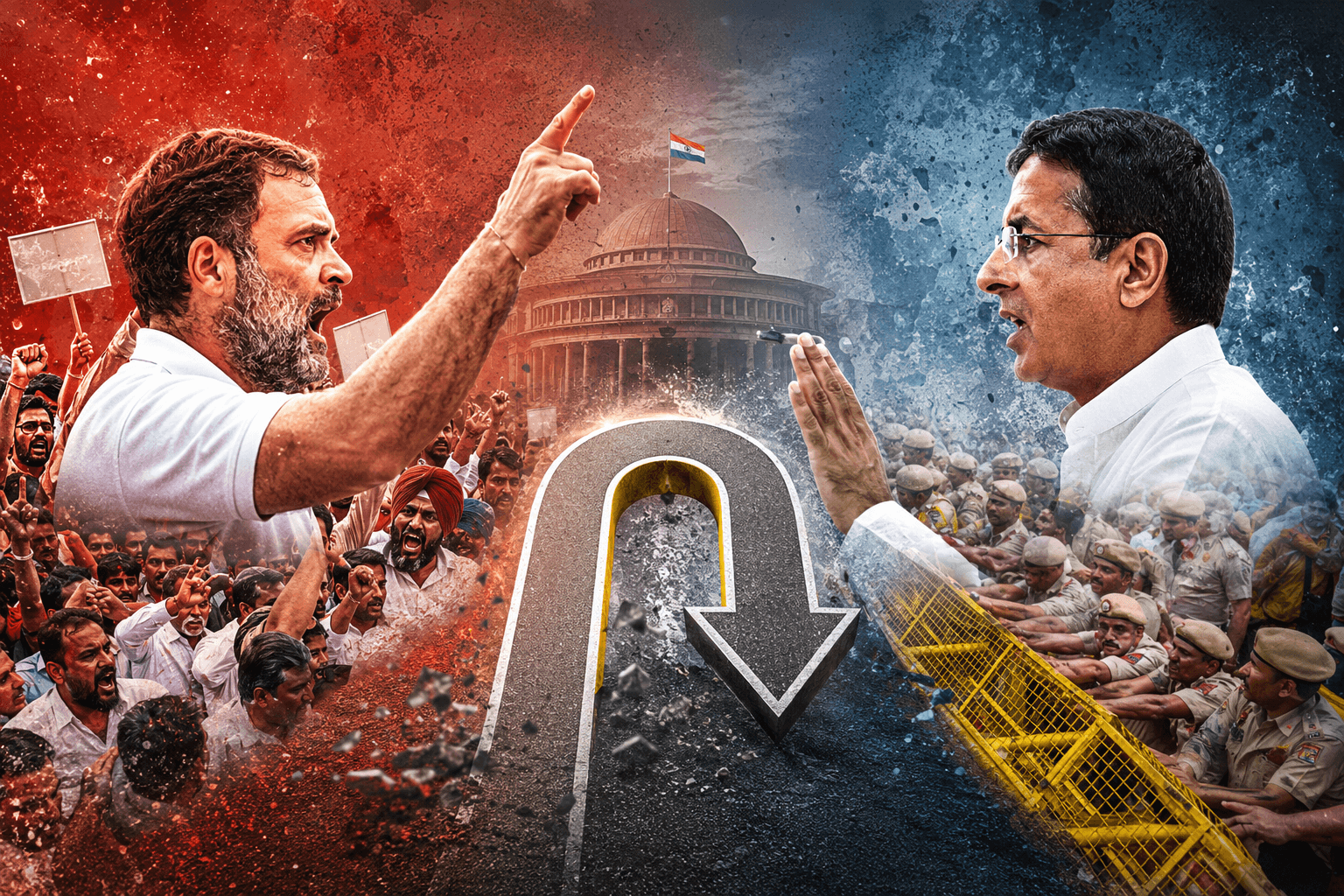
The government's core argument: action has already been taken
As the political standoff over the NEET-UG 2026 paper leak deepens, the central government's defense rests on a simple claim: it has already acted, and further political pressure amounts to manufactured disruption rather than genuine problem-solving. At a meeting of NDA MPs dubbed "Mangal Milan," Prime Minister Narendra Modi told lawmakers that 13 people have been arrested and sent to jail in connection with the paper leak, according to Parliamentary Affairs Minister Kiren Rijiju, who briefed reporters afterward. Modi said the government acted immediately once reports of the leak surfaced, prioritised a re-examination to protect students' futures, and that the redone NEET-UG exam was conducted successfully on June 21 with results declared without delay — over 11.21 lakh candidates ultimately qualified. Modi reportedly called the leak a "grave sin" and vowed the strictest punishment for those responsible.
Pradhan accuses Rahul Gandhi of exploiting students
Union Education Minister Dharmendra Pradhan went further in his own remarks, directly accusing Congress leader and Leader of the Opposition Rahul Gandhi of using students as "political tools." In a pointed post on X, Pradhan wrote that Gandhi and the Congress "continue to shamelessly exploit students as political tools to manufacture disruption during the Monsoon Session of Parliament," adding: "For Rahul Gandhi, this is not about students. This is about manufacturing confrontation after every genuine avenue for discussion has been opened... We owe our students more than outrage. We owe them answers, reforms and accountability."
The "U-turn" dispute
Central to the government's framing is a specific sequencing argument: officials say the Centre had already conveyed its willingness to hold a comprehensive discussion on NEET in Parliament, only for Rahul Gandhi and the Congress to instead escalate by staging a sit-in outside the Prime Minister's residence and making Dharmendra Pradhan's resignation — rather than a scheduled debate — the precondition for further engagement. The government has publicly characterised this shift as a "U-turn," while Congress maintains it is simply standing firm on Pradhan's resignation as non-negotiable.
What happened outside the Prime Minister's residence
The flashpoint came on Monday, when Rahul Gandhi, Priyanka Gandhi Vadra, Congress president Mallikarjun Kharge, Samajwadi Party chief Akhilesh Yadav, and other opposition leaders staged a surprise dharna outside PM Modi's residence at Lok Kalyan Marg, protesting both the NEET controversy and the police action against CJP protesters during Monday's "Chalo Sansad" march. The unexpected demonstration in the high-security zone prompted the Centre to dispatch Minister of State in the PMO Jitendra Singh and Union Home Secretary Govind Mohan to the site for talks; Singh held a brief discussion with Gandhi, but it ended inconclusively. Delhi Police subsequently detained and forcibly removed the Gandhi siblings and the other leaders, releasing them later in the day.
Speaking afterward, Rahul Gandhi laid out a more detailed set of demands than a single resignation: he called for Dharmendra Pradhan's removal over the paper leak, Home Minister Amit Shah's resignation over the police action against student protesters, the withdrawal of all cases filed against protesting students, action against officers responsible for the crackdown, and a full debate on the issue in both the Lok Sabha and Rajya Sabha. "The students' demands are, firstly, the resignation of Dharmendra Pradhan and HM Amit Shah," Gandhi said. "Secondly, action should be taken against those who have beaten and humiliated the students... Finally, the entire opposition wants that there should be a debate on this tomorrow."
Nadda and Jitendra Singh visit Wangchuk at Medanta
Separately, in what the government has presented as evidence of its willingness to engage directly with protesters rather than only through political channels, Union Health Minister JP Nadda and Jitendra Singh visited Gurugram's Medanta Hospital on Tuesday night to check on activist Sonam Wangchuk's health. Wangchuk, who began his hunger strike on June 28, had been discharged from Delhi's Safdarjung Hospital earlier that evening and transferred to Medanta in compliance with a Delhi High Court order, after his wife Gitanjali Angmo petitioned the court citing his deteriorating condition. At discharge, Safdarjung reported his vitals as stable but noted persistent pancytopenia and a serum potassium level of 3.4 mEq/L. He was admitted to ICU 8 under specialist Dr Sushila Kataria. Despite the transfer, Wangchuk has continued his hunger strike, with Angmo saying he intends to do so in solidarity with students allegedly injured during Monday's police action.
Where the standoff stands
The visit to Wangchuk came the same day CJP founder Abhijeet Dipke announced there would be no further talks with the government from the movement's side, even as more than 5,000 protesters returned to Jantar Mantar on Tuesday to resume their sit-in — the CJP's protest is now in its 32nd day. Organisers said they would suspend further marches toward Parliament after Monday's violent clashes but would continue the sit-in indefinitely. With the government pointing to arrests and a completed re-examination as proof of action taken, and the opposition and CJP insisting Pradhan's resignation remains non-negotiable, the two sides remain publicly at odds over both the substance of the paper leak issue and, increasingly, over who bears responsibility for the political and physical confrontation that has followed it.