Three US service members now confirmed dead after Jordan strikes
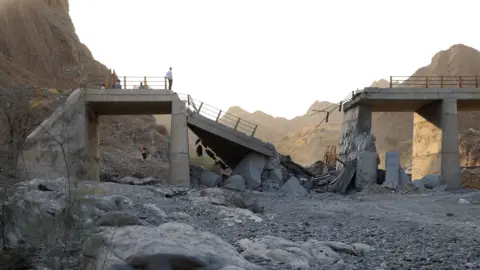
US Central Command says three American service members have died following Iranian missile and drone attacks on US-linked military facilities in Jordan last week — the first American combat deaths since fighting between the US and Iran resumed in late June. CENTCOM initially reported on Saturday, July 18 that two service members were killed in action on July 17 and a third was missing, with four others medically evacuated to hospitals in Jordan. By Sunday, July 19, the military confirmed that remains found at the strike site belonged to the missing service member, bringing the confirmed death toll to three. The strikes hit Muwaffaq Salti Air Base (also referred to as Al-Azraq), which hosts US troops and fighter jets; two Iranian ballistic missiles struck the base directly. US officials said Jordan had come under four separate Iranian missile attacks over the preceding week, wounding dozens of additional service members and destroying several helicopters.
Iran's account of the attack
Iran's Islamic Revolutionary Guard Corps (IRGC) claimed responsibility for the strikes, saying it targeted a base used by US forces in Al-Azraq as part of its retaliatory campaign, and claimed to have "completely destroyed" several aircraft using a combined missile-and-drone assault. In a separate statement issued Tuesday, July 21, the IRGC said it had also struck a compound housing US troops in Jordan's al-Rukban area as part of what it called the "24th wave" of its retaliatory operation, alleging — without independent confirmation — that the US had significantly understated casualties from the strikes. Claims of the precise number of positions or bases targeted have come primarily from Iranian state media and could not be independently verified against official Jordanian or US figures.
The scale of damage to US bases — and a date correction
A frequently cited figure in coverage of this conflict — that Iranian strikes have damaged or destroyed at least 228 structures and pieces of equipment at US military sites — comes from a Washington Post investigation using satellite imagery, but it's important to note this figure describes cumulative damage from the war's first phase, published in early May 2026, not new damage from last week's Jordan strikes specifically. That analysis found damage across 15 US-linked sites in Kuwait, Bahrain, Qatar, Jordan, Saudi Arabia, and the UAE, including hangars, barracks, fuel depots, aircraft, and radar and air-defense equipment — a scale of destruction the Post said was significantly larger than what the Pentagon had publicly acknowledged at the time. Separately, CSIS and the BBC estimated Iranian strikes caused roughly $800 million in damage in just the first two weeks of the war. The current round of attacks in Jordan represents a fresh escalation on top of that earlier damage, rather than being reflected in the 228 figure itself.
The strategic logic behind Iran's campaign
Analysts see Iran's targeting strategy as centered on a small number of high-value levers: control of the Strait of Hormuz, through which roughly a fifth of the world's oil and gas flows; the security of Gulf shipping more broadly, including the Bab-el-Mandeb strait and Red Sea; and pressure on US and allied military infrastructure across the region. The reasoning, as widely described by regional analysts, is that sustained disruption to shipping and military logistics raises the economic and political cost of the war for Washington faster than Iran's own capacity is degraded — creating leverage to force the Trump administration back to negotiations on terms more favorable to Tehran. When the US briefly attempted to secure the strait with a naval escort operation (Project Freedom, backed by more than 100 aircraft and roughly 15,000 personnel) in early May, Trump suspended it after just one day in a bid to pursue a deal instead — a move Iran's continued strikes suggest it interprets as a sign the pressure campaign is working.
Washington's response so far
The US military said it began launching new airstrikes against Iranian targets on Saturday evening to "swiftly punish" Tehran for the deaths of American service members, with CENTCOM describing the strikes as designed to further degrade Iran's ability to threaten commercial shipping in the Strait of Hormuz. Asked about Iran's position that it would no longer abide by the ceasefire memorandum the two countries signed in June, President Trump was reported to have responded: "I couldn't care less." The deaths bring the total number of US service members killed since the war began in late February to 16, according to the Pentagon's casualty tracking system — a toll that includes six Army Reserve soldiers killed in a single strike on Kuwait's Shuaiba port in March.
What to watch next
With both sides now trading direct strikes again after the June ceasefire's collapse, and Iran signaling through repeated IRGC statements that its campaign is intended to be sustained rather than a one-off retaliation, the coming days are likely to hinge on two questions: whether Iran can keep disrupting Gulf shipping and US logistics faster than Washington can adapt its posture, and whether mounting American casualties shift the political calculus in Washington toward a harder military response or a renewed push for negotiation.