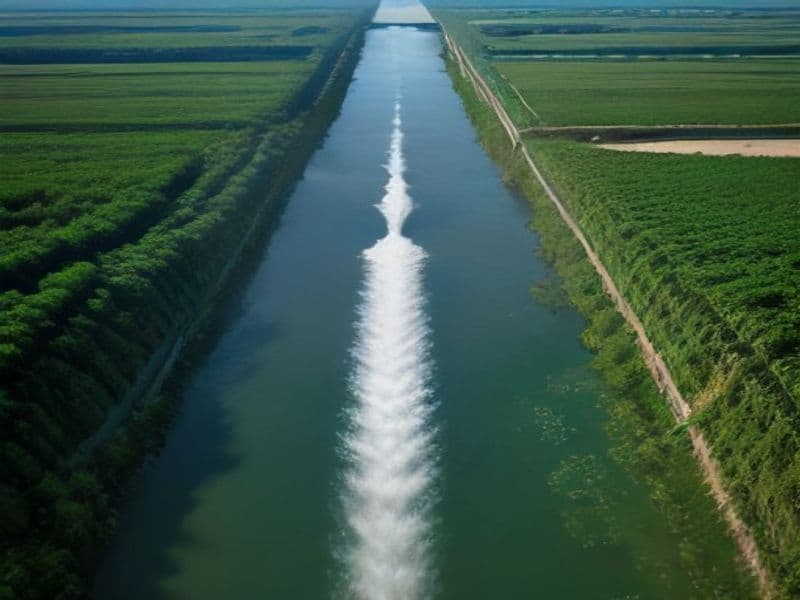
Tamil Nadu announced that water from the Mettur Dam will begin flowing to the Cauvery delta on September 1, marking the first scheduled release for the 2024‑25 irrigation season. The decision arrives amid a protracted inter‑state dispute over Cauvery allocations, and it is expected to revive paddy fields that have lain fallow for months. Farmers in districts such as Thanjavur, Nagapattinam and Tiruvarur are watching the move as a potential lifeline for a crop cycle that could otherwise be lost.
Key Context & Background
The Cauvery water sharing arrangement, first formalised in the 1990s and later refined by the Supreme Court, apportions a fixed volume of water to Tamil Nadu, Karnataka and Kerala based on seasonal inflows. In recent years, erratic monsoons and rising demand have strained the system, prompting repeated legal challenges. Karnataka’s upstream diversions during the pre‑monsoon months have often left the Mettur reservoir below critical levels, forcing the Tamil Nadu government to request emergency releases from the central government’s inter‑state water pool. The current release follows a court‑mandated “Cauvery Water Management Plan” that stipulates a minimum of 12 tmcft (thousand million cubic feet) for delta irrigation, provided reservoir levels exceed the 65 percent threshold.
Political & Legal Landscape
The timing of the September release is tightly linked to the political calendar in both Tamil Nadu and Karnataka. With state elections looming in Karnataka in early 2025, the ruling coalition is under pressure to showcase water security for its agrarian base, while Tamil Nadu’s ruling party seeks to demonstrate effective governance ahead of its own mid‑term assessments. Simultaneously, the Supreme Court’s 2018 verdict, which introduced a “water‑bank” mechanism, is being invoked by Tamil Nadu to claim its share from the central reservoir. Legal scholars note that each release decision now serves as a de‑facto precedent, potentially reshaping the interpretation of “equitable” distribution under the Indian Constitution.
Broader Implications & Future Impact
If the September flow reaches the delta as planned, the immediate effect will be a revival of the rice‑paddy cycle, which accounts for roughly 30 percent of Tamil Nadu’s agricultural GDP. Beyond the short‑term harvest, the release could set a benchmark for cooperative water governance in the region, encouraging the adoption of real‑time telemetry and joint‑river‑basin committees. However, climate projections warn of decreasing monsoon reliability, suggesting that reliance on fixed‑schedule releases may become untenable. Long‑term, the episode may accelerate discussions around water‑saving technologies—such as micro‑irrigation and crop diversification—while prompting both states to negotiate a more flexible, data‑driven allocation framework. Stakeholders across the supply chain, from seed exporters to agro‑processing units, are already recalibrating their forecasts based on the likelihood of a more predictable water regime.