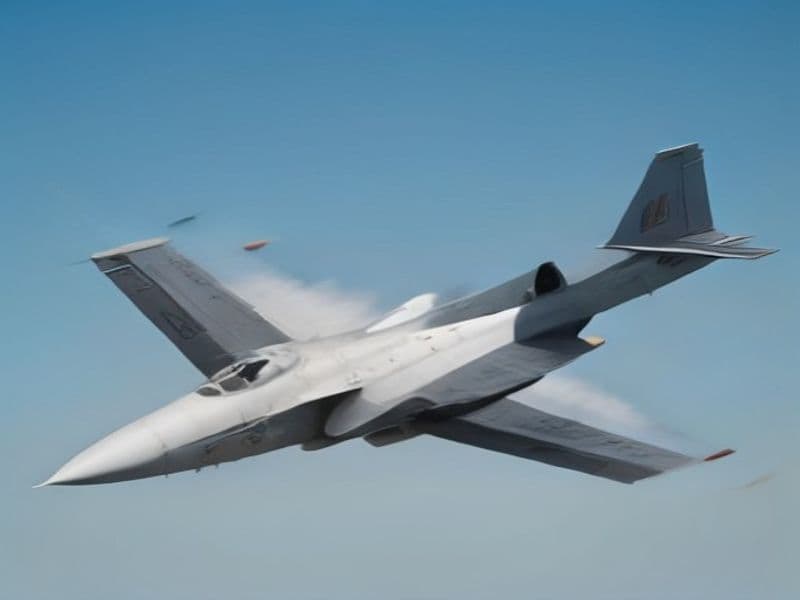
The United States Navy unveiled the AIM‑424 Long‑Range Air‑to‑Air Missile (LRAAM) this week, touting a strike envelope that exceeds 250 nautical miles – roughly 460 km – and positioning the weapon as a “kill‑shot” for the next generation of aerial combat. Branded as “Malice” in internal test programs, the missile is slated for integration on the F/A‑18E/F Super Hornet, the upcoming F‑35C, and future carrier‑based platforms. Its debut marks a decisive shift from the short‑range dogfighting paradigm that has dominated post‑Cold‑War air warfare toward a standoff, network‑centric approach that could redefine carrier strike group tactics.
Key Context & Background
The LRAAM program traces its roots to the Navy’s “Beyond Visual Range” (BVR) resurgence that began in the early 2020s, when adversaries such as China and Russia fielded advanced, long‑range air‑to‑air missiles capable of engaging targets beyond 200 km. The legacy AIM‑120D AMRAAM, while reliable, was designed for a combat environment where radar and data‑link latency were far lower than today’s contested electromagnetic spectrum. Simultaneously, the proliferation of low‑observable platforms and hypersonic strike aircraft forced U.S. planners to reconsider the viability of “inside‑the‑bubble” engagements, prompting a doctrinal pivot toward “outside‑the‑bubble” lethality.
Technical Leap & Capabilities
At the heart of the AIM‑424 is a dual‑mode seeker that fuses active radar homing with an infrared imaging system, allowing the missile to maintain lock even after the launch platform’s radar is jammed or degraded. A new solid‑propellant motor, derived from the SM‑6 cruise missile, provides sustained thrust that pushes the missile past 2 Mach while preserving a low infrared signature. Integrated with the Navy’s Cooperative Engagement Capability (CEC), the LRAAM can receive mid‑course updates from any networked sensor, effectively turning the entire carrier strike group into a single, distributed fire‑control node. This level of sensor‑to‑shooter integration is unprecedented for a carrier‑based air‑to‑air weapon.
Strategic Calculus for the U.S. Navy
Deploying a missile with a 450 km reach reshapes the carrier’s area‑of‑influence diagram. Instead of relying on escort fighters to shepherd the strike group, a single Super Hornet equipped with the LRAAM can neutralize hostile aircraft before they penetrate the carrier’s defensive bubble. This reduces the number of combat air patrols required, freeing up airframes for strike missions and extending the endurance of the carrier’s air wing. Moreover, the missile’s ability to engage multiple targets sequentially—thanks to its re‑targeting data link—offers a cost‑effective counter to swarming unmanned aerial systems that are increasingly fielded by near‑peer competitors.
Broader Implications & Future Impact
The introduction of the AIM‑424 signals a broader arms race in ultra‑long‑range air combat. Allies such as Japan and Australia, already integrating the F‑35C, are likely to seek similar capabilities, potentially spurring a new generation of collaborative missile programs. Conversely, adversaries may accelerate development of counter‑measures, including high‑power microwave weapons and AI‑driven electronic attack suites designed to disrupt the CEC data flow. In the commercial sphere, the dual‑mode seeker technology could spill over into civilian aerospace, enhancing collision‑avoidance systems for densely trafficked air corridors.
Strategically, the LRAAM cements the United States’ commitment to maintaining air superiority from the sea, reinforcing the carrier’s role as a mobile, sovereign air‑defense platform in an era where contested space and cyber domains increasingly erode traditional deterrence. If the missile performs as advertised in operational testing, it may become the benchmark for future BVR weapons, compelling a re‑evaluation of force postures across the Indo‑Pacific and beyond.