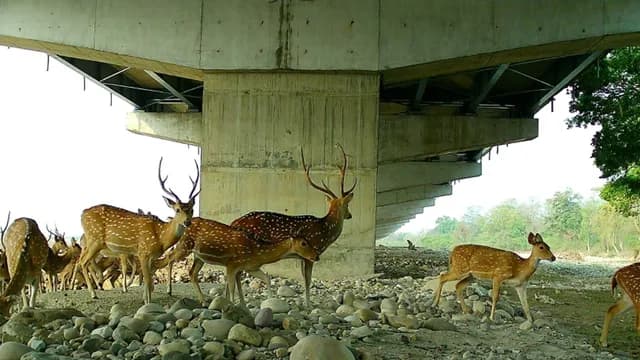
Wildlife Thrives: Delhi-Dehradun Expressway Underpasses Proven Effective
A recent 40-day field study conducted by the Wildlife Institute of India has provided conclusive evidence that the dedicated wildlife underpasses constructed under the Delhi-Dehradun Expressway are being effectively utilized by a diverse array of species. The study, which deployed 150 camera traps along the expressway, recorded an astonishing 40,000 wildlife detections, underscoring the importance of these underpasses in maintaining connectivity between fragmented habitats.
Early Adopters and Elusive Predators
The study revealed that ungulates such as Nilgai and Spotted Deer were among the first species to adopt the underpasses, demonstrating a high degree of behavioral flexibility in response to the new infrastructure. However, the discovery of movement from elusive predators like Leopards and Rusty-spotted cats has come as a welcome surprise, indicating that these species have successfully adapted to the new structures. The presence of these apex predators is a clear indicator of the underpasses' effectiveness in maintaining ecological connectivity.
Behavioral Adaptation and Nocturnal Activity
The report highlights that despite the significant human and vehicular presence along the expressway, many species, particularly Leopards, have adjusted their activity patterns to become largely nocturnal to avoid disturbance. This behavioral adaptation is a crucial aspect of the underpasses' success, as it allows species to continue their natural movements without interference from human activities. By avoiding daytime activity, these species are able to maintain their ecological roles within the ecosystem, thereby ensuring the continued health and resilience of the Shivalik elephant corridor and the Rajaji Tiger Reserve.
Mitigating the "Barrier Effect"
The Delhi-Dehradun Expressway is a major infrastructure project that has the potential to fragment habitats and disrupt wildlife movements. However, the underpasses have effectively mitigated the "barrier effect" usually created by such projects, providing a vital link between the Shivalik elephant corridor and the Rajaji Tiger Reserve. This is a significant achievement, as it ensures the continued movement of species between these critical habitats, maintaining the integrity of the ecosystem and supporting the long-term conservation of these species.
Implications and Future Directions
The success of the underpasses has significant implications for wildlife conservation and infrastructure planning. The study demonstrates that with careful planning and design, it is possible to mitigate the negative impacts of infrastructure development on wildlife populations. As such, this project serves as a model for future infrastructure development, highlighting the importance of incorporating wildlife-friendly features into development plans. By adopting this approach, we can work towards creating a more sustainable and wildlife-friendly built environment, supporting the conservation of species and ecosystems for future generations.