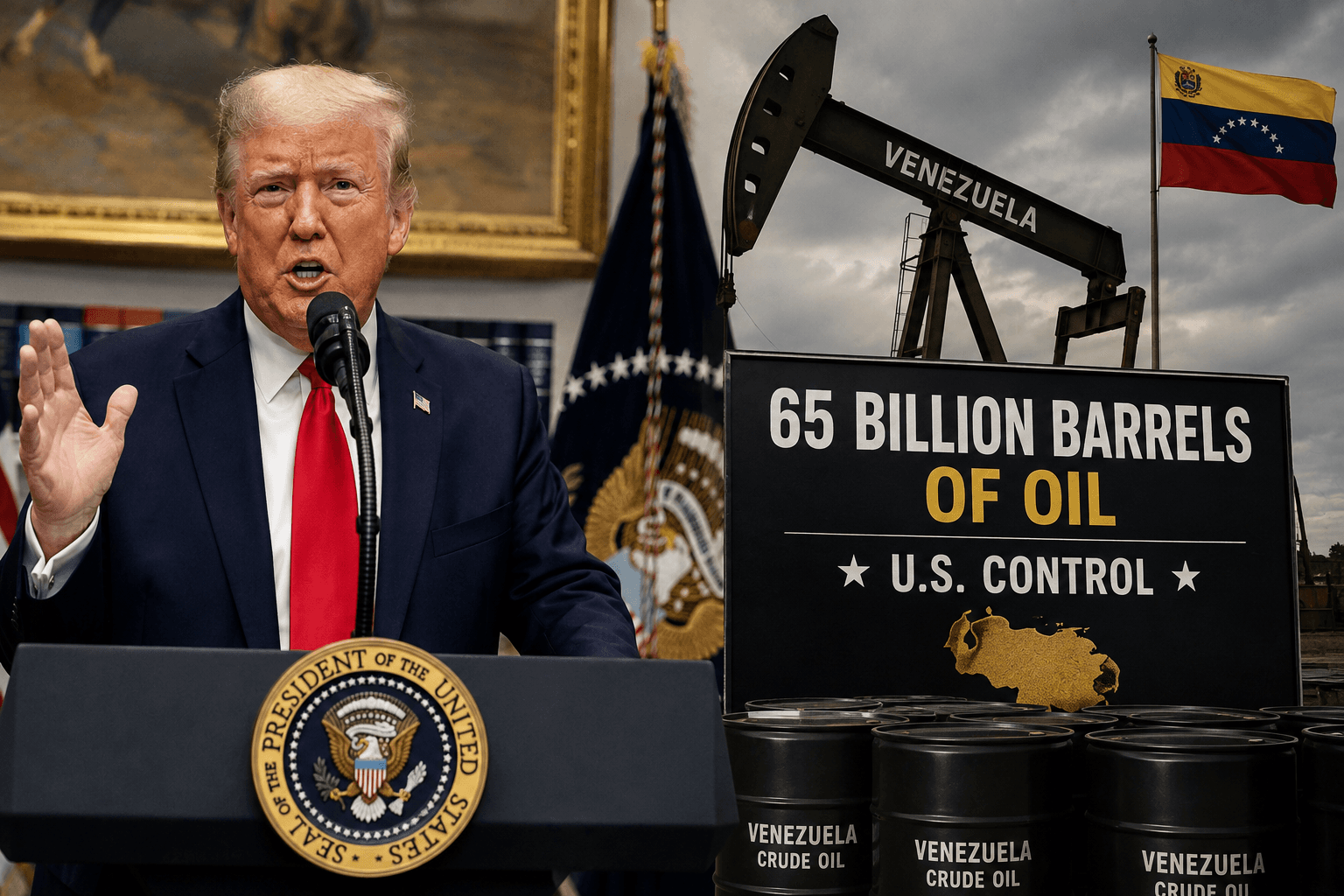
President Donald Trump announced on social media that the United States has secured control of roughly 65 billion barrels of Venezuelan crude, branding it “the biggest oil deal in history.” The agreement, brokered by Secretary of State Marco Rubio, Defense Secretary Pete Hegseth, and Venezuela’s interim president Delcy Rodríguez, follows a dramatic U.S. military operation that removed President Nicolás Maduro from power nine months earlier. By positioning the deal as a triumph of American resolve, the administration seeks to reshape global energy markets while cementing its geopolitical foothold in the Western Hemisphere.
Key Context & Background
Venezuela’s oil reserves have long been the world’s largest, but decades of mismanagement, sanctions, and a collapsing economy reduced production from 2.5 million barrels per day in the early 2000s to under 500,000 today. The United States imposed sweeping sanctions in 2019, targeting state‑run PDVSA and limiting Caracas’ ability to sell abroad. In parallel, the Trump administration pursued a hard‑line policy against the Maduro regime, culminating in a covert operation that captured the president and delivered him to U.S. courts on narcoterrorism charges. The power vacuum created by Maduro’s removal and the appointment of Delcy Rodríguez as interim leader opened a narrow diplomatic window, which Washington exploited to negotiate a joint‑venture framework that effectively places the oil fields under U.S. operational control while offering the Venezuelan government a share of future revenues.
Political Calculus Behind the Deal
Beyond the economic allure, the arrangement serves multiple political objectives. Domestically, Trump can tout a tangible “win” that resonates with his base’s demand for strong action against perceived socialist regimes. Internationally, the move signals to allies and rivals alike that the United States is willing to intervene directly in sovereign resource disputes when strategic interests align. By involving senior cabinet members, the administration underscores the deal’s elevation to a matter of national security rather than routine commercial negotiation. Moreover, the agreement positions the U.S. as a counterweight to China’s growing footprint in Latin America, where Beijing has quietly financed infrastructure projects in exchange for future oil access.
Broader Implications & Future Impact
If operationalized, the deal could inject up to 1.5 million barrels per day of Venezuelan crude into a market still reeling from pandemic‑induced demand shocks and OPEC+ production cuts. That supply boost would likely depress global oil prices, benefitting oil‑importing economies but straining the profitability of higher‑cost producers such as shale operators in the United States. Strategically, U.S. control of the reserves grants Washington leverage over the International Energy Agency’s future production quotas, potentially reshaping the balance of power within the organization. Regionally, the arrangement may destabilize the fragile political equilibrium in Venezuela, emboldening opposition factions while alienating countries that have maintained diplomatic ties with Maduro’s government.
Risks and Uncertainties
The deal’s success hinges on a series of precarious variables. Legal challenges from multinational oil firms that previously held concessions could stall field development, while the Venezuelan judiciary—still under Maduro‑aligned influence—may contest the legitimacy of the interim administration’s authority. Environmental concerns also loom large; decades of neglect have left many fields in a state of disrepair, raising the likelihood of spills and costly remediation. Finally, the geopolitical backlash from Russia and China, both of which have vested interests in Venezuela’s oil sector, could manifest in heightened diplomatic tensions or proxy confrontations, complicating the United States’ broader strategic objectives in the region.