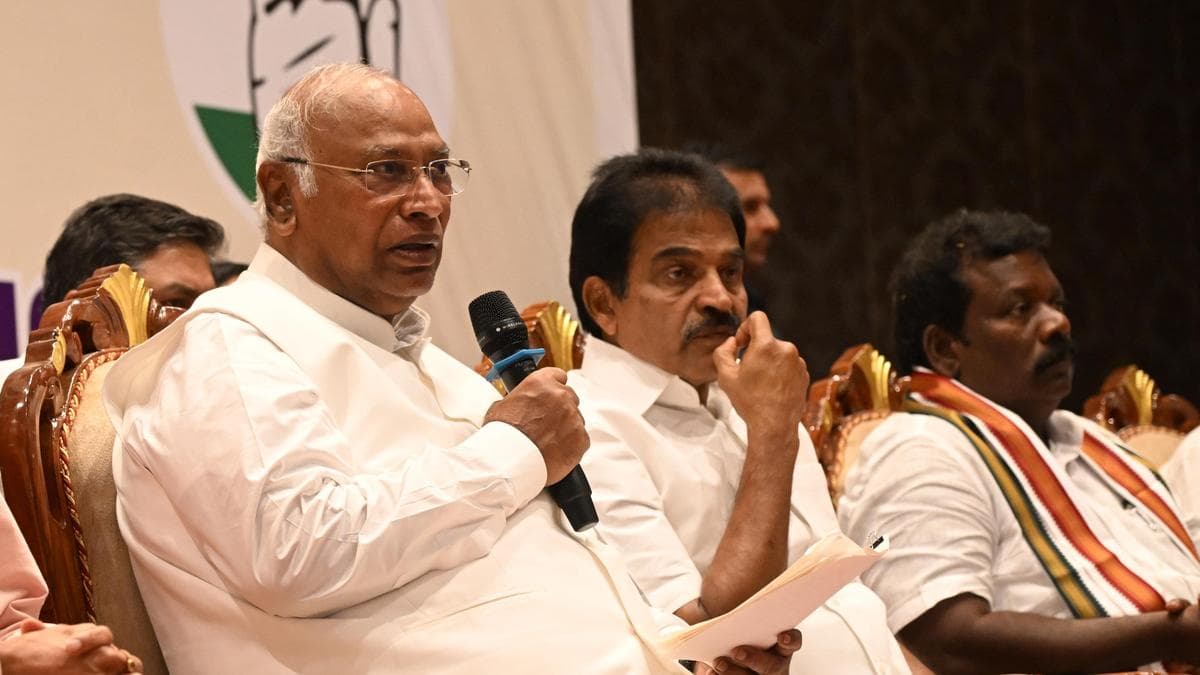
BJP Seeks Election Commission Action Against Mallikarjun Kharge Over 'Terrorist' Remark
The Bharatiya Janata Party (BJP) has filed a formal complaint with the Election Commission of India (ECI) against Congress President Mallikarjun Kharge for allegedly calling Prime Minister Narendra Modi a "terrorist" at an event in Tamil Nadu. The BJP has accused Kharge of violating the Model Code of Conduct (MCC) and seeks action against him.
Background and Context
The alleged incident occurred during a public event in Tamil Nadu, where Kharge was speaking about the Bharatiya Janata Party (BJP) and its alleged tactics. According to reports, Kharge made a remark that PM Modi was a "terrorist" – a statement that has been widely reported and criticized by the BJP. The Congress party has maintained that Kharge's statement was not meant to be taken literally, but rather a metaphorical expression of the alleged intimidation tactics used by the BJP and its associated agencies.
BJP's Allegations and Demands
The BJP has termed Kharge's remark as "grossly derogatory" and a violation of the MCC. The party has accused Kharge of lowering the political discourse and trying to provoke the Prime Minister. In its petition to the ECI, the BJP has demanded that the Commission direct Kharge to issue a public apology and retract his statement. The party has also asked the ECI to remove the statement from digital and social media platforms, citing concerns about the spread of misinformation and the potential impact on the electoral process.
Kharge's Clarification and Response
Kharge has clarified that his remark was not meant to be taken literally, and that he was referring to the alleged "terrorising" of opponents using agencies like the Enforcement Directorate (ED) and the Central Bureau of Investigation (CBI). The Congress party has maintained that the BJP is trying to misrepresent Kharge's statement and create a controversy where none exists.
Analysis and Implications
The BJP's complaint to the ECI marks the latest escalation in the ongoing battle between the two major parties ahead of the upcoming elections. The controversy surrounding Kharge's statement highlights the increasingly polarized nature of Indian politics and the tendency of politicians to use emotive language to gain an upper hand. The ECI's response to the BJP's complaint will be closely watched, as it will set a precedent for the handling of similar incidents in the future. Ultimately, the incident raises questions about the limits of free speech, the role of the ECI in regulating political discourse, and the impact of such controversies on the electoral process.