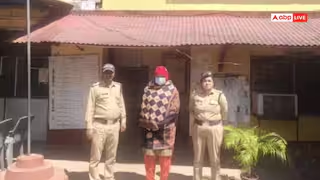
Dehradun Woman's Desperate Measures: A Glimpse into India's Organized Crime
The arrest of 34-year-old Shabnam in Dehradun's Khushalpur area on March 25, 2026, has shed light on the darker side of India's organized crime network. The discovery of 7.53 grams of heroin in her possession, valued at approximately ₹2.20 lakh, has sparked a chain reaction that may lead to the dismantling of a larger smuggling syndicate.
The Troubling Reality of Female Involvement in Organized Crime
Shabnam's involvement in the heroin trade is a stark reminder of the complexities of organized crime in India. According to the National Crime Records Bureau (NCRB), the number of women arrested for narcotics-related offenses has been increasing steadily over the years. While the exact reasons behind this trend are unclear, it is likely that economic necessity and desperation are driving women like Shabnam to engage in illicit activities.
In this case, Shabnam's decision to turn to heroin smuggling was motivated by her husband's legal woes. Muntajir, currently incarcerated for multiple offenses including cow slaughter, theft, and drug smuggling, required a sizeable amount of money for his lawyer fees and bail. Shabnam's involvement in the smuggling network allowed her to raise the necessary funds, highlighting the often-overlooked role of women in facilitating organized crime.
The Organized Nature of the Smuggling Syndicate
Initial investigations suggest that Shabnam was not a small-time peddler, but rather a key player in an organized smuggling network. Her ability to purchase heroin at low prices and sell it for a profit indicates a level of sophistication and connections within the underworld. The use of her husband's old contacts to facilitate the transactions further underscores the intricate web of relationships within the syndicate.
The police's decision to charge Shabnam under various sections of the Narcotic Drugs and Psychotropic Substances (NDPS) Act is a significant step towards dismantling the syndicate. Shabnam's cooperation during interrogation has provided valuable intelligence, allowing the police to track other members of the conspiracy. The success of this operation will depend on the strength of the evidence gathered and the ability of the authorities to apprehend those involved.
Conclusion
Shabnam's story is a disturbing reflection of the pervasive nature of organized crime in India. The involvement of women in the heroin trade highlights the complex interplay of economic necessity, desperation, and the often-overlooked role of women in facilitating these activities. As the police continue to investigate the smuggling syndicate, it remains to be seen whether this operation will mark a significant turning point in the fight against organized crime in Dehradun and beyond.