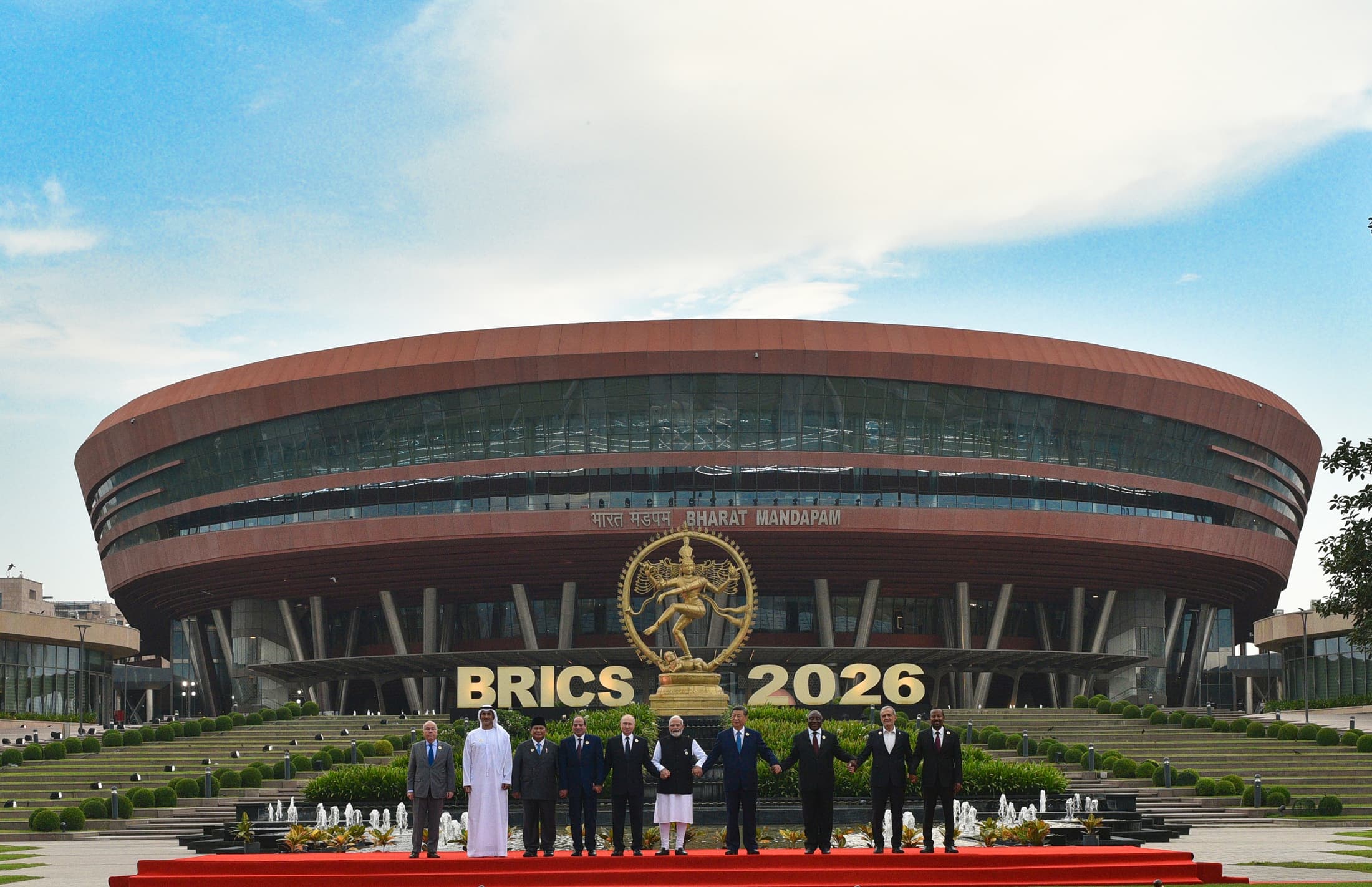
The 2026 BRICS summit, convened in New Delhi on September 12‑13, offered a rare visual record of informal exchanges between Prime Minister Narendra Modi and his counterparts—President Xi Jinping, President Vladimir Putin and Indonesia’s President Prabowo Subianto. Footage released by the Indian press shows the leaders sharing quiet moments over tea, strolling through the venue’s gardens and exchanging personal anecdotes, a tableau that starkly contrasts with the tightly choreographed state ceremonies that usually dominate such gatherings. The candid clips have ignited debate about India’s evolving diplomatic posture, the cohesion of the BRICS bloc, and the strategic calculus driving the quartet of nations as they navigate an increasingly fragmented global order.
Key Context & Background
BRICS, originally a coalition of emerging economies, entered its 2026 edition at a crossroads. The bloc’s expansion to include Saudi Arabia, Iran and several African states last year was intended to counterbalance Western‑led institutions, yet internal divergences over trade policy, technology standards and security commitments have persisted. India’s ascension to a permanent seat on the summit’s steering committee reflects New Delhi’s ambition to shape that agenda, especially as Beijing and Moscow grapple with sanctions and diplomatic isolation following the Ukraine conflict. Meanwhile, Indonesia’s newly elected President Prabowo, a former military commander, seeks to leverage BRICS as a platform for South‑South investment and to diversify Indonesia’s energy imports away from Western suppliers. The convergence of these leaders in New Delhi therefore represents not merely a diplomatic courtesy but a strategic convergence of three distinct geopolitical imperatives: India’s bid for a greater global voice, China’s quest for a reliable Asian partner amid strained U.S. ties, and Russia’s search for economic lifelines.
Candid Interactions on the Ground
The released video captures Modi and Xi exchanging a light‑hearted comment about the Delhi monsoon, while Putin, seated beside them, gestures toward a shared interest in “energy security” that extends beyond oil and gas to include rare‑earth minerals. In a separate vignette, Prabowo and Modi discuss a joint maritime training exercise aimed at safeguarding the Indian Ocean’s critical shipping lanes. These unscripted moments reveal a level of personal rapport that could translate into pragmatic cooperation, especially in areas where formal negotiations have stalled. Analysts note that such informal bonding is a hallmark of the “club‑house” diplomacy favoured by BRICS, where leaders rely on personal trust to bypass bureaucratic inertia.
Broader Implications & Future Impact
If the camaraderie captured in New Delhi translates into policy, the next few years could see a deepening of trilateral initiatives among India, China and Russia, particularly in the realms of digital infrastructure, defense logistics and climate finance. A joint “BRICS Innovation Fund” has already been floated, and the personal chemistry among the leaders may accelerate its approval, potentially diverting billions of dollars from Western‑led venture capital streams. For the global economy, a more cohesive BRICS could challenge the dominance of the U.S. dollar in trade settlements, prompting a gradual shift toward a multi‑currency system anchored by the yuan, ruble and rupee. Regionally, Southeast Asian nations may find themselves pressured to align with either the New Delhi‑centric “Indo‑Pacific” vision or the Beijing‑Moscow axis, reshaping the strategic calculus of ASEAN.
India’s Diplomatic Leverage
By hosting the summit and facilitating these informal exchanges, India has positioned itself as the de‑facto convener of a bloc that is still searching for a coherent identity. Modi’s ability to balance a “strategic autonomy” narrative—asserting independence from both Western and Chinese pressures—while still courting Beijing and Moscow, underscores New Delhi’s nuanced diplomatic choreography. The visual record of friendly dialogue may bolster India’s claim to leadership in global governance reforms, from World Bank voting rights to climate accords, and could encourage other non‑aligned nations to view the BRICS platform as a viable alternative to traditional Western institutions.