'My Younger Sister': Inside the Modi-Takaichi Moment That Stole the India-Japan Summit
A
By Admin📖4 min read
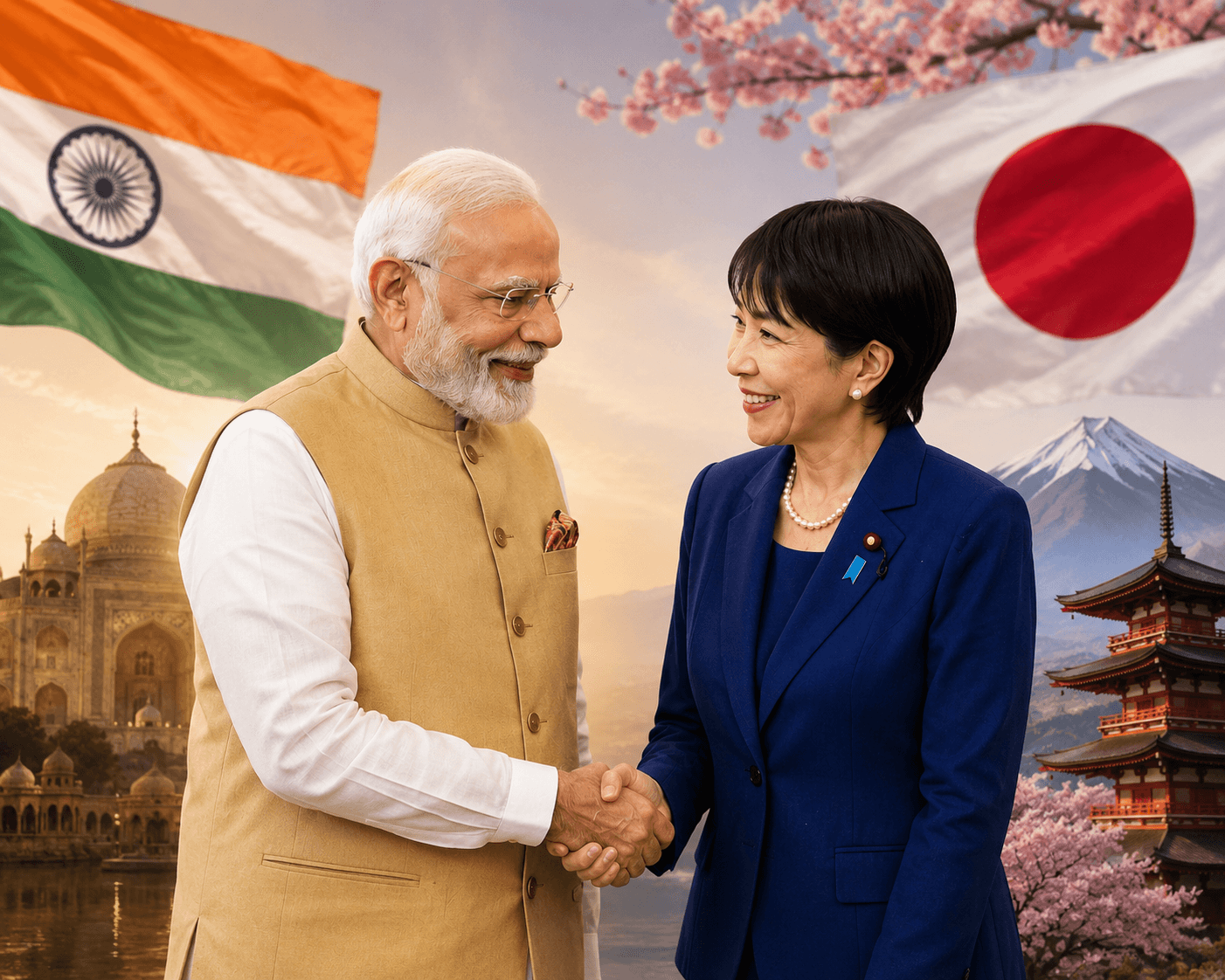
Amid a summit packed with trade pacts, defence deals, and a $10 billion investment pledge, it was a single, personal line from Prime Minister Narendra Modi that ended up defining the 16th India-Japan Annual Summit: he called Japan's Prime Minister Sanae Takaichi his "younger sister."
The moment
Takaichi, Japan's first woman prime minister, arrived in New Delhi on July 1 for her first official visit to India since taking office, at Modi's invitation. Following bilateral talks at Hyderabad House on July 2, the two leaders addressed a joint press conference — where Modi opened his remarks with, "Your Excellency, and meri chhoti behen (my younger sister), Prime Minister Takaichi..." He went on to call her a "visionary and popular leader," noting her roots in Nara Prefecture, a centre of shared Buddhist heritage between the two countries.
Takaichi, hearing the line through simultaneous translation, responded with a warm smile — and later built on the gesture herself in her own remarks, saying the two sides had agreed to "develop this relationship as brother and sister," and referring to Modi as her "big brother" as she looked ahead to the 75th anniversary of India-Japan diplomatic relations in 2027.
Where it comes from
The "brother-sister" framing isn't a one-off pleasantry — it traces back to Takaichi's own relationship with former Japanese Prime Minister Shinzo Abe, who she has described as a mentor and a "big brother" figure in Japanese politics. Abe and Modi shared an unusually close personal and political rapport during Abe's years in office, built on years of summits, shared strategic vision for the Indo-Pacific, and a personal warmth that was visible in their public appearances together. After Abe was assassinated in July 2022, Modi declared a national day of mourning in India and later travelled to Tokyo to attend his state funeral that September — a gesture widely seen at the time as a marker of how deep the personal dimension of the India-Japan relationship had become under the two leaders.
By extending that same "sibling" framing to Takaichi, Modi was, in effect, signalling that the personal warmth built with Abe carries forward into Japan's new leadership — not just the institutional partnership between the two countries.
The summit behind the headline
The personal moment came wrapped around substantial business. The two countries signed a series of agreements spanning artificial intelligence, economic security, critical minerals, clean energy, healthcare, and defence, including their first joint defence co-development project. India and Japan also renewed a target of attracting 10 trillion yen (roughly $62 billion) in Japanese investment over the next decade and issued a joint statement on AI cooperation. Trade between the two countries reached $27.5 billion in the 2025–26 fiscal year, with around 1,400 Japanese companies now operating in India.
Away from the podium, the visit had a lighter side too: Modi teased Takaichi's well-known love of motorbikes during remarks to the India-Japan Business Forum, and the two leaders were later seen together at a cultural luncheon, where Takaichi — a self-described "metalhead" — tried her hand at playing the santoor, a traditional Indian instrument.
#indiajapanrelations#narendramodi#sanaetakaichi#shinzoabe#16thindia-japansummit#hyderabadhouse#indo-pacific#bilateralties#diplomacy#japan
← Previous ArticleFord rehires human engineers after AI fails to match quality checksNext Article →Amarnath Yatra 2026 Begins: 57-Day Pilgrimage Kicks Off Under Tight Security Amid Registration Rush