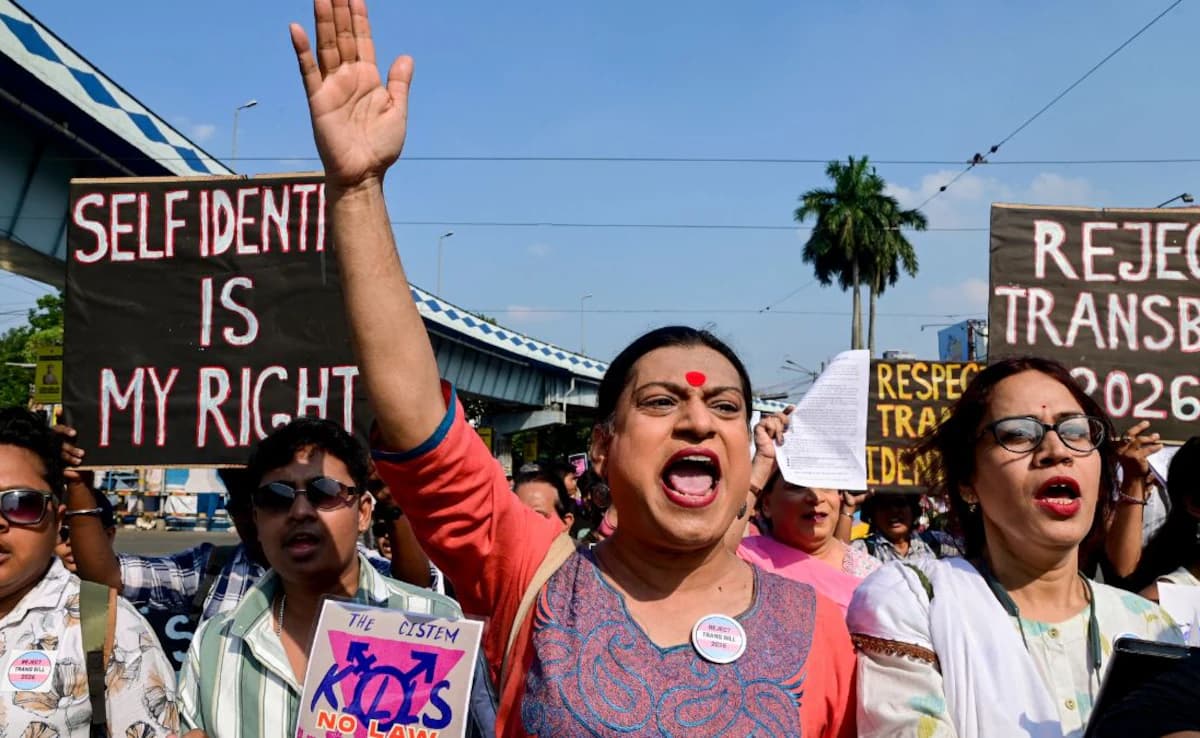
Trans Community Protests in Dehradun, Demands Rollback of 'Black' Transgender Bill
The transgender community in Dehradun has taken to the streets, protesting the introduction of the 'Black' Transgender Bill, 2026. This legislation, which aims to regulate the rights of the transgender community, has been met with widespread opposition from activists and community members.
The protesters are vehemently opposing the requirement for a medical board examination to "certify" gender, arguing that identity is a matter of self-perception and feelings rather than physical anatomy or medical reports. This stance is backed by the landmark 2014 Supreme Court NALSA (National Legal Services Authority) judgment, which granted individuals the right to self-identify their gender without mandatory surgical or medical intervention.
Activists claim that the 2026 Bill violates this judgment by limiting the definition of transgender to specific cultural groups, such as Hijra and Kinnar, effectively excluding trans-men, trans-women, and non-binary individuals from legal protections. This exclusion has sparked concerns that the Bill may be a step back for the rights of the transgender community, rather than a step forward.
Another major grievance highlighted by protesters is that the government introduced and moved to pass the Bill in Parliament without consulting the LGBTQIA+ stakeholders, leading to allegations of "transphobic" policymaking. The lack of consultation and engagement with the community has raised questions about the government's commitment to inclusive and representative policymaking.
Background and Context
The transgender community in India has made significant strides in recent years, with the 2014 NALSA judgment being a major milestone. However, despite this progress, the community continues to face significant challenges, including discrimination, harassment, and violence. The introduction of the 2026 Bill has reignited concerns about the safety and well-being of the transgender community.
The Bill's provisions, which require a medical board examination to "certify" gender, have been criticized for being overly restrictive and stigmatizing. This approach has been widely discredited by medical professionals and human rights organizations, who argue that it perpetuates a medical model of gender identity that is no longer supported by scientific evidence.
Conclusion
The protests in Dehradun are a clear indication of the transgender community's determination to protect their rights and advocate for inclusive and representative policymaking. As the government moves forward with the Bill, it is essential that they engage with the community and address their concerns in a meaningful and constructive manner. Anything less would be a betrayal of the principles of equality and justice that underpin the Indian Constitution.